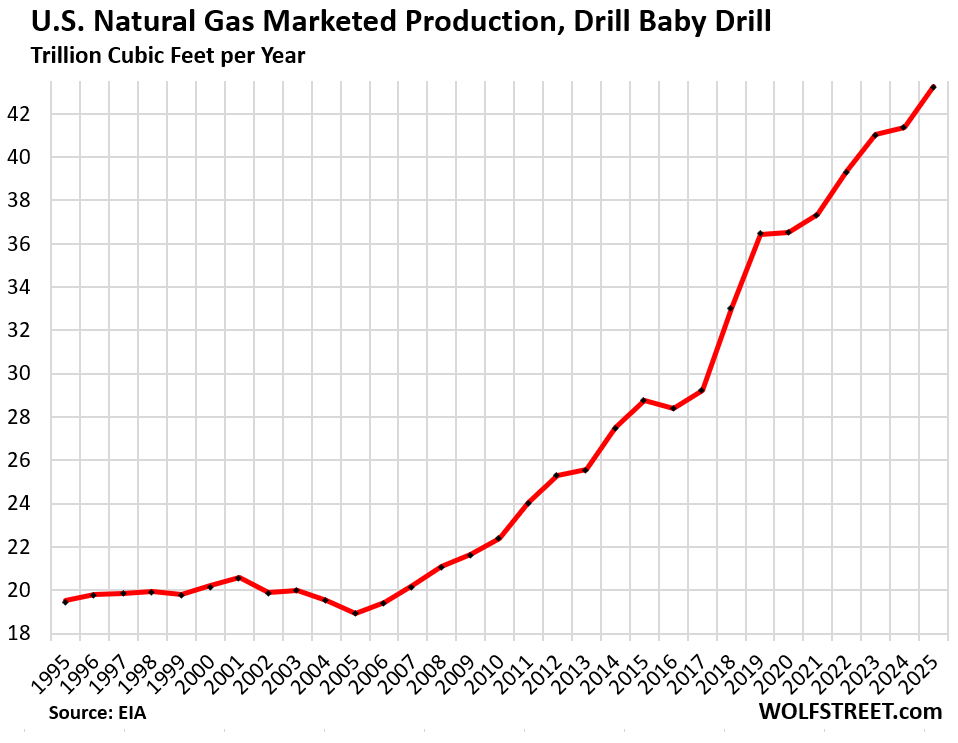
The United States reached a significant infrastructure milestone this week as the tenth liquefaction and export terminal successfully dispatched its inaugural cargo. This event marks the culmination of a ten-year transition that began when a domestic natural gas glut depressed prices and forced producers to seek international outlets for their surplus supply. The shift from a market defined by regional oversupply to one characterized by global export capacity has fundamentally altered the role of the US in international energy trade.
Infrastructure Maturation and Export Capacity
The activation of this tenth facility underscores the rapid scaling of liquefaction capabilities across the Gulf Coast and beyond. This expansion has been driven by a consistent project pipeline designed to bridge the gap between domestic production levels and the rising demand for energy security in overseas markets. The following list highlights the progression of these assets:
- Initial phase projects that established the primary export corridors.
- Mid-cycle expansions that increased total liquefaction throughput.
- Current in-service terminals that now represent the backbone of US export volume.
This infrastructure build-out has moved the sector past its early experimental phase. The focus has shifted from proving the viability of liquefaction technology to managing the logistical complexity of high-volume, multi-terminal operations. As these facilities reach full capacity, the domestic market is increasingly sensitive to global price differentials rather than just regional storage levels.
Sector Integration and Valuation Drivers
The integration of these terminals into the global energy grid has created a direct link between domestic production and international price benchmarks. Companies operating within this space, such as those tracked on the LNG stock page, now face a valuation environment heavily influenced by export utilization rates and long-term supply contracts. AlphaScala currently assigns Cheniere Energy, Inc. an Alpha Score of 66/100, labeling it as Moderate within the energy sector.
This structural change requires a reassessment of how energy stocks are valued relative to their historical domestic-only baselines. The ability to pivot supply toward the highest-paying global markets provides a buffer against domestic price volatility, yet it also exposes operators to international regulatory and geopolitical risks. Investors are now looking at terminal uptime and maintenance schedules as primary indicators of operational health, moving away from simple production-volume metrics.
The Next Marker for Export Dynamics
The next critical development will be the release of updated utilization data for the newly commissioned terminal. Analysts will monitor whether the facility reaches its nameplate capacity within the projected timeframe or if logistical bottlenecks in the regional pipeline network persist. This data will serve as a bellwether for the remaining projects currently under construction, providing a clearer picture of the total export ceiling for the coming fiscal year. The transition from construction to steady-state operations remains the most significant variable for near-term cash flow projections across the sector.