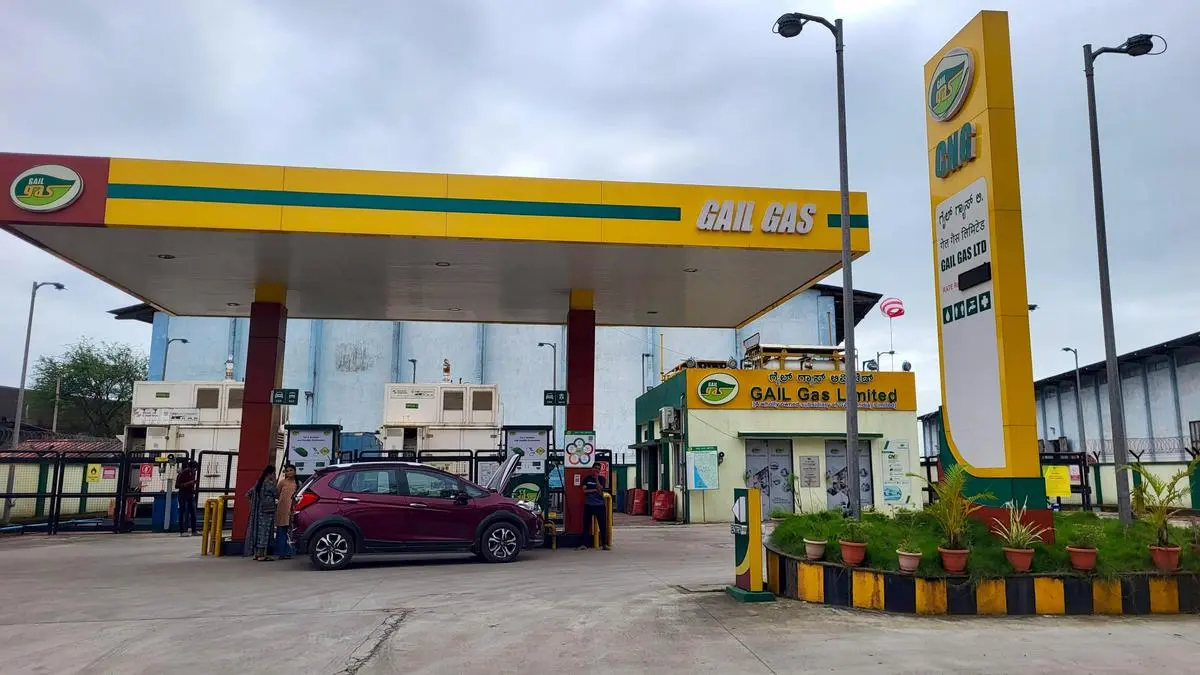
The Force Majeure That Broke GAIL's Quarter
State-run GAIL (India) reported a 41% year-on-year decline in consolidated net profit for Q4 FY26, landing at ₹1,481 crore. The direct trigger was not weak demand or operational inefficiency. It was a sudden collapse in contracted LNG supplies from the Middle East after the West Asia conflict forced Petronet LNG to declare force majeure on March 3, 2026.
For anyone tracking Indian energy markets, this is a concrete example of how geopolitical disruption bypasses company-level fundamentals. The supply chain broke at the cargo level, and the financial statement reflected it in real time.
Petronet LNG Force Majeure and Lost Cargoes
On March 3, Petronet LNG invoked force majeure on regulated RLNG allocations under its long-term contract with GAIL. From March 4, the allocation was reduced to zero. Separately, four LNG cargoes under other contracts were also blocked.
GAIL's regulatory filing with the BSE stated: "During March 2026, LNG supplies from the Middle East were disrupted due to the geopolitical situation in West Asia. Further, force majeure declared by Petronet LNG (PLL) on March 3, 2026, RLNG allocation to the Company under the contract was reduced to zero from 4 March 2026, and four LNG cargoes under other contracts were also impacted."
The disruption was not a gradual reduction. It was a sudden, near-complete halt of contracted volumes that cascaded through GAIL's operations within days.
Volume Collapse in March: The Numbers Behind the Profit Drop
GAIL's consolidated total income for Q4 FY26 was ₹36,497 crore, down from ₹36,944 crore in Q4 FY25 and only marginally above ₹35,641 crore in Q3 FY26. Total expenses rose to ₹34,989 crore from ₹33,983 crore a year earlier, compressing margins.
The volume impact was the most concrete measure of the disruption:
- Natural gas sales declined by 21 million standard cubic meters per day (MSCMD) in March 2026 versus February 2026.
- Gas transmission volumes dropped by 30 MSCMD over the same period.
- LPG pipeline transmission fell by 39,000 tonnes in March compared with February.
The 14% sequential drop in net profit (from Q3) highlights how quickly the supply loss translated into earnings erosion. GAIL said the affected volumes accounted for a material slice of its daily throughput.
Why the 30 MSCMD Transmission Decline Matters
For a pipeline operator like GAIL, transmission volumes are the primary revenue driver. A 30 MSCMD drop in a single month implies a utilization rate plunge of roughly 20-25% depending on baseload. That directly hits fixed-cost absorption and operating margins.
LPG Pipeline Hit Adds Another Layer
LPG transmission fell by 39,000 tonnes in a single month. This signals that downstream customers tied to GAIL's LPG pipeline faced supply gaps, which could trigger inventory losses or contractual penalties. The company noted the geopolitical situation directly impacted LPG pipeline throughput.
Mitigation Steps and Their Limits
GAIL responded quickly under the government's Natural Gas (Supply Regulation) Order of March 9, 2026, which directed priority allocation to essential sectors. Mitigation actions included:
- Procurement of LNG from the spot market to replace lost cargoes
- Alternative sourcing from other suppliers (specific origins not disclosed)
- Reallocation of gas to priority sectors as mandated by the government order
Deepak Gupta emphasized that GAIL maintained operational continuity and cost discipline. The company also achieved its highest-ever LPG transmission of 4.6 million tonnes per annum for the full year, suggesting the Q4 disruption was a late-blow, not a full-year trend.
Practical rule: Spot procurement looks like a quick fix. The real risk is that spot LNG prices spike as global demand competes for the same cargoes, converting a volume problem into a margin crisis.
What Would Restore the Supply Line
Traders and investors should track three factors that could reduce the downside:
- Resolution of the West Asia conflict: Any de-escalation that allows safe passage for LNG tankers would quickly restore contracted flows.
- Alternative contract renegotiations: If GAIL or Petronet LNG can secure replacement cargoes from other basins (e.g., US or Australia), the supply constraint eases.
- Increased domestic gas production: GAIL's own upstream projects or government policy to boost local output could reduce reliance on Middle East LNG over time.
The Board's approval of renewable investments (∼700 MW solar, ∼178 MW wind, six compressed biogas plants with total capacity of ∼95 tonnes per day) is a long-term hedge. It does nothing for the immediate supply gap.
The Downside Scenarios for GAIL and Indian Gas
The risk escalates under these scenarios:
- Extended conflict: If the West Asia crisis continues into Q1 FY27, the spot market will tighten and GAIL may face higher procurement costs, eating further into margins.
- Additional cargo losses: Any further force majeure declarations on other long-term contracts would compound the volume decline.
- Spot LNG price spikes: If global demand (e.g., from Europe or Asia) competes for the same cargoes, GAIL's spot replacement costs could rise sharply.
Downstream sectors reliant on GAIL's supply – including fertiliser, power, and city gas distribution – could face cascading disruptions, prompting regulatory scrutiny or penalty risks.
Related Energy Assets and Market Read-Through
GAIL's quarterly report is a direct read-through for other Indian gas utilities and LNG importers. Petronet LNG shares may face similar scrutiny on contract exposure. The broader Indian energy market now has a tangible example of geopolitical supply risk materialising.
For global context, AlphaScala's Alpha Score for Cheniere Energy stands at 66/100 (moderate). The West Asia disruption underscores how geopolitical events can override company-specific fundamentals, even for well-rated energy players. Traders watching the LNG space should treat this as a live risk event, not a one-off earnings miss.
GAIL's total dividend payout ratio for FY26 was 51.90% (interim ₹5 per share plus recommended final ₹0.50 per share). That suggests the board sees the disruption as temporary. The dividend is a trailing indicator. The forward risk is still on the table.
For a broader view of energy commodities affected by the same dynamics, see our crude oil profile and commodities analysis.