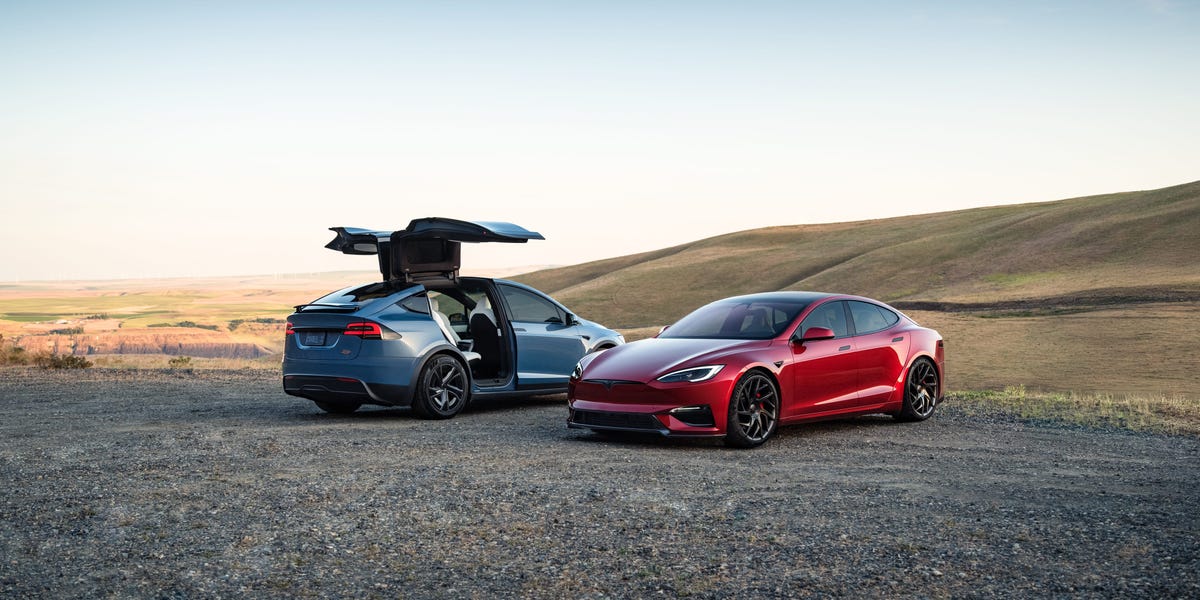
Tesla Vice President Lars Moravy told investors the company is not permanently closing the door on the Model S and Model X. His comment – “Never say never” – came after Tesla officially retired the two electric vehicles from its active lineup. The statement does not amount to a roadmap. It introduces uncertainty into what many assumed was a settled product strategy.
Why the comment matters now
Tesla has been streamlining its portfolio around high-volume models: the Model 3, Model Y, and Cybertruck. The Model S and Model X, the original halo cars, accounted for a fraction of deliveries in recent quarters. Retiring them simplified production and cut costs. A revival, even a hypothetical one, forces a re-evaluation. It suggests Tesla may believe that the premium electric sedan and SUV segment still holds value for the brand’s image and its margins. Without a flagship model, Tesla relies entirely on the Cybertruck as its high-price offering. A return of the Model S or Model X would give the company a second pillar at the top of the price ladder.
The naive read vs. the better market read
A surface interpretation is that Moravy is offering a polite hedge. “Never say never” is a low-commitment phrase that costs nothing. The better market read is more concrete. Tesla has not sold its tooling or closed the engineering teams responsible for those platforms. The retirement was a production pause, not a divestiture. If Tesla is keeping the intellectual property and supply chain intact, a revival could be executed faster and cheaper than a clean-sheet design. That matters for investors trying to gauge capital allocation. A decision to re-enter the high-end segment would signal that Tesla sees margin opportunity in lower-volume, higher-price vehicles, a strategy that contrasts with the current push toward volume and autonomous-vehicle platforms.
What the comment changes for TSLA
For TSLA equity, the comment removes a small layer of terminal-risk perception. A company that permanently abandons its founding products looks different from one that pauses them for a refresh. For the used market, it supports – or at least stabilizes – resale values of existing Model S and Model X units. Owners who feared a depreciation cliff from permanent discontinuation now have a reason to hold. For competitors like Lucid and Mercedes-Benz that target the same price bracket, it keeps a credible incumbent in the conversation.
The decision point the story creates
The next confirmation or contradiction will come from Tesla’s own actions. If the company releases a software update for the Model S and Model X that adds new features, or if a supplier contract for specific parts is renewed, the revival becomes more probable. If Tesla instead shifts engineering resources entirely to the next-generation platform and robotaxi program, the comment will fade as a placeholder. Investors revisiting their approach to stock market analysis should treat Moravy’s words as a watchlist item that requires follow-up filings and production data to become actionable.