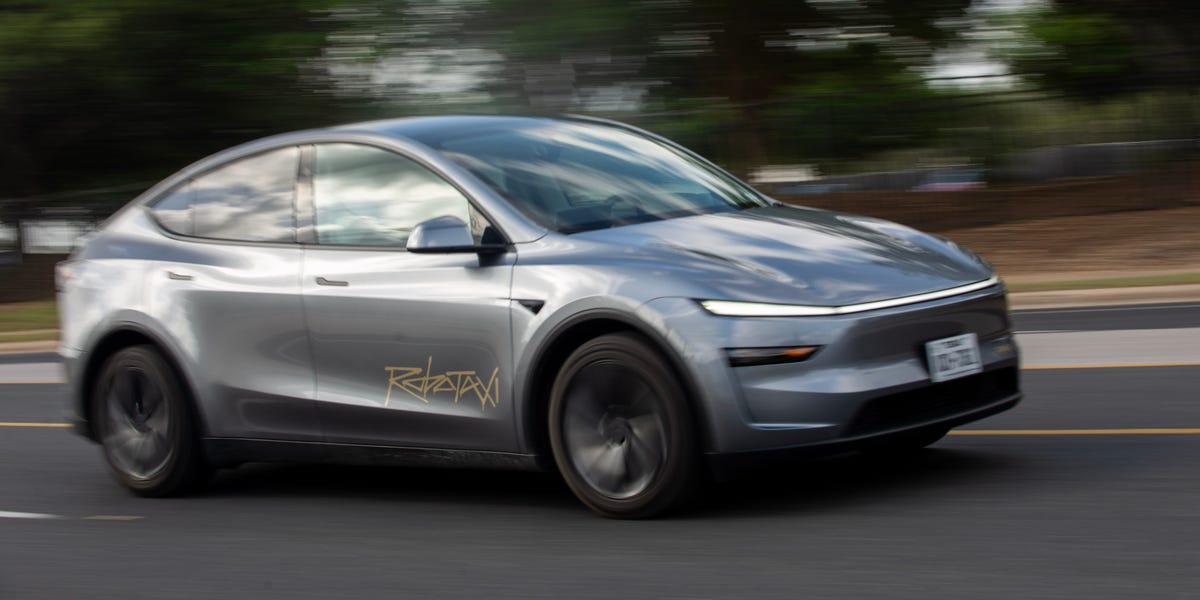
Tesla executives laid out new robotaxi metrics on Wednesday's second-quarter earnings call, offering the cleanest batch of numbers since the service launched in June 2025. CEO Elon Musk and AI head Ashok Elluswamy walked through cumulative paid miles, unsupervised driving totals, fleet expansion, and Cybercab production capacity.
The company's shareholder deck put cumulative paid robotaxi miles at nearly 2.5 million by the end of Q2. That figure includes trips with a safety monitor behind the wheel. In the San Francisco Bay Area, a human supervisor still sits in the driver's seat. Elluswamy said the fleet had logged more than 380,000 unsupervised miles across six cities in two states. Tesla has not disclosed how many cars operate without a monitor. For scale, Alphabet's Waymo has run more than 200 million fully autonomous, rider-only miles.
Musk said robotaxi miles were growing at more than 10% per week. Elluswamy added that unsupervised mileage had increased at "double-digit growth rates" weekly since the start of the year. "We expect to continue growing at such a large rate through the rest of this year," he said.
Tesla lists seven US markets where robotaxi is active: Austin, Dallas, Houston, Miami, Orlando, Tampa, and the Bay Area. All except the Bay Area are "ramping unsupervised" rides, per the deck. Preparations are underway in Phoenix and Las Vegas. Waymo operates in 11 US regions.
On safety, Elluswamy reported "zero notable incidents" over the 380,000 unsupervised miles. Known incidents involved other vehicles hitting stationary Teslas. Tesla has reported to federal regulators two low-speed crashes that occurred after a teleoperator took direct control, both with a safety monitor present. "This is a huge validation of Tesla's entire AI approach," Elluswamy said.
Tesla said it had installed annual manufacturing capacity of more than 125,000 Cybercabs at Gigafactory Texas. Production began in Q2. Zoox, Amazon's robotaxi venture, can assemble more than 10,000 purpose-built units a year at full scale, while Waymo's Arizona plant can build "tens of thousands." Musk noted the Cybercab needs more driving data specific to its chassis before wider deployment. Employees have started taking autonomous rides in the vehicle at the factory.
The company also reported 1.48 million paying customers for Full Self-Driving, a 56% year-over-year increase. FSD still requires constant human supervision in personally owned vehicles.
For broader context on Tesla's market positioning, see stock market analysis.