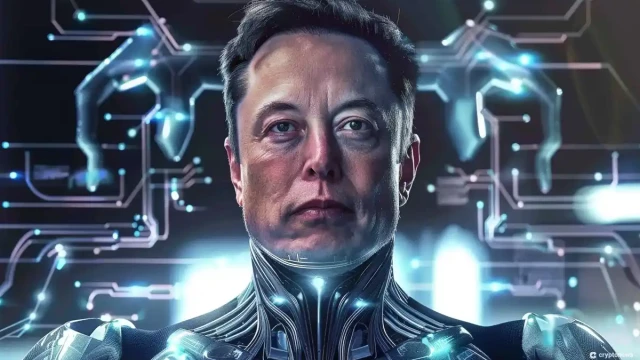
Tesla reports its Q1 2026 earnings today, with market attention focused on the company's updated AI roadmap. As the firm navigates shifting consumer demand, the integration of compute-heavy infrastructure remains a central point of interest for both equity and digital asset markets. The company currently holds an Alpha Score of 36/100, reflecting a mixed outlook as it trades at $386.42, down 1.55% today. Investors are looking for clarity on how capital expenditure will be allocated toward autonomous driving and distributed compute initiatives.
Capital Allocation and Compute Infrastructure
The primary driver for market sentiment surrounding Tesla is the potential for a pivot toward decentralized compute resources. If the earnings call confirms a deeper commitment to AI-driven infrastructure, it creates a direct linkage to the broader crypto market analysis. Companies building out decentralized GPU networks or AI-settled information markets often rely on similar hardware and energy-efficiency metrics as those prioritized by large-cap manufacturers. A shift toward proprietary, high-density data centers could signal a broader industry trend where hardware manufacturers and blockchain infrastructure providers begin to overlap in their supply chain requirements.
This convergence is particularly relevant for projects that aim to solve the latency and verification issues inherent in large-scale AI training. As Tesla refines its roadmap, the market will evaluate whether the company intends to build closed-loop systems or participate in the open-source protocols that are currently gaining traction in the Bitcoin (BTC) profile and Ethereum ecosystems. The decision to favor one over the other will dictate the flow of capital into specialized infrastructure tokens and hardware-focused crypto plays.
Liquidity and Sector Rotation
The current market environment is characterized by a rotation out of traditional consumer discretionary assets and into high-beta technology plays. Tesla's ability to maintain its margin profile while scaling AI operations will serve as a bellwether for the rest of the sector. If the company reports a shortfall in earnings, the resulting liquidity contraction could trigger a sell-off in correlated assets, including those in the Ethereum (ETH) profile. Conversely, a strong guidance update could provide the necessary momentum for a rotation back into growth-oriented crypto assets that rely on high-performance computing.
Key markers for the post-earnings session include:
- The total capital expenditure guidance for the remainder of the fiscal year.
- Specific commentary on the utilization of energy-efficient hardware for AI training.
- Any mention of cross-platform integration for autonomous data processing.
Investors should monitor the TSLA stock page for immediate price action following the release. The next concrete marker will be the post-earnings conference call, where management will likely provide the granular detail needed to confirm whether the AI roadmap includes partnerships with decentralized infrastructure providers. If the company avoids specific commitments to open-source compute, the market may see a cooling of interest in AI-linked crypto tokens that were priced for a more collaborative outcome.