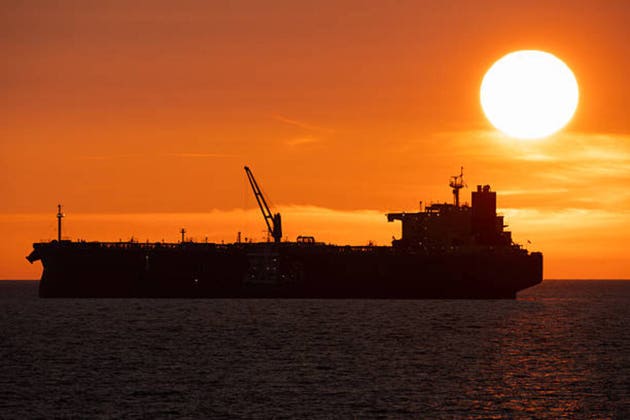
The supertanker Eagle Verona has left the Persian Gulf carrying Iraqi crude to China. It is the first visible movement through the Strait of Hormuz after US-Iran talks raised expectations of a diplomatic resolution. The waterway handles about one-fifth of global oil supply daily.
For traders positioning in crude futures and tanker equities, a single cargo does not confirm a sustained re-opening. It does shift the baseline assumption from 'Hormuz is blocked' to 'Hormuz is negotiable.' That change matters because the risk premium built into Brent and WTI over recent weeks was priced for extended disruption, not a brief pause.
What the Eagle Verona Departure Means for Oil Pricing
The simple read holds that a tanker sailing signals the crisis is over, so oil prices should fall and tanker stocks should normalize. That interpretation is premature. Shipping agents, insurers, and charterers need multiple safe transits before they reprice war-risk premiums back to normal levels. One data point does not unwind a month of geopolitical fear.
A better market read focuses on positioning. Hedge funds and CTAs accumulated net long crude positions expecting a physical shortage from a Hormuz closure. They now face a choice: hold the trade and bet that talks stall, or liquidate before the premium evaporates. A wave of long liquidation could push Brent lower than supply-demand fundamentals justify. If talks collapse and the Eagle Verona is the last tanker to clear the strait, the premium snaps back even harder.
The Asymmetric Risk in Crude and Tanker Equities
The Iranian export channel is not the only variable. OPEC+ discipline and Chinese demand still support crude prices at current levels. So the downside from a re-opened Hormuz is limited. The upside from a renewed blockage remains explosive. That asymmetry argues for maintaining a long crude position while reducing exposure to tanker stocks like Frontline and Euronav until the pattern of traffic becomes clear.
Iraq is especially vulnerable. Its southern terminals on the Persian Gulf handle the vast majority of its crude sales. No alternative pipeline capacity exists to bypass the strait. The resumption of Basrah Light shipments directly affects the premium Asian refiners are willing to pay for Iraqi crude versus competing grades from West Africa or the US.
What Asian Refiners and Tanker Charterers Watch Next
Chinese independent refiners had scrambled for alternative crude grades during the disruption. A steady return of Iraqi flows would narrow the differential between Dubai-linked grades and Brent. For tanker owners, day rates on the Persian Gulf-to-Asia route spiked during the crisis. The Eagle Verona movement is a negative signal for those spot rates, at least in the near term.
The key catalyst to watch is the next US-Iran negotiating round. A string of safe transits over the coming week would confirm that the risk premium has peaked. A single vessel, however, could just as easily be a lucky passage before renewed tensions. Position traders should adjust for this uncertainty, not assume a binary resolution.
For deeper analysis of how geopolitical bottlenecks affect commodity flows, see AlphaScala's full commodities analysis. For a detailed breakdown of crude supply chains, visit the crude oil profile.
The next decision point is not the Eagle Verona itself. It is the second tanker, the third, and the insurance premiums that follow.