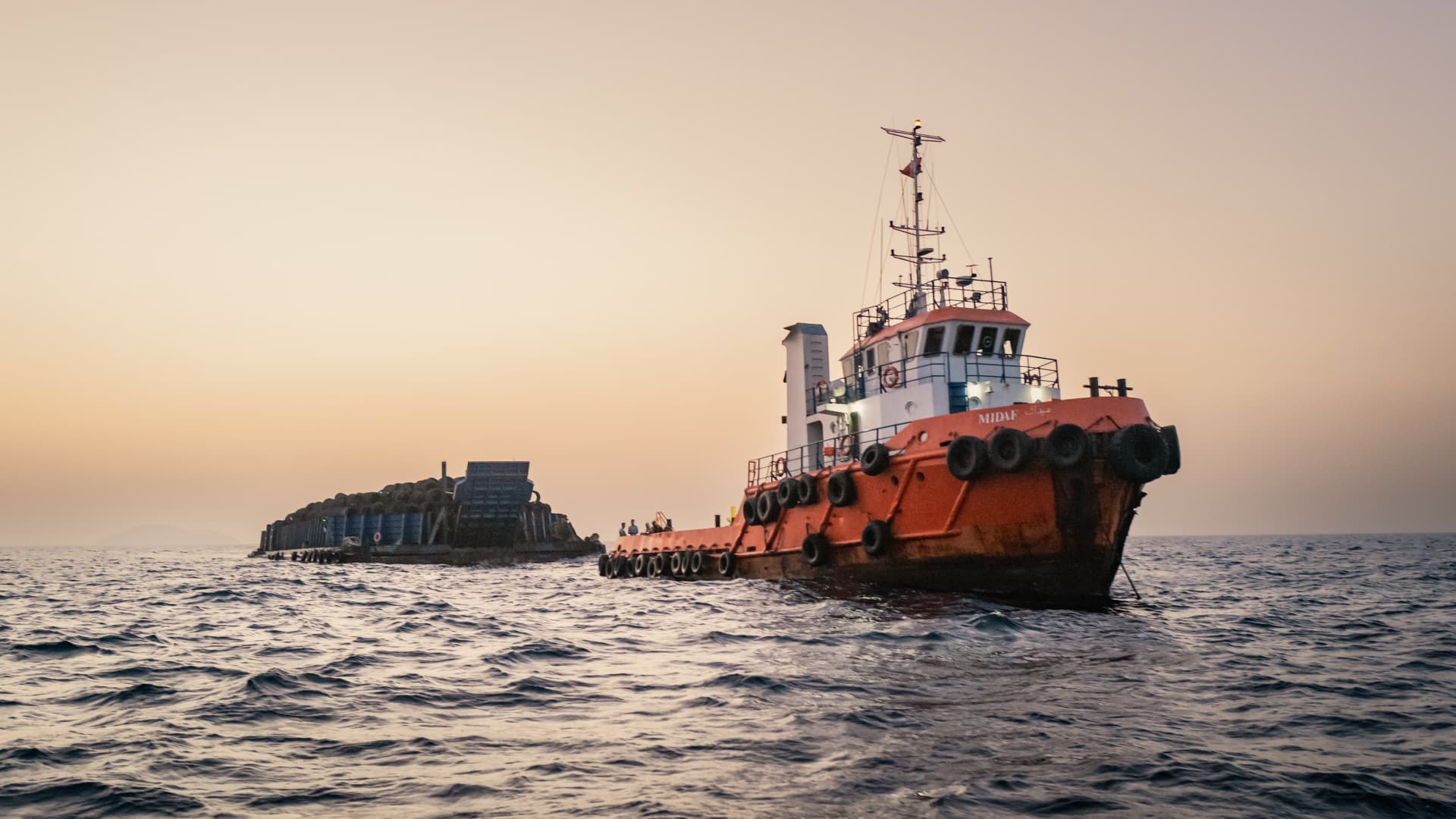
Shipping through the Strait of Hormuz stalled over the weekend after Iran announced it had again closed the world's most important oil choke point, according to maritime intelligence company Windward.
The update comes even as industry trackers showed Iranian tankers continued to sail through the narrow waterway, which typically handles around 20% of the world's oil traffic.
There was a recovery in oil tanker traffic through the strait immediately after the U.S. and Iran signed a 14-point memorandum of understanding (MOU) last week. The latest data shows that has already hit a snag.
Windward found that 12 ships transited the strait on Sunday, down from more than 21 the previous day. Five of eight inbound vessels were "dark" – a ship that disables its Automatic Identification System (AIS) transponder to hide its location, identity and destination.
"The current traffic profile: dark, sanctioned, Iranian-linked, resembling the late-blockade baseline more than a functioning open strait," Windward said Sunday in a social media post.
Trade intelligence firm Kpler said last week that at least 20 tankers transited the strait on Thursday, the highest level of traffic since June 2. That was still far below prewar levels, when more than 100 ships transited daily, including dozens of tankers.
A separate analysis Monday from Lloyd's List found that commercial traffic continued to move through the strait over the weekend, defying Iran's claims that it had closed the waterway again.
Iran on Saturday said it had shut the strait, citing ceasefire violations after Israel continued deadly strikes in southern Lebanon. The U.S. military denied those claims, stating the waterway remained open and that "Iran does not control the Strait of Hormuz."
At least 15 Iran-flagged Suezmaxes and Very Large Crude Carriers (VLCCs) were outbound from the Gulf of Oman with AIS signals active as of Saturday night, according to Lloyd's List.
The U.S. and Iran held talks in a Swiss mountain resort on Sunday to build on the MOU both parties signed on Wednesday. Both parties were said to have made progress on reaching a final deal within 60 days, including an agreement to establish a committee and a mechanism to end hostilities in Lebanon.
A senior Pakistani official and an Iranian official involved in the talks in Bürgenstock told MS NOW the talks went into the early hours and were "constructive but tense."
Under the MOU, both sides agreed to reopen the strait toll-free for at least 60 days and to end all hostilities, including in Lebanon, where fighting has persisted between Israel and the Iran-backed Hezbollah.
Iran's Foreign Minister Abbas Araghchi said the country had secured waivers for oil and petrochemical exports, the lifting of the blockade on its ports, the release of some frozen assets and the launch of a reconstruction and development plan.
President Donald Trump had threatened further attacks on Iran ahead of the talks. "Iran must immediately stop their highly paid PROXIES in Lebanon from causing trouble. If they don't, we'll hit Iran very hard again, just like we did last week, only harder!!!" Trump said in a social media post on Sunday.
Vice President JD Vance, who led the U.S. delegation at the talks, said he was optimistic about the outcome despite Iran's latest threat to shut the strait. He downplayed the impact of violence in Lebanon, saying progress had been made toward ending hostilities there. "These things are always a little bit messy," Vance said.