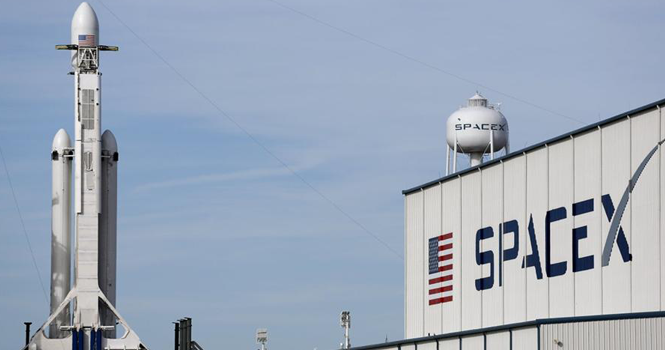
SpaceX plans to sell 555.6 million shares at $135 apiece in what would be a record $75 billion initial public offering, Reuters reported, citing people familiar with the matter. The story is unconfirmed – no S-1 filing has reached the SEC – but the scale alone forces a serious look at how the largest private company in aerospace might price its public debut.
The Pricing Structure Signals a Deliberate Strategy
At $135 per share, SpaceX would command a $75 billion market capitalization. That is an unusual number on two fronts. First, $135 is a round price that does not emerge from a typical book-building process. It suggests the underwriters are setting an anchor for demand rather than letting the order book set the final price dynamically. Second, the 555.6 million share count is high for a tech IPO. A float that large indicates the company wants broad institutional distribution, not a scarce offering that spikes on day one.
The simple read is that this is a liquidity event for employees and early backers. SpaceX has raised billions in private rounds at increasingly rich valuations. A public listing at $75 billion would reward those investors and open the door for retail participation in the company's launch and Starlink businesses.
The better market read is more guarded. A $75 billion IPO would be roughly 15% of SpaceX's implied value at the midpoint. That level of dilution could pressure the stock if public market buyers are less enthusiastic than the private syndicate. The offering size also creates execution risk: the underwriters need to place 555.6 million shares into an institutional base that may already hold SpaceX position paper through secondary market vehicles.
Sector and Valuation Read-Through
At $75 billion, SpaceX would trade at roughly 25x trailing revenue based on public estimates. That multiple exceeds aerospace incumbents like Boeing ($110 billion market cap) and Lockheed Martin ($130 billion), despite SpaceX generating less revenue than either. The premium reflects the company's launch dominance – Falcon 9 and Falcon Heavy carry the majority of global commercial payloads – and the revenue potential of Starlink, which is still scaling its subscriber base.
Competing public space stocks have not fared well. Virgin Galactic and Rocket Lab trade at fractions of their earlier highs. A SpaceX listing could reset benchmarks for the entire sector. If successful, it would validate the premium that private investors have assigned to space assets. A weak debut, however, could stall capital formation for other space companies for quarters.
- Valuation risk: The $75 billion valuation leaves no room for execution missteps. Any delay in Starlink's subscriber growth or a major launch failure would weigh heavily on the multiple.
- Liquidity risk: With 555.6 million shares coming to market, early investors may look to sell into the offering. Lock-up terms and the mix of insider versus new shares will be critical to watch.
- Sector read-through: Competing launch providers and satellite operators may see their own valuations challenged. A strong debut could lift the entire space group, while a poor aftermarket could isolate SpaceX's premium.
The Decision Point: Treat This as a Catalyst Alert, Not a Sure Thing
The reported terms may change or the offering may not happen at all. CEO Elon Musk has previously expressed reluctance to take SpaceX public, citing the pressure of quarterly earnings. Until a registration statement appears, the $75 billion number is a headline, not a fact.
Three concrete milestones will confirm or weaken the setup:
- The official S-1 filing – This will reveal financials, use of proceeds, and the underwriter syndicate. The absence of a filing is itself a risk.
- Public comments from leadership – Any confirmation or denial from Musk will move the stock equivalent and related names.
- The IPO calendar – A deal this size would absorb massive demand, potentially crowding out smaller offerings and affecting market liquidity.
Investors should position for the sector impact but avoid treating the report as a sure thing. The real test comes when the roadshow starts and institutional buyers put real money behind the $135 price tag.
For a broader look at how large IPOs affect market dynamics, see the stock market analysis and the latest on best stock brokers.