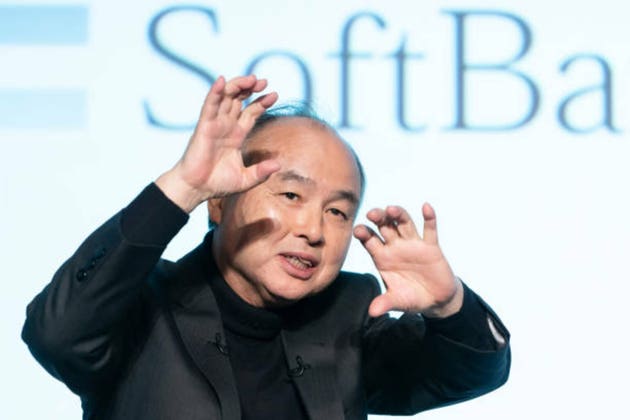
The 11% Drop on Tokyo’s Board
SoftBank Group (SFTBY) retreated about 11% on Thursday, leading losses on the Tokyo exchange. The selloff was driven by renewed concern that the conglomerate’s aggressive pivot into artificial intelligence investments has created a concentrated risk profile that leaves it exposed to a single-sector downturn. The move erased roughly $12 billion in market value from the Japanese technology holding company, which has increasingly become a leveraged proxy for AI startup valuations.
Why SoftBank’s AI Exposure Matters Now
The simple read is that SoftBank lost value because AI hype cooled. The better market read involves the structure of SoftBank’s balance sheet. The company funds its Vision Fund and AI bets through debt secured against its huge Alibaba (BABA) stake and other listed holdings. When those collateral assets fall or when the perceived risk of AI verticals rises, the leverage amplifies the equity move. Thursday’s drop reflects that mechanism: a reassessment of AI startup survival rates and capital costs, not just a broad tech selloff.
Investors also appear to be pricing in tighter liquidity conditions for SoftBank’s Vision Fund portfolio companies. Many of these firms have burned cash without reaching profitability, and rising interest rates make follow-on financing more expensive. The 11% decline signals that the market is now demanding a higher equity risk premium for this exposure, regardless of any single catalyst or earnings print.
Affected Asset: SFTBY ADR and Vision Fund Holdings
The primary affected instrument is SoftBank Group’s over-the-counter ADR (SFTBY), which tracks the Tokyo-listed shares. U.S. investors holding this ADR saw a proportional 11% hit. More broadly, the decline pressures the valuation of SoftBank’s direct investments. The Vision Fund holds stakes in companies like Arm Holdings, ByteDance (implied), and dozens of private AI startups. A lower SoftBank share price reduces the carrying value of those assets if the parent sells, and it can trigger margin calls on the debt used to fund them.
For traders, the key linkage is the Arm Holdings (ARM) overhang. SoftBank owns about 90% of Arm, and any drop in Arm’s stock – or any signal of slower AI chip demand – directly hits SoftBank’s net asset value. Thursday’s move suggests the market is now watching this feedback loop more closely.
Decision Point: The Next Catalyst for SoftBank
The 11% decline creates a clear decision point. The next concrete catalyst is SoftBank’s upcoming quarterly earnings, expected in early August, where Vision Fund performance and any new impairments will be disclosed. A second trigger is any announcement of a secondary sale of Alibaba shares; SoftBank has reduced its Alibaba stake over the past year, and a faster-than-expected exit would signal that the company needs cash to backstop its AI bets.
If SoftBank’s leverage ratio rises above 25% (it was around 20% last quarter), the risk of a rating downgrade increases. That would push borrowing costs higher and compress the equity further. The other side: if Vizion Fund portfolio companies show improving unit economics, the discount could narrow. For now, the market is pricing in the worst-case leverage scenario, and only hard data from portfolio exits or debt reduction will shift the narrative.
How This Read-Through Affects Broader Tech
SoftBank’s 11% drop is a warning signal for the entire AI startup ecosystem. The conglomerate is one of the largest institutional backers of unprofitable AI firms. A sustained decline in SoftBank’s stock would likely reduce its appetite for new venture investments, which could slow capital flows into the sector. Traders tracking the ARK Innovation ETF (ARKK) or global tech valuations should watch SoftBank’s ADR as a leading indicator for speculative tech stress. The next move will come from either a macro rate shift or a specific Vision Fund write-down. Either way, the mechanism is clear: leverage plus concentration equals higher downside volatility.