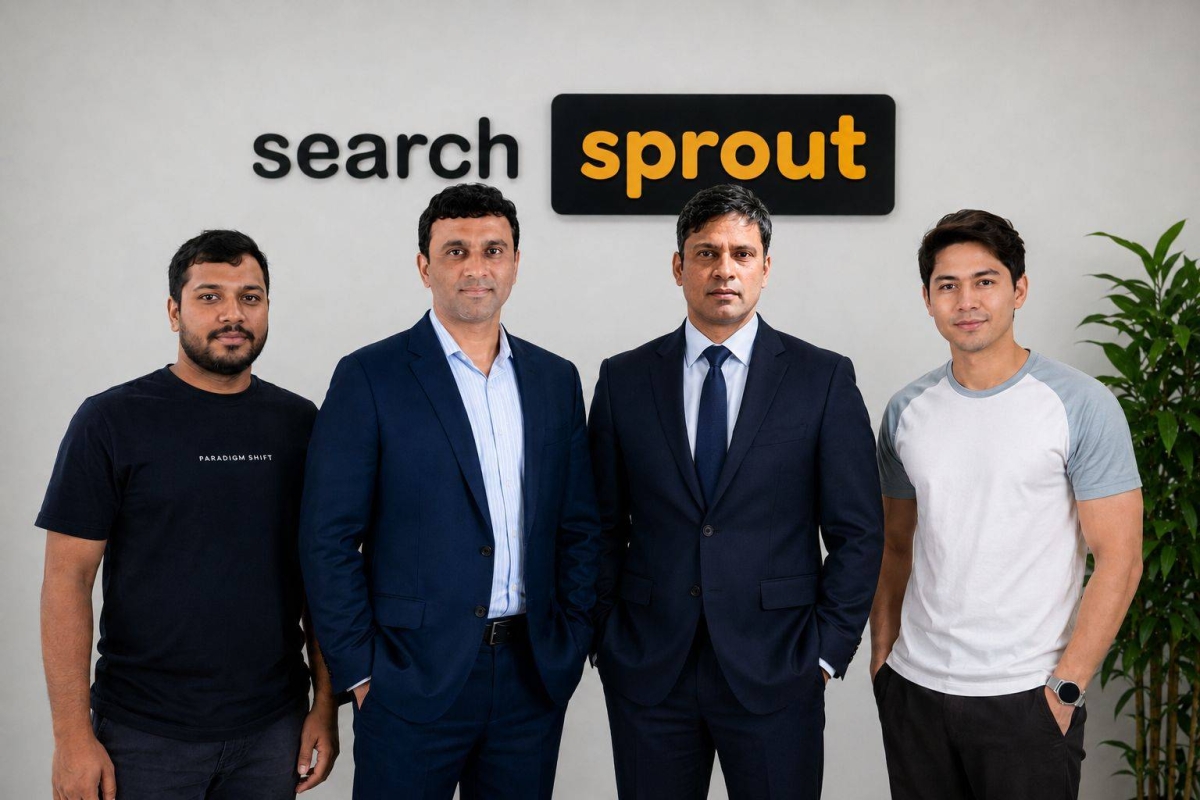
Search Sprout, a Philippine-based digital marketing agency, has expanded into the Middle East, launching operations in Kuwait and the wider Gulf region. The firm is bringing fractional CMO services and strategy-led marketing consultancy to a market that has historically leaned on project-based execution. The simple read is that an agency plants a flag in a new region. The more useful market read is that Search Sprout is testing whether the consulting-led model can scale in an environment where family-owned conglomerates and state-linked enterprises often default to traditional agency relationships.
The expansion follows the company’s earlier US entry, which was covered by The Manila Times. That move provided a template: enter a competitive market, offer a blend of strategic advisory and execution, and target organisations that need to build measurable customer acquisition systems rather than just buy media. The Middle East push applies the same logic to a region under pressure to diversify revenue away from hydrocarbons and build digital-first growth engines.
The Fractional CMO Pitch: Strategy and Execution Bundled
Search Sprout’s core offering in the Middle East is not another tactical performance marketing shop. The firm is selling a partnership that embeds a senior marketing strategist inside the client’s decision-making cycle. The service stack includes:
- Strategic advisory and marketing roadmap development
- Hands-on execution of lead generation and conversion programmes
- Systems-building for repeatable, sustainable growth outcomes
- Senior oversight comparable to a full-time CMO yet on a flexible cost basis
The approach matters because many Gulf businesses are mid-sized or larger entities with substantial budget yet fragmented marketing leadership. A family office or a fast-growing logistics firm might need to set up a demand-generation engine yet lack the in-house talent to design and run it. A full-time CMO hire carries fixed costs and a long ramp-up. The fractional CMO arrangement reduces commitment risk while providing executive-level accountability.
The quote draws a line between Search Sprout’s positioning and the large network agencies that often dominate the region with media buying and creative production. Surface-level visibility – vanity metrics, impressions, award campaigns – is the thing the firm explicitly says it wants to replace with sustainable growth systems. For a market watcher, the value proposition implies a willingness to cannibalise legacy agency spend.
Key insight: The fractional CMO model is migrating from Western markets to regions where the fixed cost of a full-time CMO is a barrier even for well-funded firms. A successful Kuwait build-out would force competitors to offer comparable bundled leadership services.
Why Kuwait? The Gulf’s Digital Diversification Play
Kuwait is the first node. The country’s economy is heavily dependent on oil, yet it has a young, digitally literate population and a government pushing economic diversification under Vision 2035. Local businesses, from banks to e-commerce platforms, face rising customer acquisition costs and increasing competition. A dedicated platform at https://searchsprout.co/kw/ signals that the firm is tailoring its presence rather than routing everything through a single global site.
The regional bet is supported by Search Sprout’s global leadership: Joel Madtha (CEO), Ben Francisco Espina (chief experience officer), and Ganesh Jalla (chief marketing officer). The structure suggests that the Middle East operation will not be a standalone silo. The global team provides cross-market learning, particularly from the US expansion, on what it takes to crack a market where the agency brand is unknown.
For those tracking the growth of marketing services, the Kuwait entry provides an early signal. A successful build-out in the Gulf would demonstrate that a Philippine-headquartered firm can compete with Western network agencies on the basis of a consulting-led, performance-driven model rather than a cost arbitrage play.
Navin Lewis Carries the On-the-Ground Execution Risk
Navin Lewis, co-founder and COO of Search Sprout Middle East, carries the on-the-ground execution risk. The firm has not disclosed a client roster or revenue targets, leaving observers with only the leadership pedigree and the service model as indicators. Lewis’s background in working with “enterprise firms and growth-focused organisations” is the stated foundation. The real test is whether the fractional CMO offer resonates with decision-makers who may be accustomed to hiring a full-time marketing director from a local talent pool.
The risk is that the model gets stuck in a middle ground: too strategic for companies that just want performance marketing invoices, and too expensive for those that see consultancy as a cost they avoid. Search Sprout’s answer appears to be the combination of advisory and execution under one roof. The consulting phase informs the execution phase, and the client pays only for what scales. This bundling is operationally demanding. It requires the local team to be equally fluent in boardroom strategy sessions and in campaign analytics.
Sector Read-Through: The Agency Value Chain Shift
For investors and analysts covering the digital marketing services sector, the Search Sprout expansion adds a data point on how agencies are trying to move up the value chain. The larger holding groups – WPP, Publicis, Omnicom – have their own consultancy divisions. The rise of independent, agile firms with a fractional CMO pitch suggests that mid-market demand is fragmenting. The Gulf region, with its mix of state-backed enterprises and entrepreneurial ventures, could become a testing ground for this fragmentation.
There is no public stock to watch directly. The pattern is relevant for anyone tracking the competitive dynamics of the marketing services space. If a fractional-CMO-led agency gains traction in the Gulf, it could attract venture interest and increase pressure on public incumbents to justify their premium pricing. The more commoditised an agency’s output, the harder it becomes to defend margins. Search Sprout’s play is a bet that a consulting-led wrapper insulates it from that race to the bottom. For broader stock market analysis, the shift from commodity services to consultancy-driven models is a theme worth monitoring across sectors. The model also opens the door for Search Sprout to eventually offer higher-margin strategic retainers, moving beyond project fees.
Confirmation Points: Client Wins and Regional Traction
The narrative is clear. Confirmation will come from tangible proof points. Observers will watch for:
- Announcement of a first Gulf-based client with a named case study
- Hiring of additional senior consultants on the ground in Kuwait
- Expansion beyond Kuwait to the UAE or Saudi Arabia within the next 12 to 18 months
If Search Sprout secures a visible Gulf client – a retail chain, a fintech, a government-related enterprise – and publishes a performance-driven case study, it would validate the thesis that the fractional CMO model can win against entrenched agencies. A long silence would suggest the model is facing friction.
The expansion into the Middle East resets the conversation around Search Sprout from a regional Philippine agency to an international operator with a specific value proposition. The next move belongs to the market: whether Gulf businesses embrace fractional strategic leadership as a growth lever or continue to write cheques for surface-level visibility.