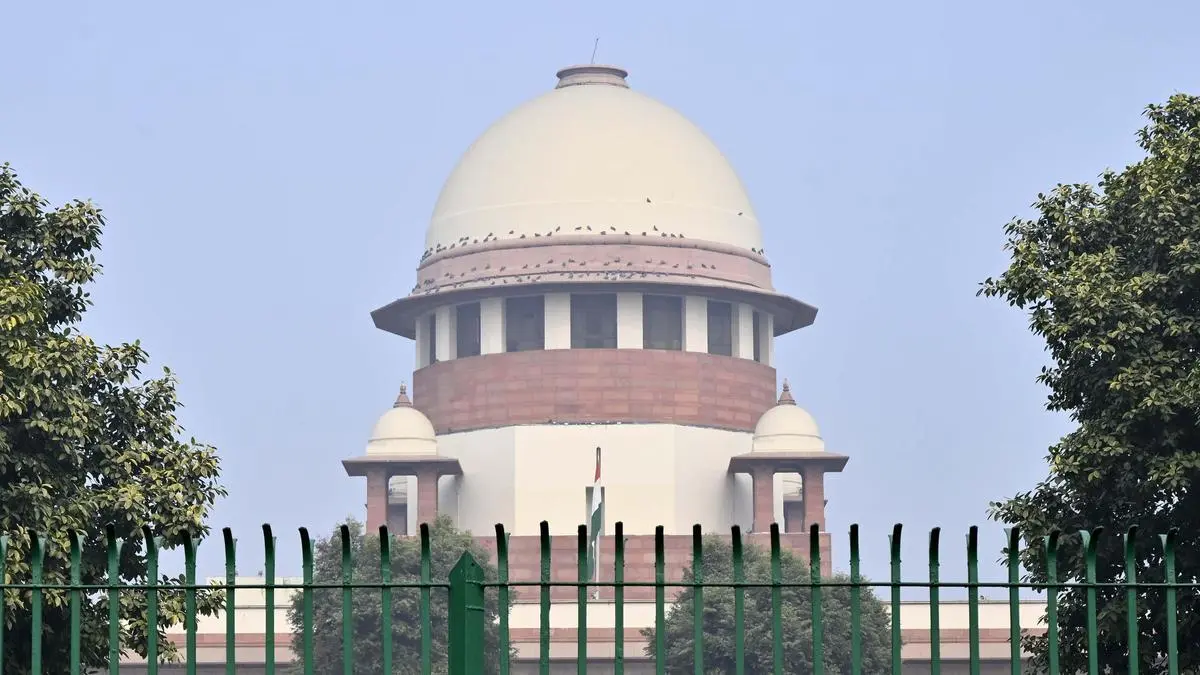
The Supreme Court called India's old rural employment law a "salutary scheme" on Friday, even as a new law has slashed job creation by half. Chief Justice Surya Kant, leading a three-judge bench, said the Mahatma Gandhi National Rural Employment Guarantee Act was "neither freebie nor exploitation" and had done "a wonderful job" across rural India.
The accolade came during a hearing on delayed wage payments under MGNREGA. But the court's praise lands at a moment when the replacement law – the Viksit Bharat Guarantee for Rozgar and Ajeevika Mission (Gramin), or VB-G RAM G – has shifted the framework from demand-driven rights to central control. Employment generation has dropped 50% compared with MGNREGA, even though guaranteed work days rose from 100 to 125 per household per year.
States now bear a much heavier funding burden. The old 90:10 ratio between central and state governments has flipped to 60:40. That means states must contribute nearly half the funds, up from 10%. Advocate Prashant Bhushan, arguing for activist Aruna Roy, told the bench that "states have no money" and the number of employments has halved.
The new law's centralized model removes the earlier right-to-work character. Bhushan urged the court to examine whether minimum wages below the state-determined threshold could amount to forced labour, linking the right to dignified life under Article 21 of the Constitution. Justice Joymalya Bagchi pushed back, noting that the Constitution does not make the right to work a fundamental right – it sits in Part IV as a directive principle. He asked whether the court could issue a mandamus to enforce either MGNREGA or VB-G RAM G when the state contracts its social welfare activities.
Chief Justice Kant observed that wages would be tied to local conditions. Justice V. Mohana said the issues raised by Bhushan must be examined afresh under the new law, not under MGNREGA. The court disposed of the current petition and asked Bhushan to file a new one with fresh statistics.
VB-G RAM G: A Centralized Model
The shift from MGNREGA to VB-G RAM G is not just a name change. MGNREGA was a rights-based law – any rural household could demand work, and the state was obliged to provide it within 15 days or pay unemployment allowance. The new law replaces that guarantee with a centrally controlled allocation. Funds are released from Delhi based on annual plans, not on local demand. That creates a lag between need and supply.
The 50% drop in employment generation is the most visible effect. If rural households cannot find guaranteed work, their income falls. That income had been a floor for consumption in villages – money spent on staples, soap, cooking oil, and mobile recharges. Companies that depend on rural demand face a direct headwind.
Rural Consumption Stocks at Risk
Hindustan Unilever (HUL) gets roughly 40% of its revenue from rural India. Dabur (DABUR) draws about 45% from villages. ITC (ITC), with its cigarette-to-FMCG portfolio, also has significant rural exposure through its consumer goods division. A sustained drop in rural incomes would pressure volume growth for all three.
Analysts have already flagged slowing rural demand in recent quarters. The new law's funding squeeze could accelerate that trend. States like Bihar, Uttar Pradesh and Madhya Pradesh – where MGNREGA was most used – now have to find more money from their own budgets. Many are already fiscally stretched. The central government's share has fallen, but the total allocation for the scheme has not risen to compensate for inflation or the extra 25 days of work.
The court has not ruled on the constitutional question yet. Justice Bagchi's skepticism about elevating the right to work to a fundamental right suggests the bench is cautious. But the practical effect – fewer rural jobs, lower wages – is already being felt. The next petition will need to include fresh data on employment and funding. Until then, the market will have to price in the risk of a weaker rural economy.
A weaker rural consumer would show up in quarterly results for HUL, Dabur and ITC. Volume growth in shampoo, toothpaste and packaged foods would slow. Margins might hold if input costs fall, but top-line pressure would be real. Investors tracking these stocks should watch the next round of state budget allocations for the new law and the employment numbers published by the Ministry of Rural Development.
The Supreme Court's praise for MGNREGA was a reminder of what the old scheme achieved. The new one, at least so far, is not matching up.
For broader context on how policy shifts affect equity markets, see stock market analysis.