The Saudi bypass reduces tail risk for crude prices. Other Gulf producers remain exposed to Hormuz. Track utilization rates and OPEC+ decisions next.
An advisor to Saudi Arabia's Energy Minister stated that the East-West pipeline played a key role in preventing a severe crisis in the global oil market. The statement highlights the pipeline's function as a physical bypass of the Strait of Hormuz, through which roughly 20 million barrels per day of crude and products flow. For traders, this confirms that Saudi infrastructure partially hedges the tail risk of a Hormuz closure. The protection has clear limits.
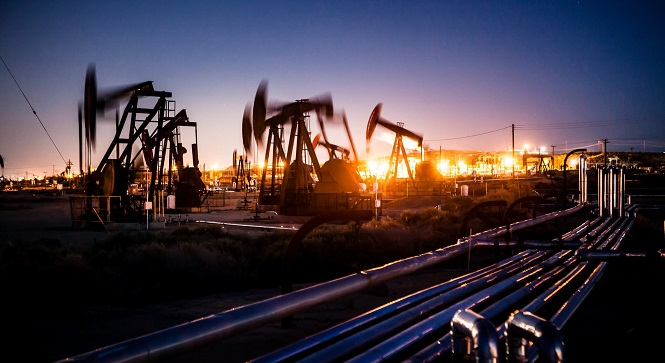
The East-West pipeline, also known as the Petroline, connects Saudi Arabia's eastern oil fields to the Red Sea port of Yanbu. Its nameplate capacity of about 5 million barrels per day allows Riyadh to redirect crude exports away from Hormuz without shutting in production. The naive view is that this eliminates Hormuz risk entirely. The better market read is that the pipeline covers only Saudi crude. It does nothing for Iraqi, Kuwaiti, UAE, or Iranian barrels that still depend on the strait. Moreover, the 5 million bpd capacity is not fully spare. Some of it is routinely used for domestic or Red Sea exports, so effective surge capacity is lower.
For the global oil balance, the Saudi bypass reduces the probability of an extreme price spike. It does not remove that probability. The mechanism works by lowering the risk premium embedded in front-month futures. When traders see that the largest OPEC producer can sustain exports even with a Hormuz disruption, the market's worst-case scenario shrinks. Structural underinvestment in spare capacity outside Saudi Arabia means that any simultaneous disruption to other Gulf producers would still create a deficit. The advisor's comment is a reminder to watch the geographic concentration of supply risk, not just headline capacity numbers. Demand-side factors such as a slower Chinese recovery can offset some of this risk. Current OECD inventory levels remain below the five-year average, giving the market a tighter buffer.
The next decision point for oil traders is whether the East-West pipeline's existence alters the behavior of other actors. If tensions with Iran escalate further, the Saudi bypass becomes a more vital asset. OPEC+ compliance and any changes to production targets at the next meeting will matter more for the medium-term price path. The pipeline does not solve the demand uncertainty from global monetary tightening. It does not prevent a potential demand shock from a hard landing in the US or Europe. The advisor's statement is a useful check on panic selling or buying. It should not be read as a guarantee that oil prices will stay range-bound. The concrete marker to track is the utilization rate of the East-West pipeline, reported monthly via Saudi Aramco's operational data. An increase in flows above the seasonal norm would confirm that the bypass is being used as a shock absorber.
For a deeper look at the crude oil supply chain, see the crude oil profile. The intersection of pipeline infrastructure and geopolitical risk is also covered in our analysis of Iran oil sanctions waivers.
The Saudi East-West pipeline is a structural advantage for the kingdom. The global market's real test remains the balance between OPEC+ spare capacity and demand degradation.
Prepared with AlphaScala research tooling and grounded in primary market data: live prices, fundamentals, SEC filings, hedge-fund holdings, and insider activity. Each story is checked against AlphaScala publishing rules before release. Educational coverage, not personalized advice.