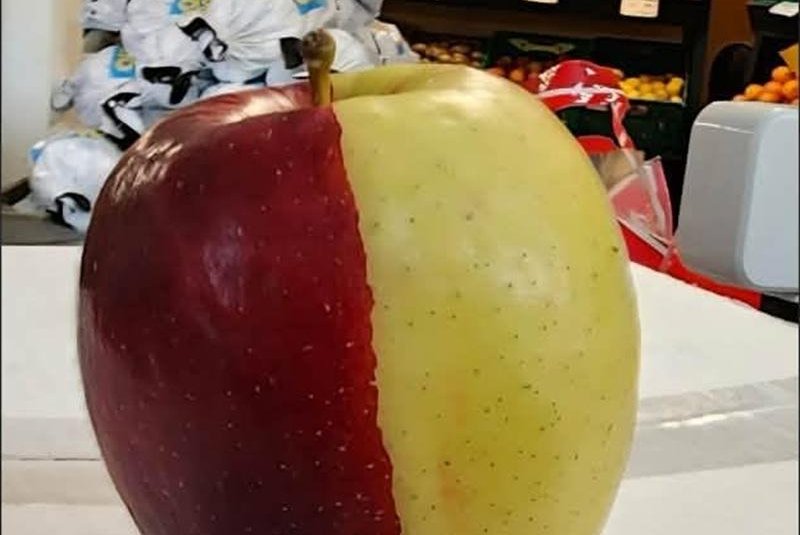
A rare chimera apple split almost perfectly down the middle – half red, half yellow – turned up in a mid-May delivery of Red Braeburn apples at Sunshine Corner Market in Christchurch's Mairehau suburb. The store's owner, Heather, told the New Zealand Herald that curious visitors have been flocking in to see the fruit. Some customers brought skeptical spouses back to prove the apple is real. Others asked to touch it for luck before entering contests.
The one-in-a-million genetics
Chimera apples result from a mutation where the fruit develops from cells carrying two different genetic backgrounds. The split coloring occurs in less than one in a million fruits. That rarity creates a genuine organic buzz – no marketing spend, no social media push. The store got free word-of-mouth advertising across the region.
For a small produce shop, foot traffic is the key lever. A single novelty item that draws repeat visits (some customers came back with family) converts directly to higher basket sales on adjacent items. The mechanism is straightforward: attention on one SKU lifts the whole category.
The shelf-life decision
Heather extended the apple's life by refrigerating it. She now faces a trade-off. She can try to preserve it permanently as a display piece, or cut it open to see the internal coloration. The decision matters for the store's ongoing draw. A preserved apple keeps the curiosity alive longer. A cut apple answers a question customers ask – what does the inside look like? – and ends the visual novelty.
From a retail management perspective, the right call is preservation. Once cut, the apple loses its photogenic split. Photos are the primary sharing mechanism. Keeping it whole extends the free marketing window.
What this means for small-store operators
Heather's store didn't plan this. It arrived in a routine shipment. The lesson is not to ignore oddities. What looks like a defect can become a draw.
The next concrete marker
The apple's fate will determine whether the store gets a second wave of visits. If Heather preserves it, the curiosity can run for weeks. If she cuts it, the story ends with one viral photo. Either way, the store has already captured what most marketing budgets can't buy: genuine community excitement. The next decision point is whether to monetize it with a contest or donation jar. Customers already touched it for luck. A small wager or charity contribution tied to the apple's longevity could extend the engagement.
For a single produce store, a chimera apple is a one-off. The playbook – identify the rarity, display it, let customers share it – works for any small business that receives unusual inventory.