Stocks● Neutral
Quantum Computing's Fragile Qubits Draw Billions in Funding
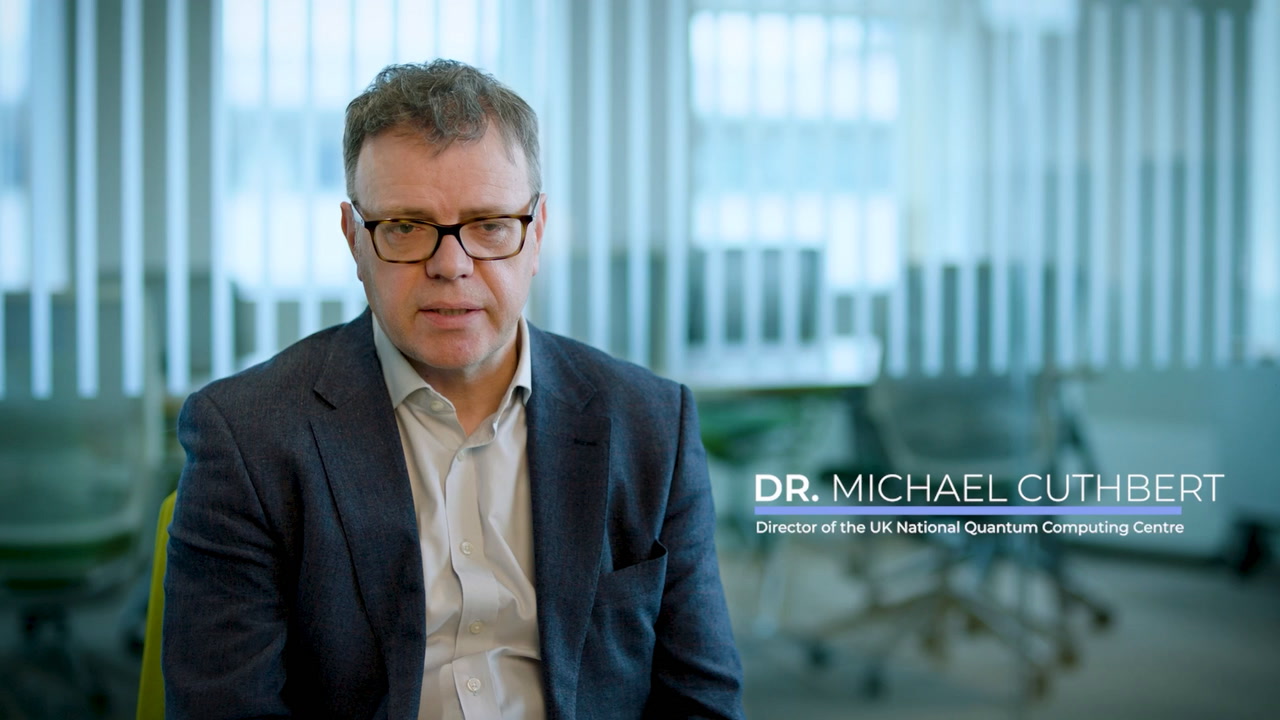
Delta Gold Technologies' video overview surfaces the quantum computing investment theme, mapping government and corporate billions into a technology still years from practical use. The infrastructure buildout is underway.
Continue with
Delta Gold Technologies PLC (OTCQB:DGQTF, AQUIS:DGQ) released an investor overview video on quantum computing through its The Innovation Report series. The video itself is not a price catalyst. It serves as a signal that the conversation around quantum computing is migrating from academic journals to capital allocation memos, and that migration is the real story for traders mapping long-duration technology themes.
The simple read is that quantum computers remain years away from commercial viability, so there is no trade to put on. The better market read is that the infrastructure, talent pipelines, and partnership networks being assembled today will determine which entities capture the economic value when the technology matures. This is a positioning story, not a revenue story. Positioning stories reward early pattern recognition and punish those who wait for earnings to confirm the thesis.
The Qubit Advantage and the Error Problem
Classical computers process information in bits that are either 0 or 1. Quantum computers use qubits, which can exist in a superposition of both states simultaneously. When qubits become entangled, the system can explore vast numbers of possibilities in parallel. A problem that would take a classical supercomputer thousands of years to solve could, in theory, be cracked by a sufficiently powerful quantum machine in minutes.
Why Superposition and Entanglement Change the Game
The computational leap comes from the way quantum algorithms exploit these properties. Instead of checking each possible answer sequentially, a quantum processor can evaluate many answers at once. This is not merely a speed improvement; it changes the class of problems that become solvable. Optimization, molecular simulation, and factoring large numbers all sit in that category. The source material highlights that this capability is what makes quantum computing strategically important for industries such as finance, healthcare, and cybersecurity.
The Fragility That Keeps Quantum in the Lab
Current quantum systems are noisy intermediate-scale quantum (NISQ) devices. Qubits are extraordinarily fragile. They require temperatures near absolute zero and shielding from electromagnetic interference. Even then, they decohere quickly, introducing errors that corrupt calculations. Error correction exists in theory but demands thousands of physical qubits to produce a single stable logical qubit. No organization has built a machine that can do that at scale.
- Decoherence: qubits lose their quantum state in microseconds to milliseconds.
- Error rates: gate fidelities above 99.9% are still rare outside laboratory conditions.
- Scaling: adding more qubits increases noise faster than it increases computational power on most architectures.
Who Is Funding the Quantum Race
Investment is accelerating despite the technical hurdles. Governments, universities, and major corporations are committing billions to quantum research, recognizing its long-term implications. The source material frames this funding race as a primary reason investors should pay attention now.
Government and Institutional Capital
National quantum strategies have been announced by the United States, China, the European Union, and several other countries. These programs fund basic research, build testbeds, and subsidize quantum startups. The geopolitical dimension is explicit: quantum computing is treated as a dual-use technology with military and economic applications. No major power wants to be second in a race that could redefine computational supremacy.
Corporate Balance Sheets Enter the Game
Large technology companies are building their own quantum hardware and offering cloud-accessible quantum processors. While the source does not name specific firms, the broader landscape includes cloud providers that let developers experiment with quantum algorithms without owning hardware. This lowers the barrier to entry and creates an ecosystem of users who will demand more capable machines. The capital flowing into quantum computing from corporate balance sheets signals that the technology is being treated as a strategic necessity, not a science project.
Industries Facing the Biggest Disruption
The source points to finance, healthcare, and cybersecurity as the sectors with the most at stake. Each has a different timeline and a different risk profile.
Cybersecurity and Encryption
The most immediate threat is to public-key cryptography. Many encryption schemes used today rely on the difficulty of factoring large numbers, a problem that a sufficiently powerful quantum computer could solve efficiently. The timeline for this threat is uncertain. The consequence is not: any data encrypted today could be stored and decrypted later once quantum capability arrives. That creates a harvest-now, decrypt-later risk that is already driving investment in post-quantum cryptography.
Drug Discovery and Materials Science
Simulating molecular interactions is a natural fit for quantum computers because molecules themselves are quantum systems. Classical computers approximate these simulations with significant error. Quantum machines could model chemical reactions exactly, potentially cutting years off drug development timelines and enabling the design of new materials with specific properties.