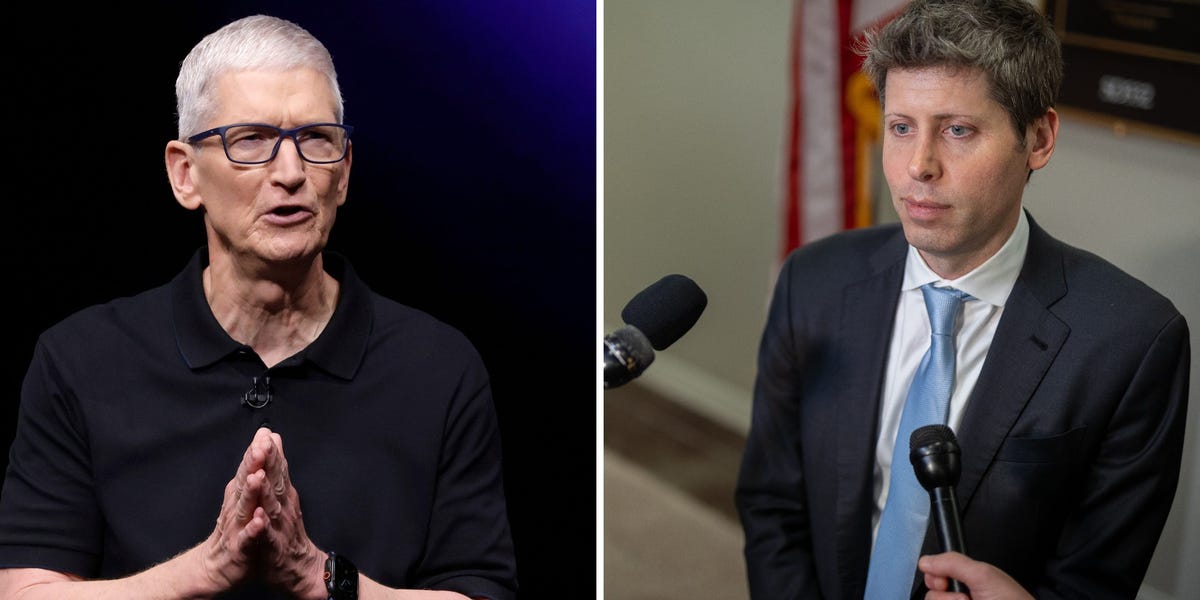
OpenAI is not just defending itself in court. It is trying to win the public argument.
On Monday, the company published a blog post titled "Apple is getting this wrong." The post accused the iPhone maker of presenting a misleading account of the events behind a trade-secret lawsuit filed in July. OpenAI released internal messages it said provided context about the dispute and highlighted what it described as errors in Apple's legal correspondence.
"Apple is one of the greatest companies of all time, and built a reputation for obsessing over the smallest details," the post said. "This careless, aggressive and oddly personal lawsuit sadly doesn't live up to that reputation."
The lawsuit, filed in July, alleges that Chang Liu, a veteran Apple engineer, improperly retained and accessed confidential company information after leaving for OpenAI in January. Apple is seeking expedited discovery and a preliminary injunction, according to court filings from Monday. That suggests the company believes other former employees may have retained or accessed confidential information after joining the AI lab.
OpenAI – which is developing its own hardware products – previously denied wrongdoing. It said it is not interested in Apple's secrets.
Monday's post goes further. It said Apple employees reached out to Liu after he left and acknowledged that Apple is "failing to properly manage system access when people leave."
Neil Cybart, founder of the independent analysis firm Above Avalon, dismissed OpenAI's response. He described the post as "nonsensical" and accused OpenAI of using the "hey, look over there" strategy to draw attention away from Apple's central allegations.
"OpenAI must be really nervous about Apple's trade secret theft lawsuit because this silly attempt at PR spin is nonsensical," Cybart wrote on X.
Todd Dailey, a former Apple enterprise marketing manager who spent 22 years at the company, said his own departure made OpenAI's statements about Apple's offboarding problems seem plausible. On X, he wrote that he still had two unreleased Apple prototypes.
"Old Apple wouldn't have let an ex-employee hold a prototype for more than 24 hours and would have sent someone to my door to get it," Dailey wrote.
He said the experience reflected how stretched Apple's employees had become and made it easier to understand how the company's lawyers could have made mistakes in their correspondence with OpenAI.
Harpal Singh, founder of the generative-engine-optimization platform Blimpp, told Business Insider that OpenAI's post was written to directly contradict Apple's account. That tactic, he said, could affect how journalists, search engines, and AI tools describe the lawsuit.
"OpenAI is not just defending itself in court," Singh said. "It wants to present the narrative that journalists, search engines, and other AI systems will mirror."
Elon Musk, who lost a lawsuit against OpenAI and its leaders earlier this year, reposted screenshots of Apple's latest court filings on Tuesday.