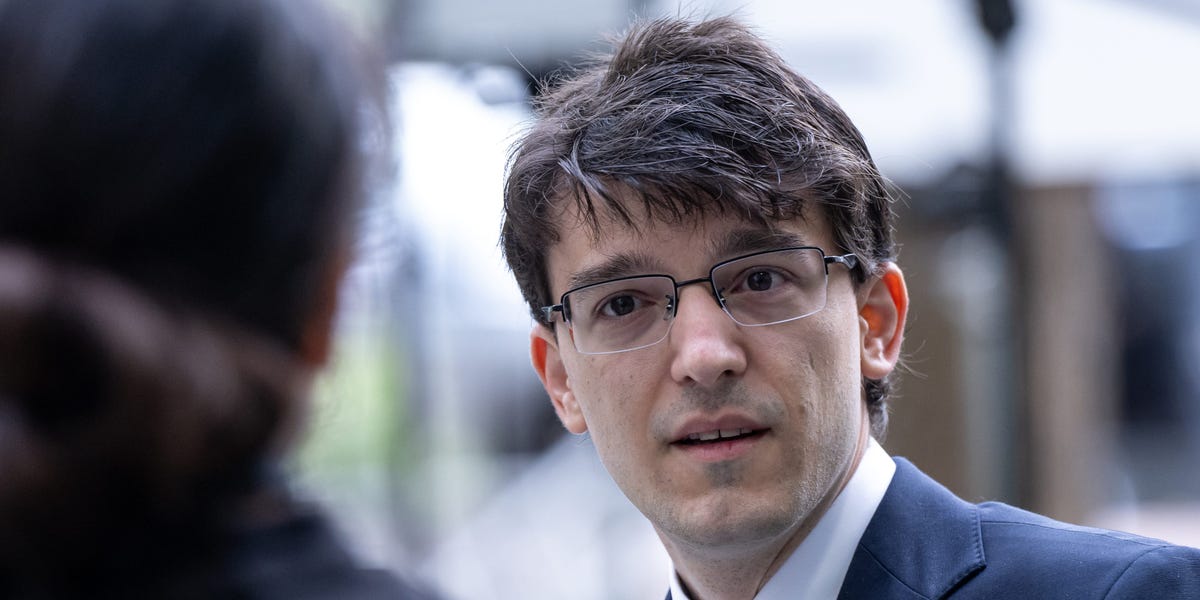
OpenAI’s chief futurist testified Wednesday in the Musk v. Altman trial that Elon Musk called him a “jackass” during a heated clash over AI safety. The exchange, recounted under oath, injects personal friction into a case that already carries high stakes for the artificial intelligence industry.
The testimony is part of a broader legal battle that could determine whether OpenAI must restructure or face damages. Musk, an early backer who later departed, claims the company’s pivot to a capped-profit model betrayed its original charter. OpenAI argues the shift was necessary to fund the immense computing costs of developing advanced AI. The name-calling incident, while seemingly minor, could influence how the jury assesses Musk’s credibility and the broader narrative of a toxic relationship between the billionaire and the organization he helped launch.
The Testimony and Credibility Risk
The chief futurist, whose role involves long-term AI risk assessment, described a tense meeting where Musk’s frustration boiled over. The argument centered on AI safety protocols, a topic that has divided the tech community. Musk has long warned of existential risks from advanced AI, while OpenAI has pursued a path of gradual deployment and commercialization.
The simple read is that Musk’s combative style is on display. The better market read is that this testimony may weaken Musk’s legal standing if the jury perceives him as erratic or if the exchange undermines his claim that OpenAI recklessly abandoned safety for profit. The jury’s perception of Musk’s temperament could influence how they weigh his broader allegations. If the exchange paints him as a disgruntled former insider rather than a principled whistleblower, his case may lose momentum. The trial’s outcome could set a precedent for how courts view the fiduciary duties of AI startups with hybrid structures.
Governance and Private-Market Valuation
OpenAI’s private valuation, a benchmark for the AI sector, hinges on its perceived stability and mission alignment. A verdict that forces structural changes or damages the company’s reputation could complicate future funding rounds. Investors who participated in recent tender offers are watching the trial for signs of legal risk that might delay an eventual IPO or reduce the premium assigned to the company’s shares.
The “jackass” remark, while not a legal argument, feeds into a governance narrative of dysfunction that could make institutional limited partners more cautious. OpenAI’s hybrid non-profit/for-profit model already faces scrutiny from regulators and competitors. Any court finding that the company strayed from its original mission could invite further regulatory challenges. Microsoft, which has integrated OpenAI’s models into its products, could face headline risk if the case damages OpenAI’s reputation or forces a restructuring that limits its access to the technology.
Sector Read-Through: AI Safety and Regulatory Risk
The trial also highlights the unresolved tension between rapid AI development and safety governance. If Musk’s claims gain traction, other AI startups with similar hybrid structures may face pressure to clarify their fiduciary duties, as seen in recent funding rounds like Outmarket AI’s $17M Series A. A ruling in OpenAI’s favor could validate the current model and accelerate investment flows into commercial AI ventures.
For traders tracking the AI ecosystem, the trial’s progress serves as a proxy for regulatory risk. Public companies like Microsoft, a major OpenAI backer, could see sentiment shifts if the case threatens the partnership’s stability. The stock market analysis lens suggests that the testimony about Musk’s behavior, while anecdotal, adds a layer of uncertainty to an already complex legal battle.
The trial continues with further witness testimony. A settlement would remove the overhang. A prolonged trial could keep AI governance in the headlines. The “jackass” moment may be a footnote. It underscores the personal stakes that could shape a multi-billion-dollar industry’s future.