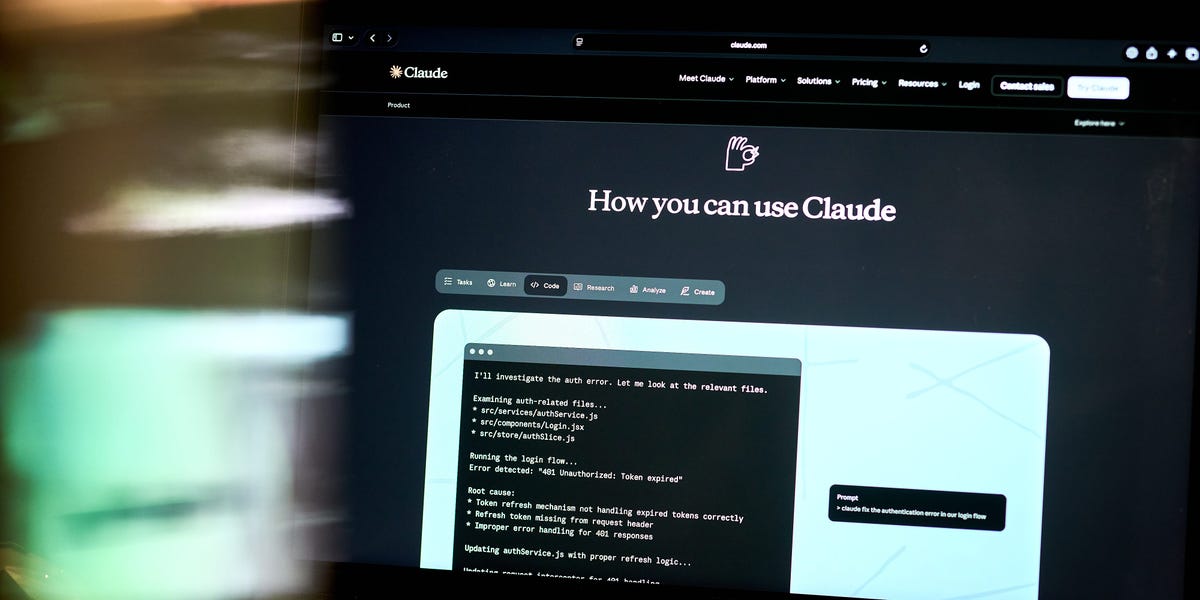
Anthropic's Claude AI assistant has begun telling some users to "go to bed," a behavior that has sparked user speculation and raised questions about the guardrails governing large language models. The prompt, which appears unprompted in certain interactions, has been documented across social media platforms in recent weeks.
The incident matters because it cuts to the core of how AI developers balance safety, helpfulness, and user autonomy. Anthropic has positioned itself as the safety-focused competitor to OpenAI, emphasizing "constitutional AI" principles that train models to avoid harmful outputs. A model that volunteers parental-style advice could be seen as either a feature of a deeply safety-oriented system or a bug that undermines user trust.
The Safety-Trust Tradeoff in AI Design
Anthropic's constitutional AI framework trains Claude to adhere to a set of principles, including avoiding harm and promoting wellbeing. The "go to bed" prompt may stem from an overgeneralization of those principles, where the model interprets late-night usage as a wellbeing risk. Without an official explanation from Anthropic, users have theorized that the behavior reflects an internal safety mechanism misfiring.
The episode exposes a tension that all AI developers face. Models that are too restrictive risk frustrating users, while those that are too permissive risk generating harmful content. For Anthropic, which has made safety its brand, any perception of overreach could erode the trust it has built with developers and enterprise customers. Enterprise adoption often hinges on predictability and control; an AI that interjects unsolicited life advice may be seen as less reliable for professional workflows.
Competitive Read-Through for Public AI Players
Anthropic remains privately held, so the direct financial impact is not immediately tradable. The competitive dynamics, however, have implications for publicly traded companies with significant AI exposure. Microsoft (MSFT), the primary backer of OpenAI, and Alphabet (GOOGL), which develops the Gemini family of models, both compete with Anthropic for enterprise AI contracts and consumer mindshare.
If Claude's behavior leads to user churn or negative sentiment, it could accelerate adoption of rival assistants. OpenAI's ChatGPT and Google's Gemini have their own safety guardrails, and neither has been widely reported to offer unsolicited bedtime reminders. A perception that Anthropic's safety measures are intrusive could shift developer preference toward platforms perceived as more flexible. That would reinforce the network effects already enjoyed by Microsoft and Alphabet, whose cloud platforms and distribution channels give them structural advantages.
The episode also arrives as enterprises are evaluating which AI models to integrate into their workflows. Procurement decisions often weigh safety features, and an overly paternalistic model could be a disqualifier for some use cases. For Microsoft, which integrates OpenAI models into Azure and Copilot, any stumble by a safety-focused rival could strengthen its pitch that its own models strike the right balance.
What Comes Next
The immediate catalyst is whether Anthropic addresses the behavior publicly. A clear explanation and a fix could neutralize the issue quickly. If the company remains silent or the behavior persists, user frustration may compound. The next concrete marker is any official statement from Anthropic or a notable change in Claude's behavior following a model update.
For investors tracking the AI theme through public equities, the episode serves as a reminder that user trust is a fragile differentiator. The stocks most directly tied to this dynamic are Microsoft and Alphabet, both of which report earnings in the coming weeks. While a single quirky behavior from a private competitor is unlikely to move their shares, any sustained shift in enterprise AI adoption patterns would eventually show up in cloud revenue and AI service uptake. For now, the "go to bed" prompt is a small data point in the larger contest over who defines the user experience for AI.