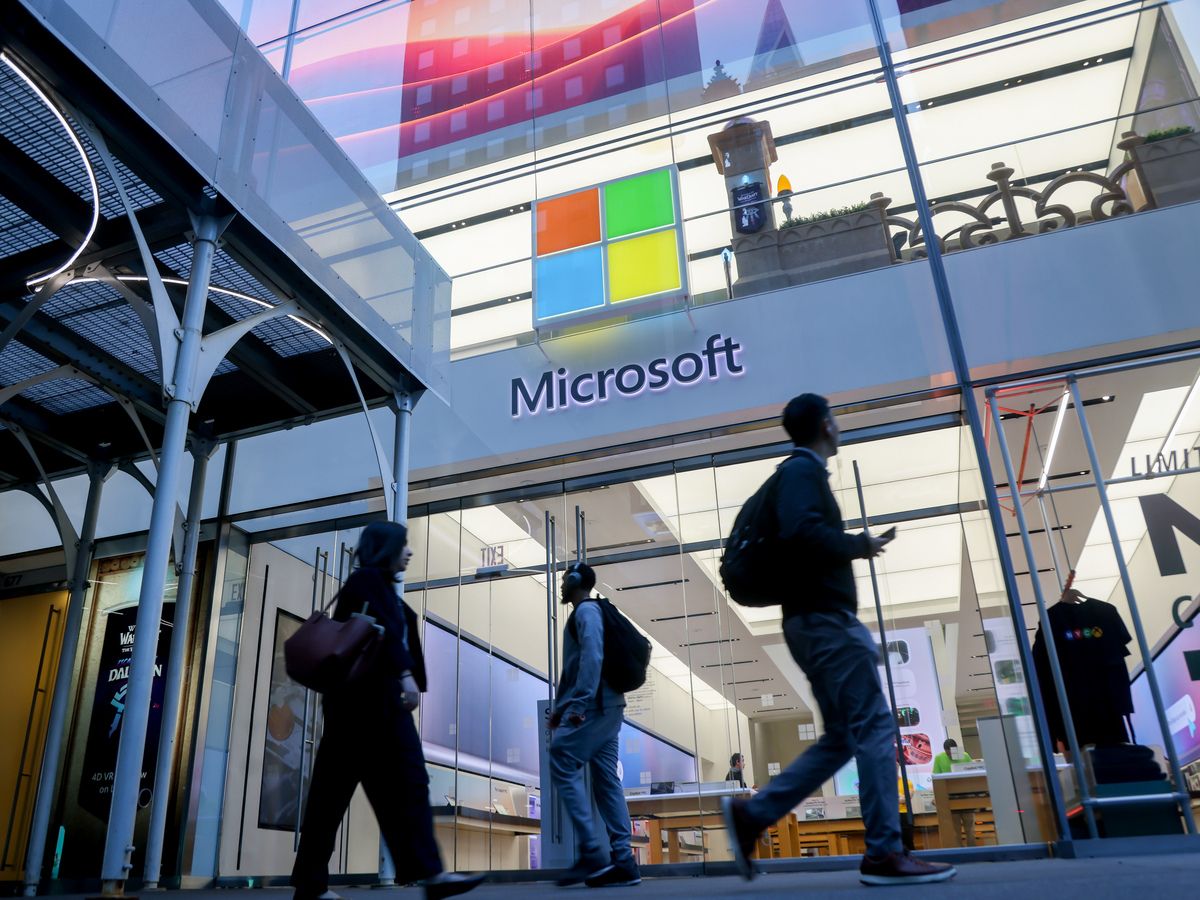
Microsoft's cumulative spending on its OpenAI partnership has crossed $100 billion, a figure disclosed in federal court testimony that shifts the capital-allocation debate for the software giant. The number, provided by Microsoft deals executive Michael Wetter on Monday, includes original investments, infrastructure buildout, and the cost of hosting OpenAI's computing workloads through the end of the current fiscal year in June.
Wetter's testimony arrived in the high-profile lawsuit brought by Elon Musk against OpenAI and Microsoft. The spending figure, combined with CEO Satya Nadella's separate disclosure of a $92 billion return target, gives investors a concrete framework to assess the risk embedded in the partnership. Microsoft stock (MSFT) traded at $405.43, down 0.57% on the day, with an Alpha Score of 62 out of 100, indicating a moderate setup that now carries an additional variable.
The $100B+ Figure That Changes the Capital-Allocation Debate
The sheer scale of the spending redefines how investors must think about Microsoft's AI commitment. The company had previously disclosed a roughly $13 billion investment in OpenAI through early 2023. The new testimony reveals that total outlays are far larger once infrastructure and hosting costs are counted.
What the Testimony Revealed
Wetter stated that many of the costs were incurred before Microsoft received any revenue from the arrangement. "We needed to build Azure infrastructure in advance of providing those services to OpenAI," he testified, referring to the company's cloud-computing division. The cumulative spending through June 2025 includes the upfront buildout of data center capacity, networking, and specialized hardware required to run large-scale AI models.
Why the Cumulative Cost Matters Now
The $100 billion figure lands at a moment when Microsoft is already under pressure to show returns on its AI investments. Capital expenditures have surged across the technology sector, and investors are beginning to ask when the spending will translate into durable revenue streams. The OpenAI partnership is the single largest concentrated bet within Microsoft's AI strategy, making the disclosed cost a direct input into any discounted cash flow analysis of the company's cloud and AI segments.
Microsoft's Exposure: More Than a Cloud Contract
Microsoft's relationship with OpenAI extends well beyond a typical cloud-provider agreement. The company holds a 27% ownership stake in the startup, a position that was formalized during OpenAI's restructuring last year. That equity stake, combined with the infrastructure commitments, creates a multi-layered exposure that is not fully captured by the headline investment figure.
The 27% Stake and the $135B Paper Gain
As of October, Microsoft's stake in OpenAI was valued at about $135 billion, according to previous disclosures. OpenAI's overall valuation reached $852 billion as of the end of March. Nadella, during his own testimony last week, said the investments "worked out well because we took the risk." The paper gain is substantial, yet it remains illiquid and contingent on OpenAI's continued growth trajectory and the resolution of its corporate structure.
Infrastructure Commitments and Revenue Timing
Wetter's testimony highlighted a timing mismatch that creates a real cash-flow risk. Microsoft built Azure infrastructure in advance of providing services, meaning the company deployed capital before any meaningful revenue from OpenAI workloads began to flow. The lag between investment and return is a classic capital-intensive risk, and the $100 billion figure suggests the magnitude is larger than many investors had modeled.
The Musk Lawsuit as a Risk Multiplier
The spending disclosure emerged during a legal proceeding that itself poses a threat to the partnership's stability. Musk's 2024 lawsuit accuses OpenAI co-founders Sam Altman and Greg Brockman of abandoning the startup's nonprofit mission, and alleges that Microsoft aided that betrayal. All defendants have denied wrongdoing, calling the claims baseless harassment aimed at boosting Musk's own AI startup, xAI.
What Musk Alleges and What's at Stake
Musk argues that OpenAI's shift toward a for-profit structure violated its founding principles. If a court were to rule in his favor, the remedies could include unwinding the for-profit conversion or imposing restrictions on the commercial relationship with Microsoft. Even if the lawsuit ultimately fails, the discovery process will continue to surface internal documents and financial details that could complicate the partnership's optics and negotiating dynamics.
How a Court Ruling Could Reshape the Partnership
The case is being heard in federal court in Oakland, California. A ruling that forces structural changes at OpenAI would directly affect Microsoft's 27% stake and the revenue-sharing agreements tied to Azure. The partnership has already shown signs of friction, with the two companies squabbling over terms and increasingly competing in the AI market. A legal shock could accelerate that divergence.
| Metric | Value | Date/Context |
|---|
| Cumulative spending on OpenAI | Over $100 billion | Through June 2025 |
| Original investment | ~$13 billion | Through early 2023 |
| Microsoft's stake value | ~$135 billion | As of October |
| OpenAI valuation | $852 billion | End of March |
| Nadella's return target | $92 billion | Disclosed in testimony |
What Would Reduce the Risk for Microsoft Shareholders
Several developments could shrink the risk premium that the market attaches to Microsoft's OpenAI exposure. The most direct path is a clear demonstration that the infrastructure spending is generating high-margin revenue.
Clear Monetization Path and Azure AI Revenue
If Microsoft reports accelerating Azure revenue that can be directly tied to OpenAI workloads, the $100 billion figure will look less like a sunk cost and more like a capacity investment with a defined payback period. Nadella's $92 billion return target provides a benchmark; quarterly results that show progress toward that number would reduce uncertainty.
Settlement or Dismissal of the Lawsuit
A swift resolution of Musk's lawsuit, whether through dismissal or settlement, would remove a legal overhang that clouds the partnership's governance. The market dislikes binary legal outcomes, and any clarity would allow investors to refocus on the underlying economics of the AI business.
What Would Make the Risk Worse
The downside scenario involves a combination of legal, structural, and valuation pressures that could force Microsoft to reassess the partnership's carrying value.
Forced Restructuring or Unwinding of the Partnership
An adverse court ruling that mandates changes to OpenAI's corporate structure could trigger a renegotiation of Microsoft's stake and cloud agreements. The companies are already competing in some areas, and a forced separation could leave Microsoft with stranded infrastructure capacity built specifically for OpenAI's workloads.
Write-Downs if OpenAI's Valuation Corrects
OpenAI's $852 billion valuation reflects a private-market mark that may not hold if growth slows or if the restructuring process introduces new governance constraints. Microsoft's $135 billion stake is a paper gain that has not been monetized. A material correction in OpenAI's valuation would flow through Microsoft's balance sheet and could prompt an impairment charge, particularly if the partnership's revenue trajectory disappoints.
Key insight: The $100 billion spending figure transforms the OpenAI partnership from a strategic bet into a quantifiable capital-allocation risk. The next catalyst is the Musk lawsuit outcome, which could reshape the terms of Microsoft's 27% stake and its Azure revenue stream.
The testimony has given investors a number they can model. The risk now is that the model breaks in a direction that the market has not yet priced. Microsoft's MSFT stock page will reflect how quickly the market digests this new information, and broader stock market analysis suggests that AI-related capital spending is becoming a central theme for the technology sector. For a parallel on how AI investment narratives can diverge from market reality, the ServiceNow AI Displacement Fears Overstated: $126–$177 Valuation Range piece offers a framework for separating spending risk from durable revenue growth.