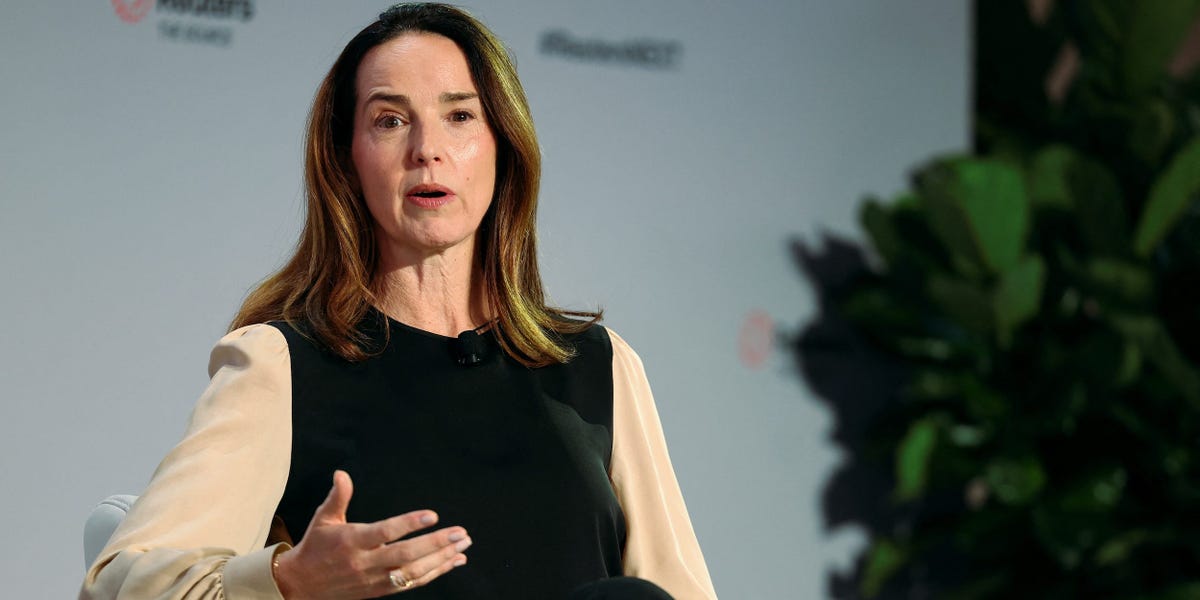
OpenAI CFO Sarah Friar sidestepped a direct question about whether the company's secretive AI hardware device, designed by former Apple design chief Jony Ive, is an earpiece. In a recent interview, Friar described the experience of using the device as feeling “very natural” but refused to confirm the form factor, calling it “hard to describe.” She did not correct the interviewer's earpiece suggestion.
The evasion is the first on-the-record comment from an OpenAI executive about the project. Friar's non-answer keeps the device's shape under wraps, leaving investors and competitors to guess about OpenAI's hardware ambitions.
Sarah Friar's Non-Answer on Device Form Factor
Friar's remarks fall short of a denial. She said users would find the device intuitive, yet she declined to specify whether it sits in the ear, clips onto clothing, or takes another form. The deliberate secrecy reinforces the project's stealth development, which has been linked to Jony Ive since 2023. OpenAI has not disclosed a launch timeline, production partners, or a target price.
The device is widely viewed as OpenAI's attempt to create a dedicated hardware interface for its AI models, moving beyond smartphone apps. Ive's involvement signals a focus on industrial design and user experience, similar to his work on the iPhone and Apple Watch.
Why the Form Factor Uncertainty Changes the AI Hardware Playbook
The lack of a form factor blurs the competitive landscape. Meta has already shipped Ray-Ban smart glasses with built-in AI assistant capabilities. Apple is developing an AR/VR headset and reportedly working on AI-powered wearable features. Both companies have distribution networks and brand recognition that OpenAI lacks in hardware.
If OpenAI's device is an earpiece, it would compete directly with Meta's audio-focused wearables and could pressure Apple to accelerate its own earbuds-based AI features. If the device is something else – a pendant, a ring, or a standalone screen – the market read-through changes entirely. Investors tracking consumer AI hardware need a form factor to size the addressable market, bill of materials, and competitive moat.
Friar's non-answer keeps uncertainty high. That uncertainty is a headwind for semiconductor and component suppliers that would benefit from a clear product launch cycle. At the same time, the secrecy preserves a potential surprise catalyst once OpenAI reveals the device.
The Decision Point: What Would Confirm or Weaken the Setup
The next concrete marker for investors is any official product announcement from OpenAI, or a supply chain leak that reveals the device's shape and specifications. If Friar confirms the earpiece form in a later interview, expect immediate positioning shifts: audio chip makers could see a tailwind, while Apple and Meta shares might face pressure on competitive fears. If OpenAI keeps the mystery alive through the second half of 2025, the effect on public equities will remain speculative.
The smarter read is to track design wins in OpenAI's supply chain. If a major contract manufacturer or sensor supplier lands a deal, the form factor will become apparent before OpenAI says a word.
Friar's deliberate silence is itself a data point. It tells the market that OpenAI believes the mystery still generates more value than clarity. That calculus shifts the moment a competitor ships a similar product first, or when OpenAI needs to raise hardware funding. Both scenarios are worth monitoring as the next catalysts for stock market analysis.