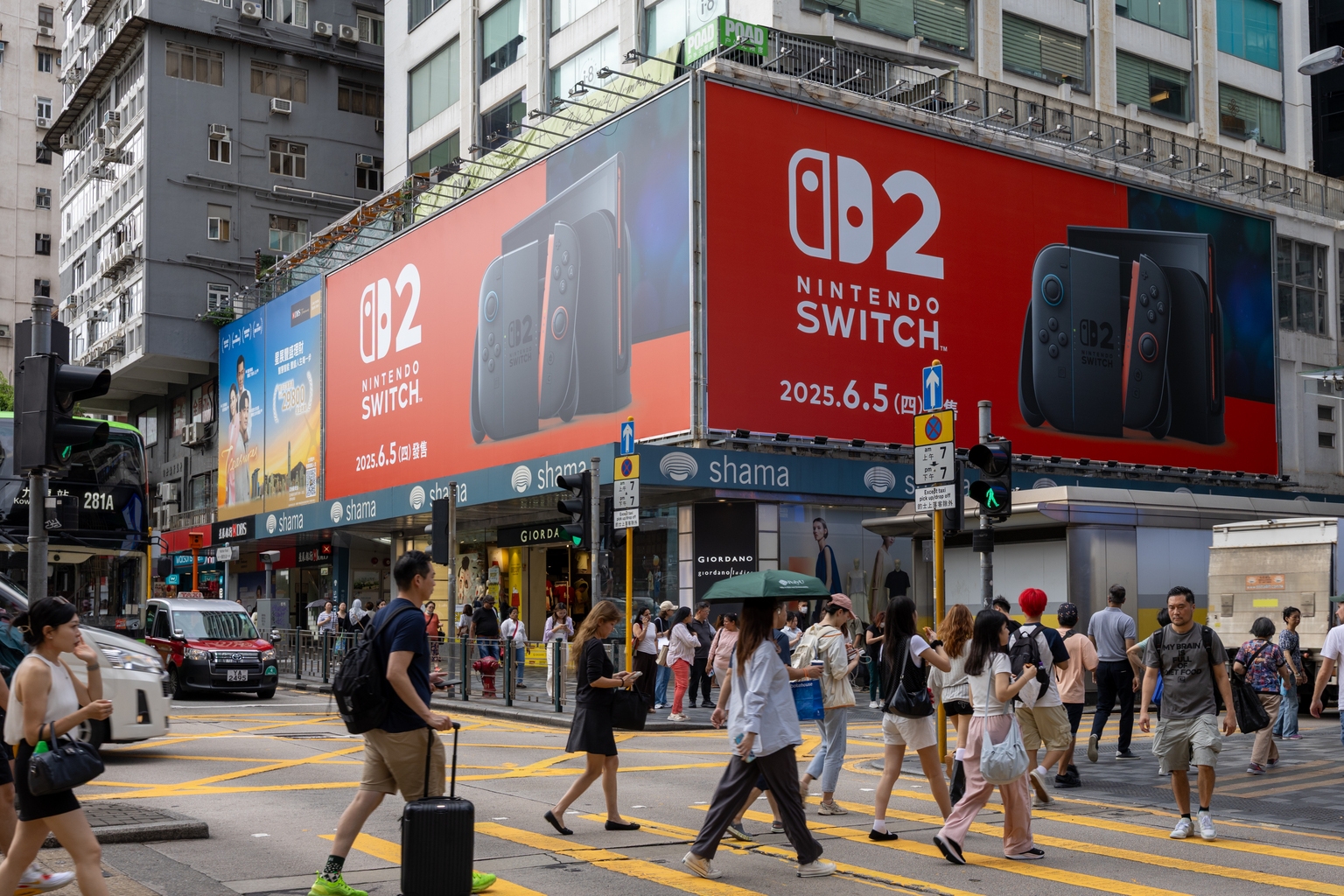
A Seeking Alpha analyst has assigned a buy rating to Nintendo (NTDOY), arguing the market underestimates the company's ability to monetize its intellectual property beyond the current console cycle. The risk event that will determine whether this bull case holds is the upcoming Switch 2 launch and the expansion of Nintendo's IP into theme parks, movies, mobile gaming, and its Chinese partnership with Tencent.
The straightforward read is that Nintendo's revenue has historically moved with its hardware cycles. The Switch is nearing saturation, and a successor is expected in 2025. The better market read looks at the actual mechanism: Nintendo's IP monetization pipeline is designed to generate cash flow less dependent on the next console's unit sales. If that pipeline succeeds, the stock's valuation multiple should expand. If it stalls, Nintendo remains a pure cycle bet.
Why the Switch 2 Launch Tests the Hardware Cycle Dependency
The analyst's buy rating explicitly assumes the market is underestimating IP expansion, yet the near-term catalyst remains the Switch 2. Nintendo's earnings historically spike during the first two years of a console generation and plateau until the next refresh. The Switch 2 needs to demonstrate that Nintendo can repeat that pattern or, better, that IP licensing can sustain revenue even if hardware sales soften. The exposure here is direct: about 70% of Nintendo's revenue comes from dedicated gaming hardware and software. A weak Switch 2 launch would confirm the market's default cycle-based valuation. A strong launch would support the broader bull thesis but still leaves the IP diversification question open.
Theme Parks, Movies, and Mobile: The Cash Flow Diversion
The analyst points to Nintendo's partnerships with Universal Studios for Super Nintendo World and the success of the "Super Mario Bros. Movie" as evidence that its characters generate revenue outside consoles. That revenue comes through licensing fees, merchandise royalties, and profit shares. The mechanism is straightforward: each successful film or park expansion creates a recurring royalty stream with a lower correlation to hardware sales. Nintendo's recent museum opening in Japan further strengthens brand equity. The risk is that these ventures are partner-dependent and capital-intensive. Universal's theme park attendance and movie studio output are outside Nintendo's direct control. If new installations are delayed or the next movie underperforms, the IP monetization narrative loses credibility. The next concrete markers are any announcements of new park locations or sequel movies, which would directly affect the royalty revenue line.
China via Tencent: The Long-Term Growth Leg
The article highlights Nintendo's entry into China through a partnership with Tencent. This is not a short-term driver. Chinese regulations on foreign gaming content, the local competitive landscape, and the need for culturally adapted IP all add execution risk. If Nintendo's characters gain traction in China, it adds a growth leg that is largely independent of the US and Japan. If the partnership stalls, the bull case loses a key pillar. The timeline for material revenue from China is uncertain, likely post-2025. The risk to watch: any new regulatory restrictions on foreign gaming content, or Tencent's shifting priorities.
Key insight: The market currently prices Nintendo on hardware units sold. If the IP monetization pipeline matures into a recurring revenue stream (theme park royalties, movie licensing, mobile subscriptions), the stock's valuation could expand as earnings become less cyclical. The Switch 2 launch in 2025 will be the first concrete test of this narrative.
What Confirms or Weakens the Bull Case
The analyst's buy rating depends on three outcomes: Switch 2 pre-orders and initial sales confirm sustained demand; new movie or theme park announcements expand the IP pipeline; and China sales show meaningful growth. A confirmation signal would be Nintendo guiding for higher licensing revenue in the next fiscal year or announcing a new film partnership. A weakening signal would be a delay to the Switch 2 launch, poor mobile game reception, or regulatory setbacks in China. The next concrete catalyst is Nintendo's next earnings release, which will include guidance on Switch 2 timing and IP revenue. Until then, the risk event remains the execution of the IP monetization strategy as outlined by the analyst. The buy rating rests on an assumption that the market is wrong about Nintendo's growth trajectory. The upcoming hardware cycle and the diversification of revenue sources will provide the evidence either way.