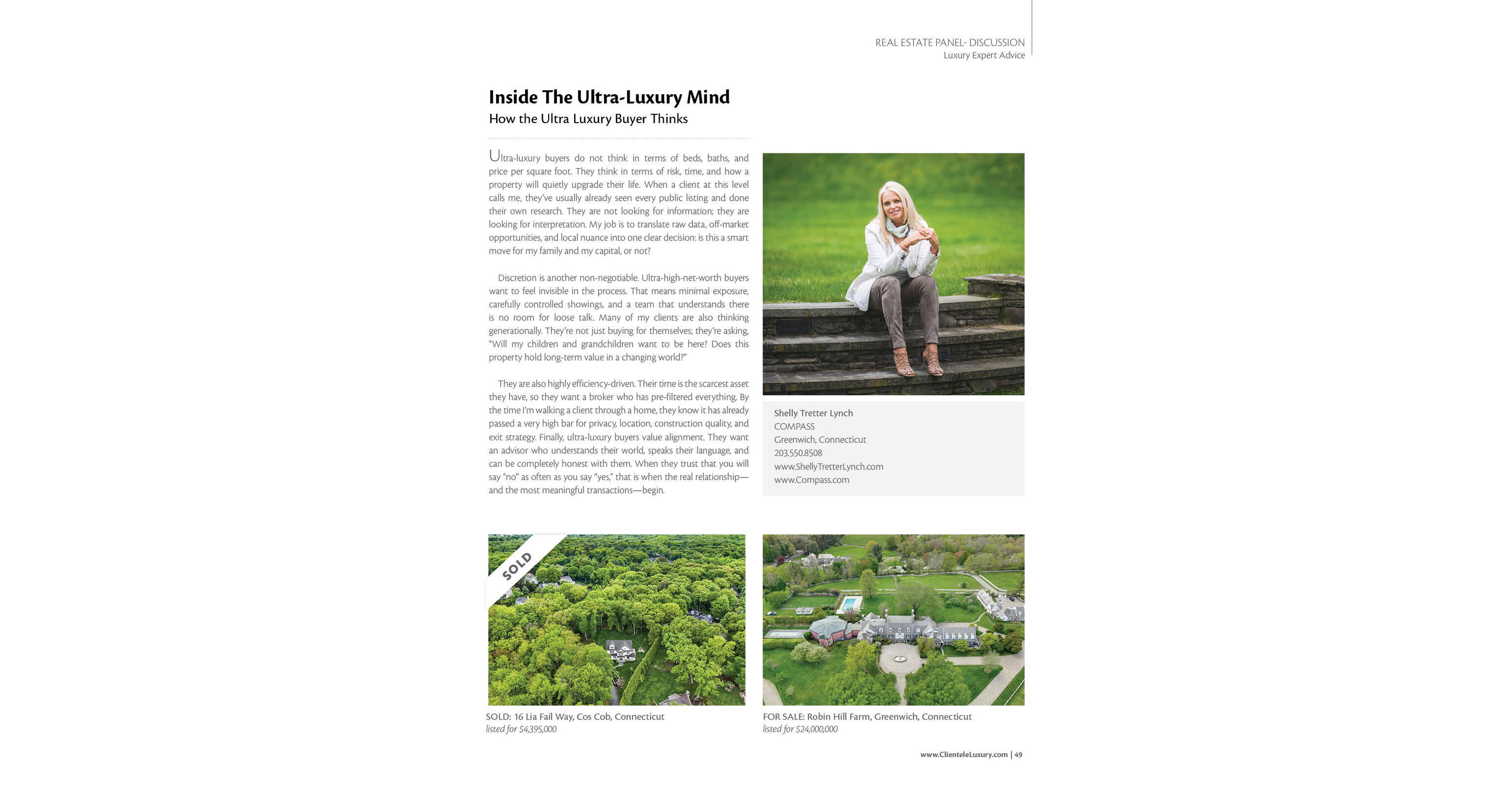
Clientele Luxury Global Magazine has released its Q1 2026 insights, signaling a pivot in how high-net-worth individuals approach real estate acquisition. The report highlights a transition from traditional property investment toward highly curated, bespoke asset strategies. This shift suggests that capital deployment in the luxury sector is becoming increasingly sensitive to personalized lifestyle integration rather than purely speculative appreciation.
Strategic Realignment in High-Net-Worth Portfolios
The core narrative emerging from the Q1 data is the move away from broad-market luxury exposure. Investors are prioritizing properties that function as multi-purpose assets, blending residential utility with private infrastructure. This reflects a broader trend where wealth preservation is tied to the exclusivity of the asset rather than regional market growth. The focus on bespoke strategies indicates that the luxury real estate market is decoupling from standard residential cycles, moving toward a model defined by private advisory and direct, off-market transactions.
This evolution in strategy carries significant weight for the broader stock market analysis regarding luxury-linked equities. As high-net-worth capital becomes more selective, the firms that facilitate these transactions or provide the underlying lifestyle services may see a divergence in performance. The emphasis on tailored experiences suggests that companies failing to offer high-touch, specialized services will struggle to capture the attention of this demographic.
Implications for Luxury Asset Valuation
The valuation of luxury real estate is increasingly driven by the scarcity of specific amenities and the ability to integrate private, secure infrastructure. The Q1 insights point to several key factors currently influencing these valuations:
- Increased demand for properties with integrated climate-resilience features.
- A preference for private, gated ecosystems that offer both security and community.
- Greater reliance on specialized advisory networks to navigate complex, cross-border regulatory environments.
These factors suggest that the premium on luxury real estate is no longer just about location, but about the functional capability of the asset to serve as a self-contained environment. This shift is consistent with broader concerns regarding infrastructure bottlenecks that are currently impacting the deployment of large-scale capital projects. When the ultra-wealthy prioritize self-sufficiency, it often mirrors a lack of confidence in public-sector infrastructure reliability.
As the year progresses, the next concrete marker for this sector will be the mid-year transaction volume data. This will reveal whether the shift toward bespoke, off-market strategies is a sustained trend or a temporary reaction to current economic uncertainty. Investors should monitor the velocity of these private deals, as a slowdown in transaction frequency could indicate that the market is reaching a point of saturation for specialized assets. The ability of luxury brokerages to maintain deal flow in this environment will serve as a primary indicator of the health of the high-end real estate ecosystem through the remainder of 2026.