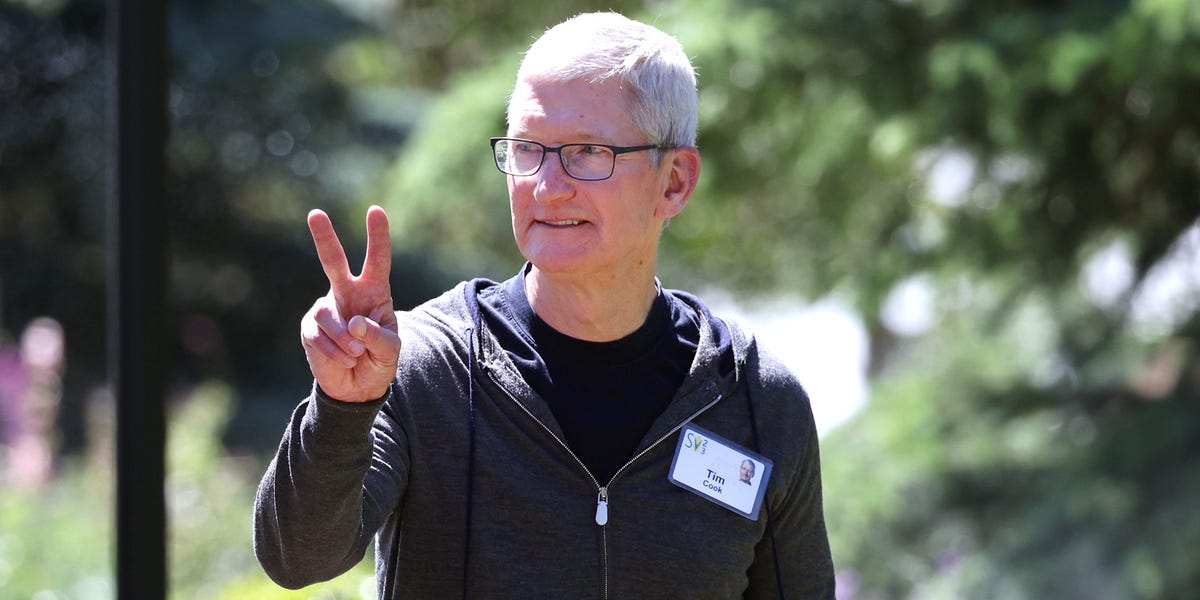
The transition of executive authority at Berkshire Hathaway marks a shift in the operational narrative for one of the world's largest conglomerates. As Greg Abel assumes the role of CEO, the market is drawing parallels to the leadership succession at Apple following the passing of Steve Jobs. Tim Cook's tenure at Apple provides a structural template for managing a legacy defined by a singular, iconic founder. The core challenge for any successor in this position involves maintaining the institutional culture while adapting to the evolving requirements of a modern capital structure.
The Operational Continuity Model
Tim Cook navigated the transition at Apple by focusing on operational excellence and supply chain optimization rather than attempting to replicate the visionary product-centric approach of his predecessor. This strategy allowed the company to scale its services business and integrate hardware ecosystems with greater efficiency. For Berkshire Hathaway, the transition requires a similar balance between preserving the decentralized management style established by Warren Buffett and addressing the increasing complexity of a diversified portfolio. The primary risk for a successor in this environment is the potential erosion of the specific capital allocation philosophy that has defined the firm for decades.
Structural Parallels in Corporate Governance
Both Apple and Berkshire Hathaway represent entities where the personality of the leader was inextricably linked to the brand identity. The shift toward a more process-oriented leadership style often leads to a re-evaluation of how the market discounts the founder premium. Investors typically monitor whether the new leadership can maintain the same level of trust with stakeholders while implementing necessary administrative updates. The following factors remain central to this transition:
- The maintenance of existing capital allocation frameworks.
- The preservation of decentralized operational autonomy across subsidiaries.
- The management of communication channels with long-term shareholders.
AlphaScala data currently tracks Apple (AAPL) with an Alpha Score of 61/100 and a current price of $270.23, reflecting a 2.59% increase today. In contrast, Berkshire Hathaway (BRK.B) holds an Alpha Score of 46/100 within the financials sector. Detailed performance metrics for these assets are available on the AAPL stock page and the BRK.B stock page.
The Path to Institutional Stability
Succession in large-cap firms often triggers a period of heightened scrutiny regarding long-term strategic direction. While Apple successfully transitioned into a services-led growth model, Berkshire Hathaway faces the distinct challenge of deploying massive cash reserves in a high-interest environment. The market will look for consistency in the firm's acquisition criteria and its willingness to divest underperforming assets. As discussed in our analysis of institutional stability and the perception of leadership continuity, the ability to project stability is as critical as the financial results themselves. The next concrete marker for this transition will be the upcoming annual shareholder meeting, where the firm's communication strategy under new leadership will be tested against the historical expectations set by the previous administration.