Stocks● Neutral
Kashmir Targets Narcotics Wealth to Break Terror Funding Links
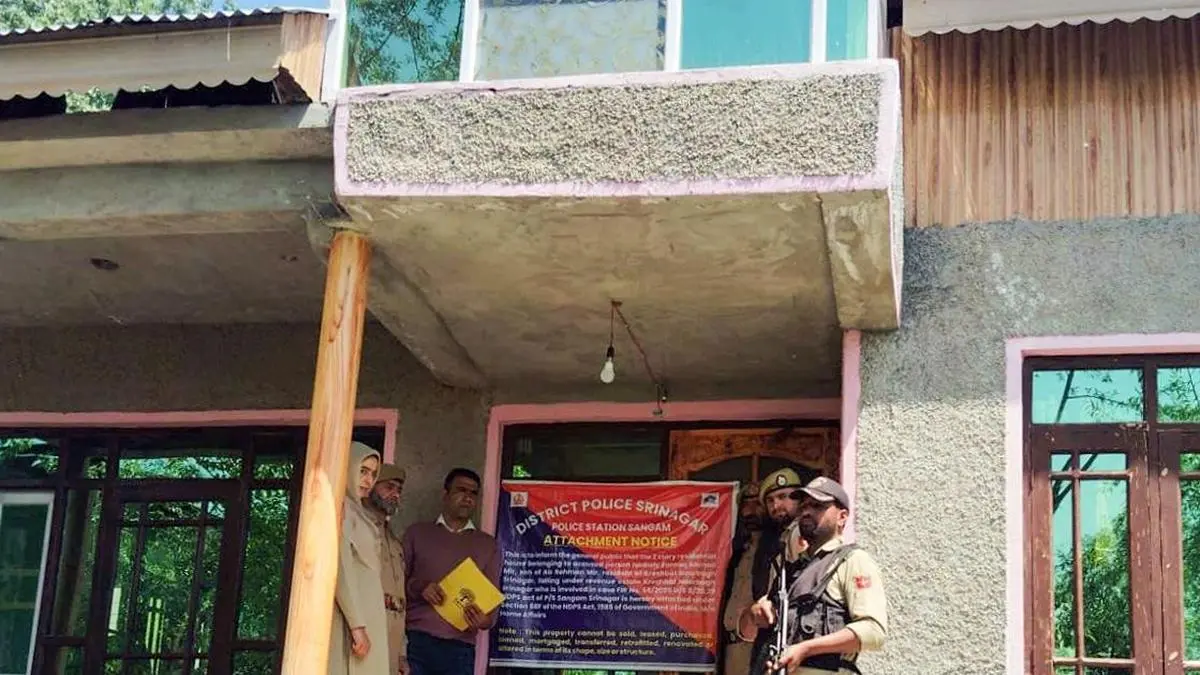
Authorities in Kashmir are seizing assets worth ₹3.5 crore to dismantle the financial networks fueling narcotics and terror funding in the region.
Continue with
The recent escalation in Srinagar’s anti-narcotics campaign represents a fundamental shift in how regional authorities manage illicit economies. By moving beyond street-level enforcement to the systematic attachment and demolition of immovable assets, the administration is attempting to choke the financial arteries that sustain both drug trafficking and broader militant funding networks. This strategy, codified under the "Nasha Mukt Jammu & Kashmir Abhiyaan," treats the drug trade not merely as a public health crisis but as a structural threat to regional economic stability.
The Shift from Enforcement to Asset Seizure
For years, the primary metric for success in the region’s drug war was the volume of seizures. Official data confirms that over 68,000 kg of narcotics have been confiscated over the past five years. However, volume-based enforcement often fails to address the underlying capital accumulation that allows criminal syndicates to regenerate. The current strategy focuses on the "proceeds of crime" as defined under the Narcotic Drugs and Psychotropic Substances (NDPS) Act.
Between April 11 and May 2, authorities demolished approximately 24 houses allegedly funded by drug proceeds. This was followed on May 3 by the targeting of 15 commercial structures. The most significant recent move involved the attachment of immovable properties valued at ₹3.5 crore in Srinagar. By removing these assets from the control of suspected smugglers, the state is effectively forcing a liquidity crunch on the networks that recycle illicit profits into real estate and informal business ventures.
Economic Mechanism of the Crackdown
In any illicit economy, the primary challenge for the operator is the "laundering" of cash into legitimate-looking assets. When drug proceeds are converted into real estate, they become static, long-term holdings that provide both a store of value and a veneer of legitimacy. By attaching these properties, the state is not just punishing the individual; it is destroying the capital base required to fund future operations.
This is particularly relevant given the scale of the substance use crisis in the region. According to the National Survey on Extent and Pattern of Substance Use in India, the user base is substantial: