Stocks● Neutral
Iran's 6-Day Khamenei Funeral Tests New Supreme Leader's Grip
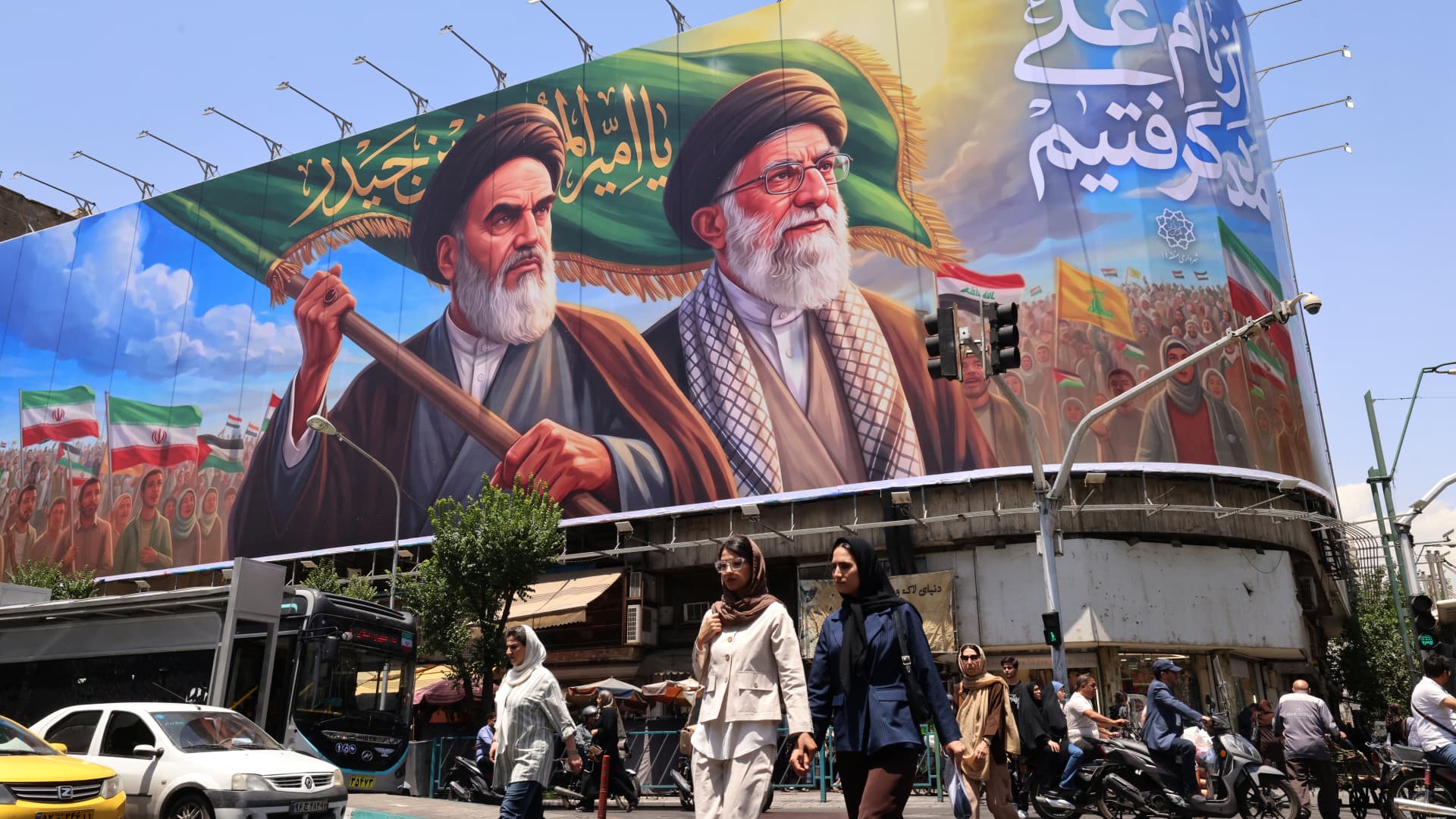
Iran's six-day funeral for Ayatollah Khamenei begins July 4, nearly four months after his death. The procession tests the new, unseen Supreme Leader's grip amid economic crisis and security risks.
Continue with
Iran begins a six-day funeral procession for Ayatollah Ali Khamenei on July 4, nearly four months after the Supreme Leader was killed on the first day of the U.S.-Israeli war in February. The ceremony ends July 9, covering cities across Iran and Iraq before burial in Mashhad, the country's holiest city.
The delay was due to fighting. The funeral is "a tightly choreographed display of mourning, continuity and regime control," Sanam Vakil, director of the Middle East and North Africa Program at Chatham House, told CNBC. The event is expected to draw tens of millions of mourners and "could reveal tensions beneath the surface," she added.
Public farewell ceremonies start at Tehran's Mosalla prayer complex around 6 a.m. local time, the traditional venue for major state religious gatherings. The main procession travels roughly 10 kilometers from Imam Hossein Square to Azadi Square after funeral prayers for the slain Ayatollah and his family. Tehran Mayor Alireza Zakani said attendance could reach 20 million people, potentially the largest gathering in the city's history.
The procession then moves to Qom, Iran's spiritual center of Shia learning, with events between the Shrine of Fatima Masoumeh and Jamkaran Mosque. The body is then transported to Iraq for ceremonies in Najaf and Karbala, home to shrines of Imam Ali and Imam Hussein. Iranian officials have coordinated with Iraqi authorities.
Khamenei's final resting place is in Mashhad, his birthplace, which holds profound religious significance for Shia Islam. The city is home to the shrine of Imam Reza, the eighth Imam, and where his father, the previous ayatollah, is buried. Authorities estimate 8 million to 10 million people could attend the final burial.