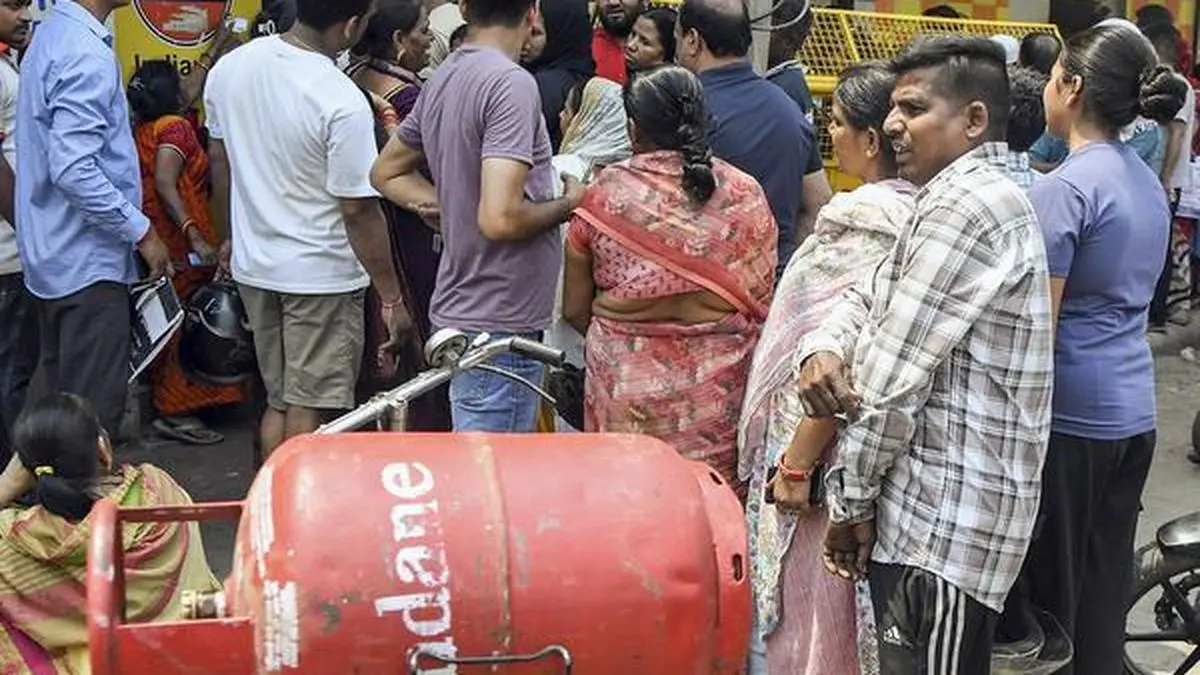
India's LPG consumption dropped 16.16% in April to 2.2 million tonnes as regional conflicts disrupted critical supply chains through the Strait of Hormuz.
India’s liquefied petroleum gas (LPG) market experienced a sharp contraction in April, with consumption falling 16.16% year-on-year to 2.2 million tonnes. This decline, reported by the Petroleum Planning and Analysis Cell (PPAC) under the Oil Ministry, marks a significant departure from the steady growth trajectory that has defined India’s transition toward cleaner cooking fuels over the past several years. The drop is not merely a statistical anomaly but a direct consequence of geopolitical instability in West Asia, which has compromised the logistical arteries of India’s energy imports.
The primary mechanism behind this consumption collapse is the vulnerability of India’s import infrastructure. India sources approximately 60% of its LPG requirements from international markets, with a substantial portion of these shipments passing through the Strait of Hormuz. Recent escalations involving US and Israeli strikes on Iran, followed by retaliatory measures from Tehran, have effectively disrupted transit through this critical maritime chokepoint. As supply chains from primary exporters like Saudi Arabia and the United Arab Emirates faced intermittent closures and logistical delays, the domestic market felt an immediate squeeze on physical availability.
To manage the shortfall, the Indian government implemented a two-pronged rationing strategy. First, authorities prioritized household cooking gas, effectively cutting off or severely restricting supplies to commercial establishments, including hotels and industrial users. Second, the government moved to regulate household consumption by extending the mandatory interval between cylinder refills. These administrative interventions were necessary to prevent a total depletion of reserves, but they have fundamentally altered the consumption profile for the month.
To understand the severity of the April data, one must look at the comparative figures provided by the PPAC. Consumption fell from 2.62 million tonnes in April of the previous year to 2.2 million tonnes this year. Furthermore, the decline is evident on a month-on-month basis, falling from 2.379 million tonnes in March. While the 16.16% year-on-year drop is stark, it is worth noting that the decline in March was 12.8%, suggesting that the supply chain constraints have intensified as the conflict in West Asia persisted.
| Fuel Type | April Consumption (Tonnes) | YOY Change | March Consumption (Tonnes) |
|---|---|---|---|
| LPG | 2.2 Million | -16.16% | 2.379 Million |
| Diesel | 8.282 Million | +0.25% | 8.727 Million |
| Petrol | 3.67 Million | +6.36% | 3.78 Million |
| ATF | 761,000 | -1.37% | 807,000 |
The impact of the regional conflict is not isolated to the LPG sector. Aviation Turbine Fuel (ATF) consumption also saw a contraction, falling 1.37% to 761,000 tonnes in April compared to the previous year. This decline is directly linked to the closure of airspace across several Gulf nations and the subsequent suspension of flight routes. When combined with the LPG data, it becomes clear that the conflict is exerting downward pressure on energy demand through both supply-side shortages and demand-side logistical disruptions.
Diesel and petrol, while less severely impacted than LPG and ATF, have also shown signs of moderation. Diesel sales rose by a marginal 0.25% to 8.282 million tonnes in April, a sharp deceleration from the 8.1% growth observed in March. Petrol sales growth also slowed to 6.36% from the 7.6% growth rate seen in the previous month. These figures suggest that while the Indian economy continues to consume transportation fuels, the broader energy complex is grappling with the volatility introduced by the regional geopolitical climate.
The current situation creates a difficult environment for stock market analysis regarding energy-dependent sectors. For industrial users and commercial entities, the primary risk remains the duration of the supply disruption. If the Strait of Hormuz remains effectively closed or subject to heightened security risks, the government will likely be forced to maintain its rationing policies, which will continue to suppress commercial LPG demand and potentially drive up operating costs for hospitality and manufacturing firms.
Investors should look for signs of normalization in import volumes as a primary indicator of relief. Any move toward reopening key shipping lanes or the establishment of alternative supply routes would likely lead to a reversal of the current rationing measures. However, until the supply chain stabilizes, the volatility in LPG availability will remain a structural drag on the sector. The focus for the coming month should be on whether the government maintains the current refill intervals or if it begins to ease restrictions as domestic inventories are replenished through non-Gulf sources. If the gap between refills is narrowed, it would signal a return to more normalized supply conditions, whereas a further extension would indicate that the government expects the supply crunch to persist into the next quarter.
AI-drafted from named sources and checked against AlphaScala publishing rules before release. Direct quotes must match source text, low-information tables are removed, and thinner or higher-risk stories can be held for manual review.