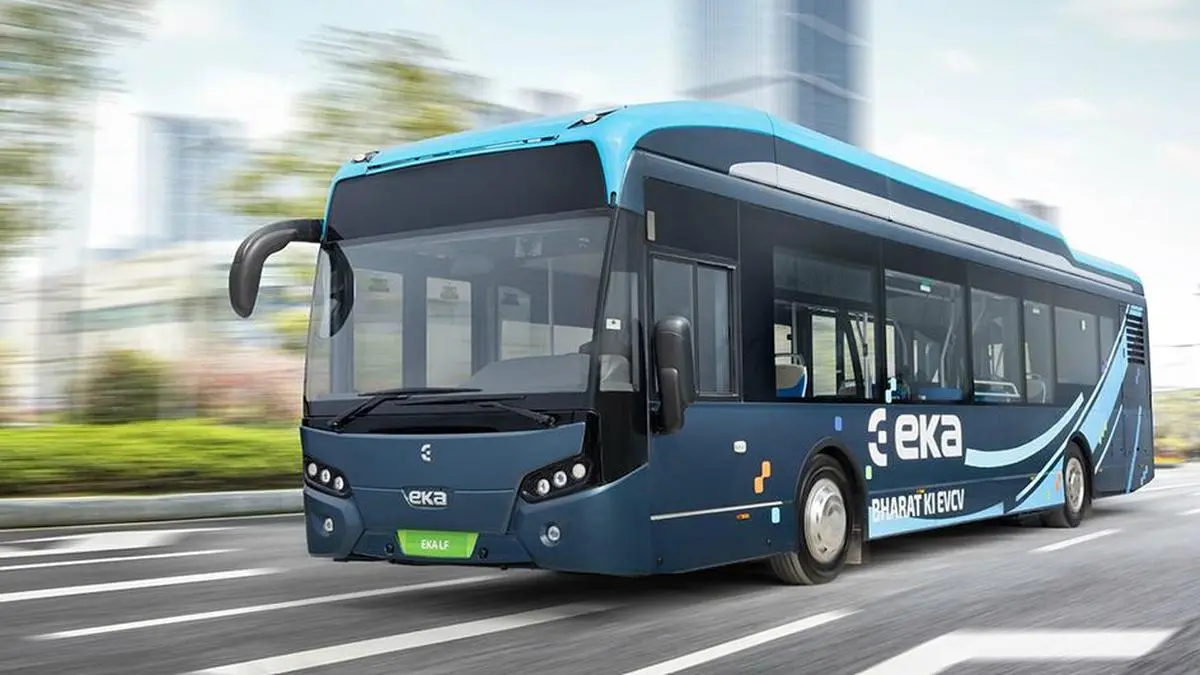
The Ministry of Heavy Industries convened a high-level meeting this week to address the persistent financing hurdles stalling the adoption of electric buses and electric trucks. By bringing together representatives from commercial banks, non-banking financial companies, and industry stakeholders, the government is signaling a shift toward de-risking the transition for fleet operators and manufacturers. The current financing landscape for electric commercial vehicles remains constrained by high interest rates and lender uncertainty regarding the residual value of battery-heavy assets.
Structural Barriers in Commercial EV Credit
The primary friction point identified in the discussions involves the risk assessment models used by traditional lenders. Electric buses and trucks carry higher upfront costs compared to their internal combustion engine counterparts, which complicates standard loan-to-value ratios. Lenders are currently hesitant to extend credit due to the lack of historical data on battery degradation and the subsequent impact on the resale value of these vehicles. Without a clear secondary market for used electric commercial fleets, financial institutions are demanding higher collateral, which effectively prices out smaller fleet operators and logistics firms.
Policy Levers and Risk Mitigation
To bridge this gap, the government is exploring credit guarantee schemes and interest subvention models designed to lower the cost of capital. These mechanisms aim to shift a portion of the default risk away from private lenders and onto the state, potentially unlocking liquidity for manufacturers that have struggled to move inventory. The discussion also touched on the standardization of battery health reporting, which could provide lenders with the transparency needed to assign more accurate residual values to assets. If successful, these policy interventions would represent a significant pivot from direct subsidies toward market-based financing support.
Sectoral Read-Through and Market Context
This push for electrification in the heavy vehicle segment aligns with broader industrial decarbonization goals. As the government seeks to lower the total cost of ownership for commercial operators, the focus on financing suggests that the next phase of growth will rely on institutional credit rather than just capital expenditure grants. This transition is critical for companies operating in the energy and technology sectors, where the demand for specialized components and infrastructure remains tied to the pace of fleet electrification. For instance, firms like ENI SPA, which holds an Alpha Score of 65/100, are navigating a complex energy landscape where such shifts in transport policy directly influence long-term demand projections. Investors should monitor the E stock page to observe how these policy-driven shifts in industrial energy consumption patterns materialize in future performance metrics.
Next Decision Point
The immediate follow-up to this meeting will be the formalization of a credit guarantee framework. Market participants should look for upcoming circulars from the Ministry of Heavy Industries regarding the specific eligibility criteria for NBFCs and the total corpus allocated for these risk-sharing mechanisms. The speed at which these guidelines are implemented will determine whether the current stagnation in electric commercial vehicle adoption gives way to a sustained increase in order books for domestic manufacturers. This development is a key component of the broader stock market analysis regarding how government-led financing initiatives can catalyze capital-intensive sectors.