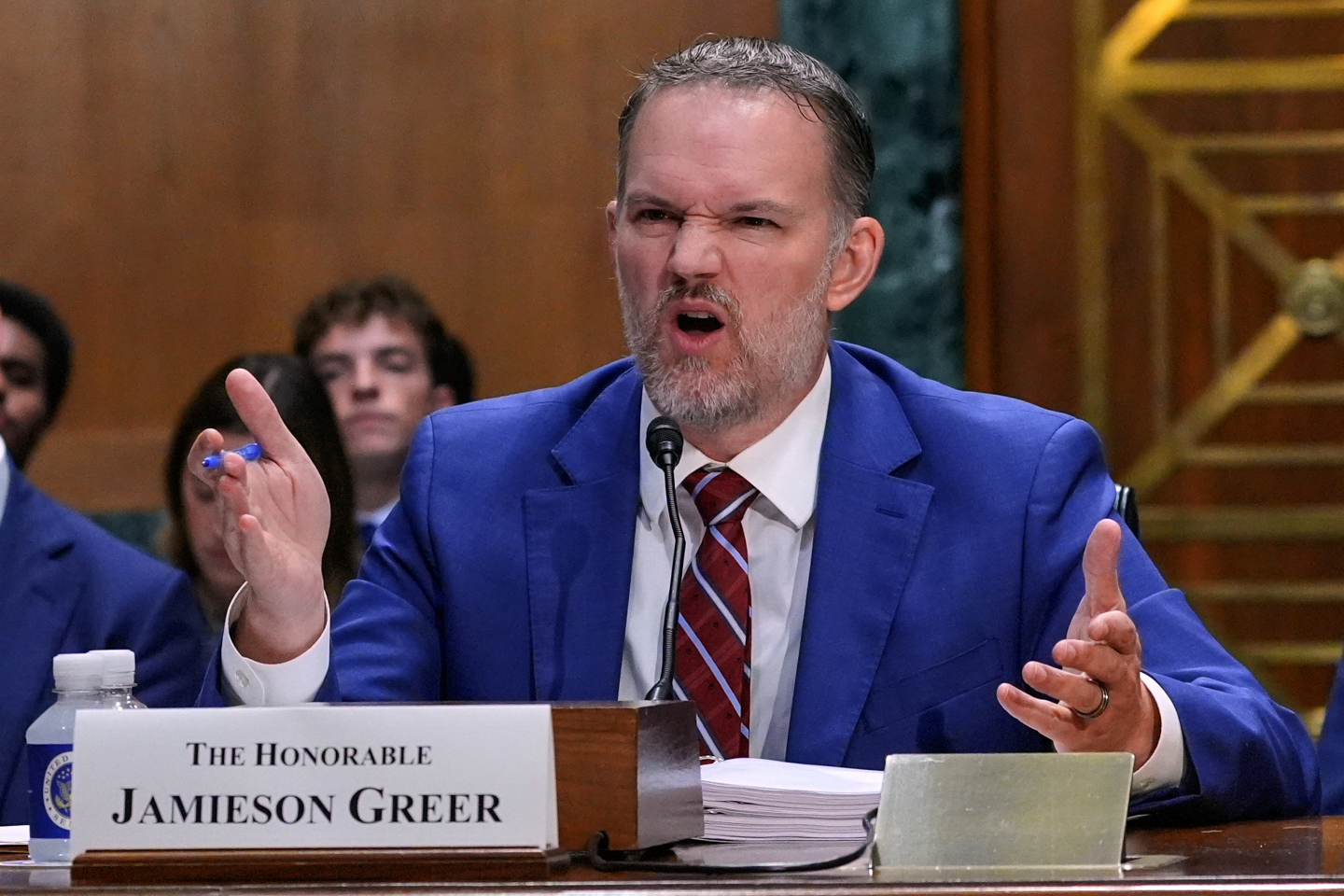
U.S. Trade Representative Jamieson Greer told the House Ways and Means Committee on Wednesday that the administration's tariff strategy is fixed. The legal authority used to impose them is a secondary concern.
"The specific authorities this administration is using have changed, but the trade strategy has not," Greer said. He added that the administration is committed to tariffs and deals that support re-industrialization and close the trade deficit.
The admission drops the pretense that tariff policy is anchored to specific statutory triggers, trade lawyers said. The administration has used IEEPA for national security tariffs and Section 301 for unfair trade practices. Greer's testimony treats these as interchangeable justifications for the same policy goal.
For companies importing goods into the U.S., the risk of new tariffs is no longer bounded by a rule of law. It is bounded by political calculation, analysts said. This uncertainty affects capital expenditure decisions across retail and industrial supply chains. Retailers like Walmart and Target, which source heavily from China, face the same planning vacuum as Apple. Companies cannot model the cost of tariffs without knowing the next political target.
Apple, which imports most of its iPhones and other devices from China, has been at the center of tariffs since 2018. The company's supply chain was structured around trade rules the administration now says are secondary to the policy goal. Apple has lobbied for tariff exclusions on its core products. Greer's comments suggest the administration views the tariff itself as the goal, analysts said. Analysts at trade-specialist firms said Greer's comments make long-term planning harder and reduce the odds of a negotiated rollback tied to specific economic triggers.
The administration faces several court challenges to its tariff authority. Legal battles have questioned the use of the International Emergency Economic Powers Act and Section 301 of the Trade Act of 1974. Greer's testimony could complicate those cases, one trade lawyer said. The lawyer said the admission signals that tariffs are a political tool. It is not a negotiating lever. The admission supports the plaintiffs' argument that the administration exceeded its statutory authority, the lawyer said. The courts are now evaluating whether the administration followed the law. Greer said the law does not constrain the strategy.
The focus on shrinking the trade deficit is another signal that tariffs are a permanent feature, economists said. The trade deficit is a macroeconomic outcome of savings and investment balances, economists said. It is not a scorecard of trade policy success. Pursuing it with tariffs implies the administration views the policy as structural. The tariff policy is not transactional, they said. This strains diplomatic relationships with allies who are also subject to tariff actions.
The broader market risk is a persistent inflation premium, analysts said. If tariffs are a permanent political tool, the cost pass-through to consumers is not a one-time shock. It is a recurring risk. The Federal Reserve faces a harder task distinguishing transitory tariff effects from structural price pressure. Business investment may slow as companies wait for clarity on trade policy, analysts said.
The next catalyst is any new tariff action by the administration. Congress has no further hearings scheduled on the matter. The administration is expected to announce new actions in the coming weeks.