India's retail inflation is on track to hit 5% by June, driven by a series of fuel price hikes and higher import duties on gold and silver. Economists from EY, India Ratings, Barclays, CRISIL, and ICRA have revised their inflation forecasts upward. The full impact is expected to show in the June CPI print. The Reserve Bank of India is likely to hold rates at its June 5 policy meeting. The risk of a rate hike in the second half of the fiscal year is rising.
Rs 7.5/Litre Fuel Hike Adds 75 bps to CPI
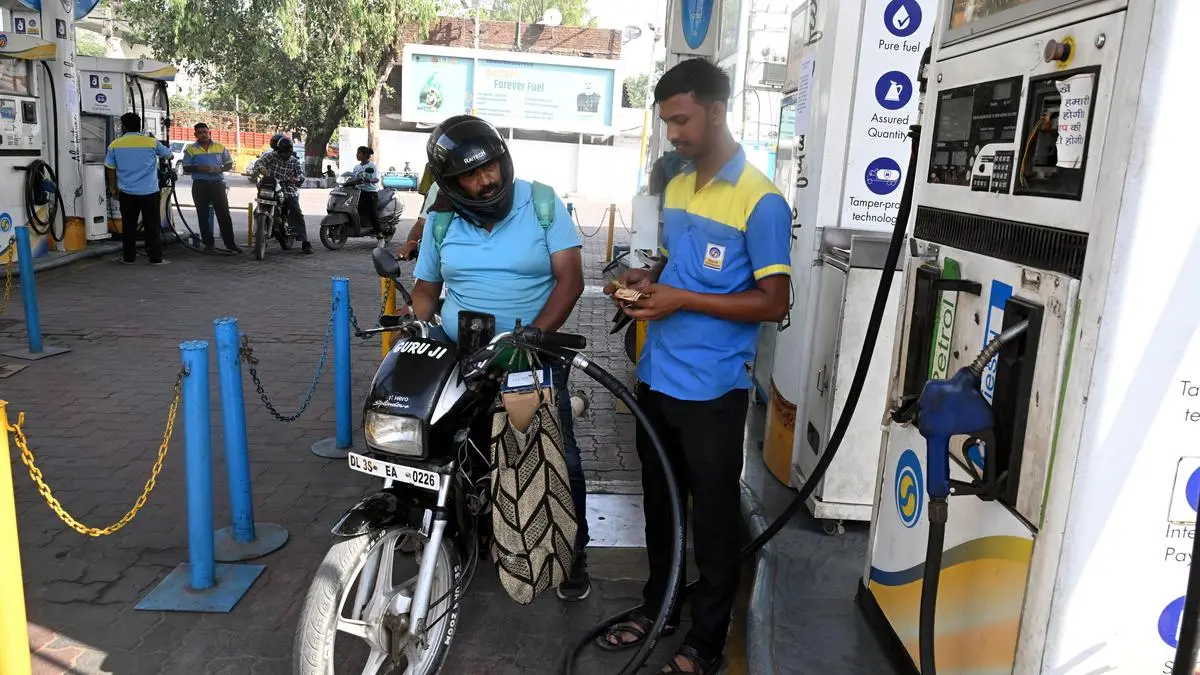
Over 11 days starting May 15, petrol prices rose by Rs 7.38 per litre and diesel by Rs 7.48 per litre. These increases cascade into transport, storage, and electricity costs. D K Srivastava, Chief Policy Advisor at EY India, estimates the overall increase will add about 75 basis points to CPI inflation. May CPI, to be released June 12, may come in at 4-4.5%. June CPI could reach 4.5-5%.
The government also raised import duty on gold and silver to 15% on May 13, adding further pressure on non-essential goods. The Wholesale Price Index (WPI) inflation already flared to a 42-month high of 8.3% in April, reflecting global commodity price pressures. With inadequate passthrough so far, the fuel hikes will now transmit more directly into retail prices.
How the Mechanism Works
Fuel price increases affect CPI through two channels. The direct channel raises transport and storage costs, which feed into the prices of goods moved by road and rail. The indirect channel affects electricity generation costs, where diesel is used as backup fuel. Both channels compound quickly because transport costs are embedded in almost every consumer good.
June CPI Seen at 4.5-5%: Multiple Agency Estimates
Megha Arora, Director at India Ratings and Research, expects June CPI to surpass 4% but remain within the RBI's 6% upper tolerance band. She estimates the fuel hikes alone will add about 38 bps to June CPI, with upside risk from further passthrough.
Aditi Nayar, Chief Economist at ICRA, said the fuel hike will have a minor impact on May CPI. The effect will transmit more widely into June. ICRA now forecasts FY27 baseline CPI inflation at 5%, assuming crude oil averages USD 95 per barrel.
Dipti Deshpande, Principal Economist at CRISIL, expects average inflation at 5.1% for the current fiscal year. The drivers are elevated fuel and input costs and a weaker rupee.
| Agency | June CPI Estimate | FY27 Average CPI | Key Assumption |
|---|
| EY India | 4.5-5% | – | Fuel hike adds 75 bps |
| India Ratings | >4% but <6% | – | Fuel adds 38 bps |
| Barclays India | – | 5% (revised from 4.6%) | Crude at USD95/bbl |
| ICRA | – | 5% | Crude at USD95/bbl |
| CRISIL | – | 5.1% | Weaker rupee, fuel costs |
Why the Range Matters for Policy
The RBI's mandate is to keep inflation at 4% with a tolerance band of 2% on either side. A June CPI reading of 4.5-5% keeps the number inside the band. The risk is that sustained fuel prices push inflation above 5% and toward the 6% upper limit. That would force the RBI to act.
RBI's June 5 Decision: Neutral Pause Expected, H2 Tightening on Table
The RBI's Monetary Policy Committee (MPC) meets on June 5. Economists expect a neutral pause, keeping all policy rates unchanged. Srivastava noted that since the CPI increase is cost-driven, repo rate adjustments may have limited effect. The RBI may wait a quarter to assess the impact before acting.
If CPI crosses 5% and shows upward momentum, the RBI may start tightening in H2 FY27.
Barclays expects the RBI to revise its FY27 inflation forecast from 4.6% to 5% and cut its growth forecast to 6.7% from 6.9% after the June 5 meeting. The RBI's base case in its April policy report assumed crude oil at USD 85/bbl. Reality has shifted to the USD 95/bbl scenario.
The Supply-Driven Inflation Problem
Rate hikes work best against demand-driven inflation. Fuel price increases are supply-driven. Raising the repo rate does not lower global crude prices or reduce transport costs. The RBI's dilemma is that second-round effects – higher household inflation expectations and wage demands – can turn supply shocks into persistent inflation. That is the real trigger for policy action.
Sector Read-Through: Transport, Gold, and Consumer Goods
The fuel price hikes directly impact transport and storage costs, which feed into a wide range of goods. Higher gold import duties may curb demand. They also push domestic gold prices higher, affecting jewellery stocks and consumer spending.
For traders, the key sectors to watch are:
- Transport and logistics – higher input costs may compress margins.
- Consumer staples – potential passthrough to retail prices could pressure volumes.
- Gold and jewellery – import duty hike may reduce demand. It also supports domestic prices.
- Oil marketing companies – fuel price hikes improve their margins. Regulatory risk remains.
How the Rupee Compounds the Problem
The rupee's weakness adds another layer of imported inflation. India imports about 85% of its crude oil. A weaker rupee makes every barrel more expensive in local currency terms. This compounds the fuel price effect and makes the RBI's inflation management harder without currency intervention.
Risk to Watch: Spillover to Household Inflation Expectations
Deshpande of CRISIL noted that while the MPC may look through supply-side pressures, the committee will remain watchful of spillovers to household inflation expectations. The possibility of second-round effects leading to broader generalisation of price pressures is the key risk.
This is the key risk for the RBI's neutral stance. If inflation expectations become unanchored, the MPC may be forced to act sooner than currently expected. The rupee's weakness adds another layer of imported inflation, compounding the fuel price effect.
Next Catalyst: June 12 CPI Print and June 5 MPC Minutes
The May CPI data on June 12 will provide the first hard data on the fuel hike's impact. The June 5 MPC decision and subsequent minutes will offer clarity on the committee's forward guidance.
For now, the market is pricing a prolonged pause. The trajectory of crude oil and the rupee will determine whether the RBI shifts to a tightening bias in H2. A drop in crude below USD 85/bbl would ease the pressure. A sustained move above USD 95/bbl would accelerate the timeline for a rate hike.
AlphaScala context: Barclays (BCS, Alpha Score 59, Moderate) is one of the key voices calling for a potential rate hike. Traders should monitor the BCS stock page for further analysis on India macro exposure. For broader market context, see our stock market analysis section.