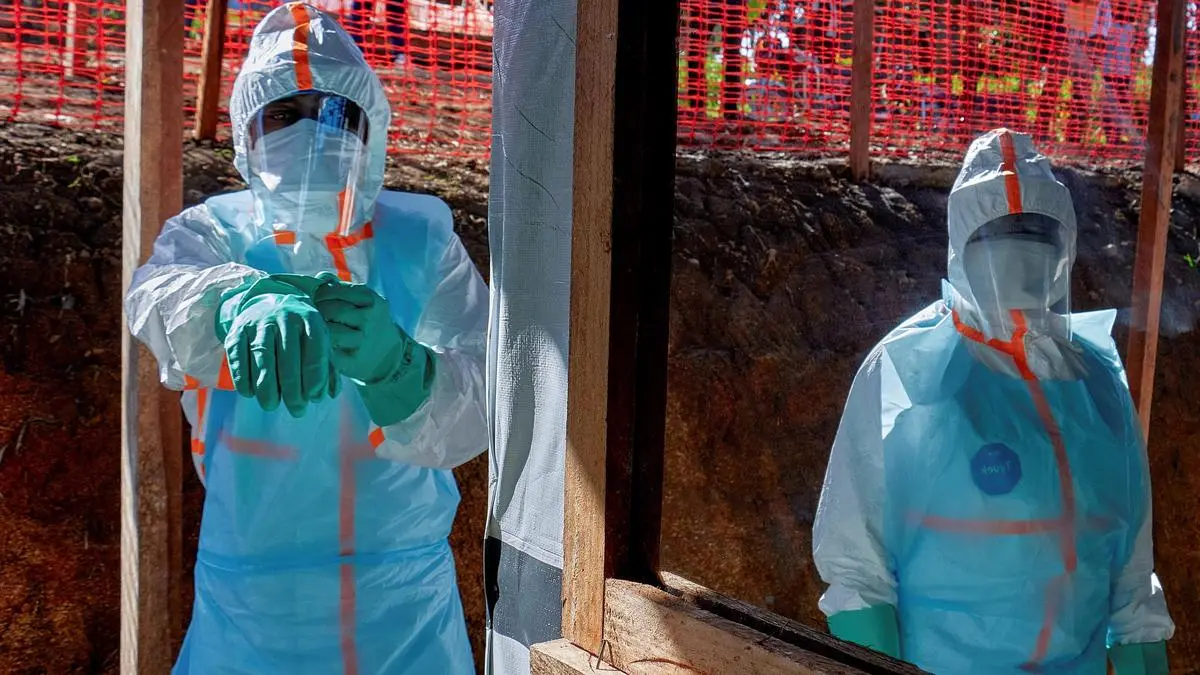
The Ebola outbreak in eastern Congo is expanding faster than responders can track it. The number of affected health zones jumped to 22 across three provinces from 13 just days earlier, according to government data. That geographic breakout is the headline number. The real concern for anyone watching the epidemic's trajectory is the 45% contact follow-up rate – a level that makes containment unlikely without a shift in community cooperation or security conditions.
The Geographic Breakout: 22 Zones Across Three Provinces
The outbreak now spans 14 health zones in Ituri province, seven in North Kivu and one in South Kivu. Mongbwalu, considered the point of origin, sits in Djugu territory where multiple armed groups operate. Frequent population movements toward Uganda complicate surveillance.
Why the Jump from 13 to 22 Matters
The naive read is that the virus is spreading faster. The better read is that improved detection is clearing a testing backlog and reclassifying suspected cases. Authorities have said they would rather over-count than miss transmission chains. The 282 confirmed cases and 42 confirmed deaths as of May 30 are likely undercounts given the backlog.
The Bundibugyo Strain: No Vaccine, No Treatment
This strain has no approved vaccine or treatment. It has already infected nine people in neighboring Uganda. Early symptoms resemble malaria and typhoid, making detection slow. Health officials believe the outbreak circulated for weeks before laboratory confirmation identified the virus.
Contact Tracing Failure as the Key Invalidation Signal
Responders are losing visibility over transmission chains. The 45% contact follow-up rate means more than half of exposed individuals are not being monitored. That is the single most important metric for the outbreak's trajectory.
Community Cooperation: The Make-or-Break Variable
Families are refusing diagnostic swab testing on corpses in morgues. Eleven suspected patients fled a hospital in Bambu on Friday because of inadequate nutritional support. Five more patients escaped isolation facilities on Saturday. These are not isolated incidents – they reflect a breakdown in trust that directly undermines containment.
Shortages Compound the Problem
Shortages of medicines, protective equipment and funding continue to hamper response. The Congolese government and World Health Organization issued a joint statement Sunday saying success depends on "the trust, engagement and leadership of local communities." That language signals that the technical response alone is insufficient.
What Confirms or Weakens the Outbreak Trajectory
Confirmation of worsening spread would come from a sustained rise in confirmed cases above the 19 new infections reported on May 30 combined with a further drop in contact follow-up rates. Weakening of the thesis would require contact follow-up to rise above 60% and a decline in new cases over a two-week incubation period.
The Uganda Spillover Risk
Nine infections in Uganda are already confirmed. If cross-border transmission accelerates, the outbreak becomes a regional crisis requiring multinational coordination. That would increase the probability of travel restrictions and economic disruption in affected areas.
The Next Decision Point: Funding and Security
The outbreak is unfolding in areas impacted by armed conflict and mass displacement. Mongbwalu lies in territory where multiple armed groups operate. Without improved security for response teams, contact tracing cannot improve. The next concrete marker is whether international donors commit additional funding for community engagement and logistics.
Practical Rule for Tracking the Outbreak
Ignore the geographic zone count as a standalone number. Watch the contact follow-up rate and the number of suspected patients fleeing isolation. Those two metrics tell you whether the response is gaining or losing ground. A contact follow-up rate below 50% for two consecutive weeks signals that the outbreak is effectively uncontrolled.
Risk to Watch: The Testing Backlog Distortion
Health officials are simultaneously clearing testing backlogs and reclassifying hundreds of suspected cases. Earlier reports showed suspected case totals exceeding 1,000 before investigators reviewed historical deaths and ruled out large numbers of non-cases. The confirmed case count may spike as backlogs clear, creating a false impression of acceleration. The better read is to compare the seven-day moving average of new confirmed cases week over week.
For broader context on how infectious disease outbreaks affect market sentiment, see our stock market analysis coverage. Investors tracking healthcare exposure should review the Apple (AAPL) profile as a proxy for supply chain risk in the region.
The outbreak's true scale remains unknown. What is known is that the response is losing ground on the metric that matters most: finding and monitoring exposed contacts before they infect others. Until that changes, the geographic footprint will keep widening.