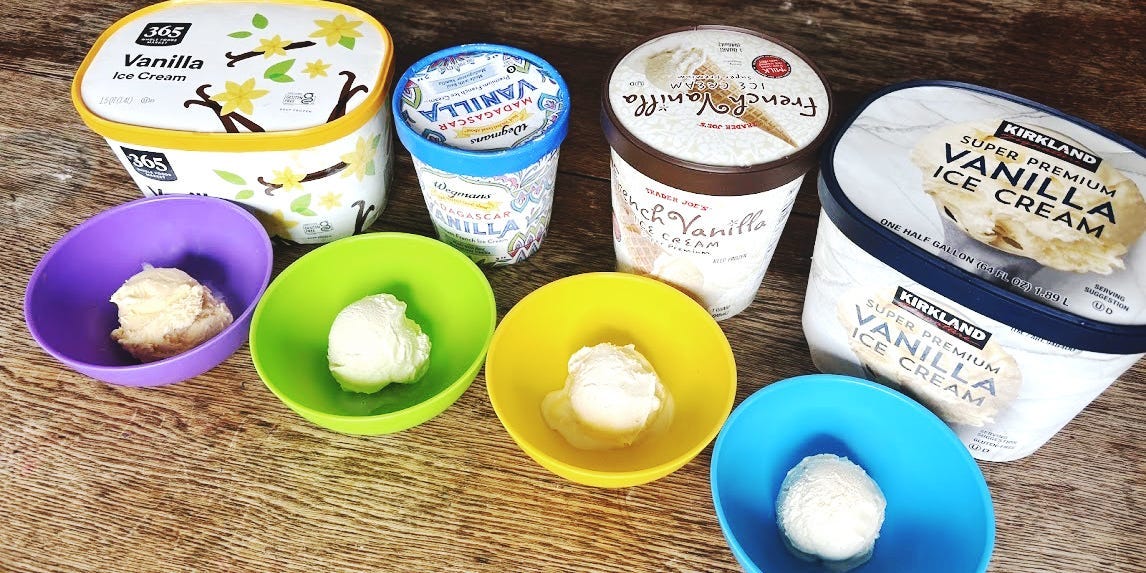
The search for high-quality, cost-effective staples often leads to private-label grocery products, where the margin between premium branding and store-brand value is frequently narrow. Recent taste testing across major retailers including Trader Joe's, Whole Foods, Wegmans, and Costco reveals that the Kirkland Signature vanilla ice cream stands out as the superior option for both flavor profile and price efficiency. While many consumers default to national brands, the specific formulation used by Costco offers a density and richness that competes directly with premium artisanal labels, despite a significantly lower price point per ounce.
Competitive Landscape of Private-Label Dairy
Market analysis of private-label goods often focuses on the supply chain efficiency that allows retailers like Costco to undercut competitors. In the case of vanilla ice cream, the primary differentiator is the butterfat content and the source of the vanilla flavoring. Many store brands rely on artificial extracts or lower-density aeration to reduce production costs. The Kirkland Signature product avoids these common pitfalls, maintaining a texture that suggests a higher-than-average overrun control. This technical advantage makes it a staple for households looking to optimize their grocery spend without sacrificing the quality typically associated with specialty dairy shops.
Valuation and Consumer Preference
When comparing these four retailers, the value proposition is not merely about the sticker price but the utility per serving. Whole Foods and Wegmans offer high-quality alternatives, but they often command a premium price that reflects their broader store positioning as upscale grocers. Trader Joe's provides a strong middle-ground, yet the volume-to-cost ratio at Costco remains unmatched for families with high consumption rates. For those tracking broader consumer spending trends, the shift toward private labels like Kirkland is a clear indicator of how inflation-conscious shoppers are re-evaluating their brand loyalty in favor of institutional quality.
Market Context and Institutional Positioning
While this analysis focuses on consumer goods, the broader financial landscape for these retailers remains competitive. For instance, companies like Intercontinental Exchange Inc. (ICE) continue to monitor the underlying volatility in commodities that impact these grocery prices. Our proprietary Alpha Score for ICE currently sits at 39/100, reflecting a mixed outlook within the broader Financials sector. You can find more detailed data on the ICE stock page for those interested in the infrastructure supporting these retail giants. Understanding the mechanics of how these companies manage their supply chains is essential for any stock market analysis that seeks to look beyond surface-level retail trends.
The Next Decision Point
Future price stability for these grocery staples will depend on the upcoming quarterly reports from major retailers, specifically regarding their private-label growth strategies. Investors should watch for commentary on supply chain cost absorption versus price pass-throughs to consumers. If retailers continue to prioritize private-label expansion to drive foot traffic, the competitive pressure on national brand manufacturers will likely intensify, forcing a potential shift in market share that will be visible in upcoming earnings guidance.