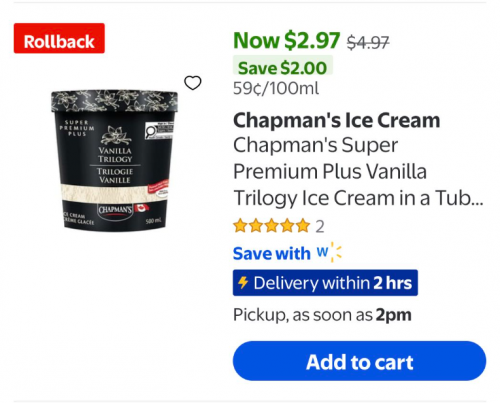
Walmart Canada has initiated a targeted price reduction on Chapman’s Super Premium Plus ice cream, marking the product down to $2.97. This promotional activity coincides with the circulation of a $3 mail-out coupon from the manufacturer, effectively creating a zero-cost acquisition point for consumers who possess the physical voucher. While some flavor varieties remain priced at $3.12, the $2.97 price point applies to core offerings such as The Only Strawberry and Salty Caramel.
Retailers frequently utilize these specific, low-cost promotional overlaps to drive foot traffic into physical stores. By pairing a manufacturer-funded coupon with a store-level Rollback, the retailer shifts the burden of the discount away from its own margins while benefiting from the increased basket size typically associated with shoppers who visit for a specific, high-value deal. For the consumer, the transaction is straightforward, but for the retailer, the objective is to leverage the perceived value of free goods to increase the velocity of store visits.
This promotional mechanic highlights a broader trend in consumer discretionary spending where retailers are increasingly reliant on manufacturer-backed incentives to maintain volume in a price-sensitive environment. When a product reaches a price point that allows for a full offset via coupon, the psychological impact on the shopper is significantly higher than a standard percentage-based discount. This creates a temporary surge in demand that can be used to clear inventory or introduce shoppers to specific product lines.
Market analysis of retail sector dynamics suggests that such tactical pricing is often a precursor to broader inventory adjustments. While individual promotions on consumer goods like ice cream do not shift the valuation of a retail giant, they serve as a leading indicator of how the firm manages its promotional calendar to combat inflationary pressures. Investors looking at stock market analysis should consider how these micro-promotions influence quarterly same-store sales figures and customer loyalty metrics.
For those tracking retail performance, the next decision point involves monitoring whether these promotional cycles lead to sustained customer retention or if they merely pull forward demand that would have otherwise occurred at full price. The effectiveness of these campaigns is typically measured by the conversion rate of coupon holders into full-basket shoppers. Future guidance from the parent company regarding operating margins will reveal if these aggressive Rollback strategies are being offset by higher-margin sales elsewhere in the store or if they are compressing overall profitability in the Canadian segment. The outcome of this specific promotion will likely inform the scale and frequency of similar manufacturer-partnered discounts in the coming fiscal quarter.