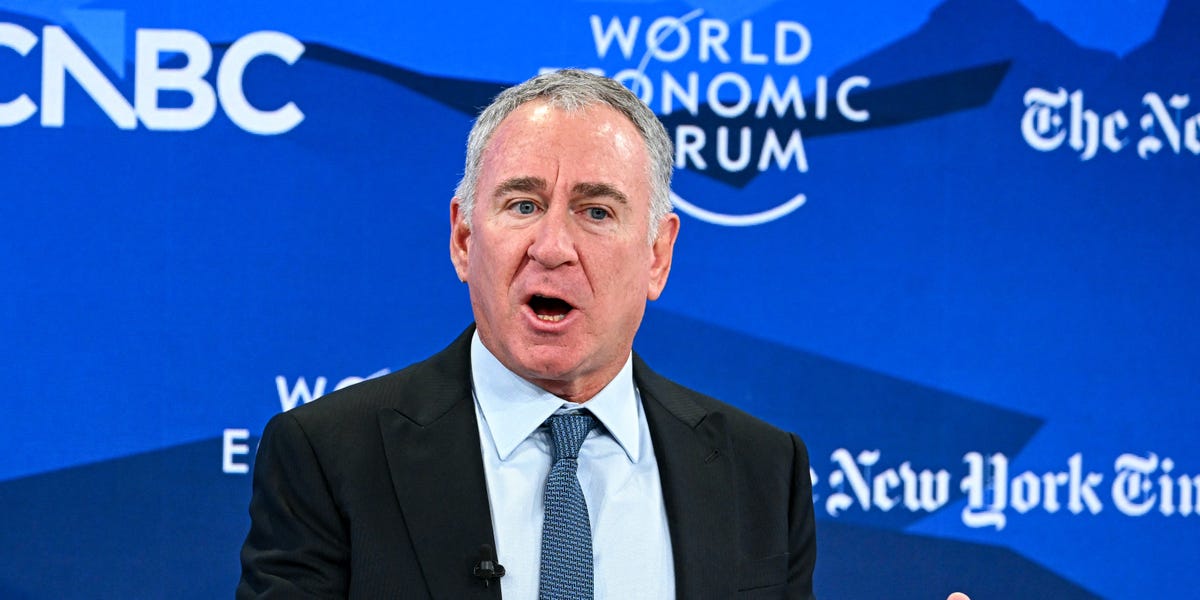
Citadel Leadership Responds to Political Criticism of Ken Griffin

Citadel leadership issued a firmwide memo defending founder Ken Griffin against political criticism, signaling a shift in how the firm manages external reputational risks.
Alpha Score of 55 reflects moderate overall profile with moderate momentum, moderate value, moderate quality. Based on 3 of 4 signals — score is capped at 90 until remaining data ingests.
Alpha Score of 47 reflects weak overall profile with moderate momentum, poor value, moderate quality. Based on 3 of 4 signals — score is capped at 90 until remaining data ingests.
Alpha Score of 58 reflects moderate overall profile with moderate momentum, moderate value, moderate quality, moderate sentiment.
Alpha Score of 56 reflects moderate overall profile with poor momentum, strong value, strong quality, weak sentiment.
The internal defense of Citadel founder Ken Griffin by his senior leadership marks a shift in how the firm manages public political friction. Following recent public comments by New York City mayoral candidate Zohran Mamdani directed at Griffin, the firm issued a companywide memo characterizing the rhetoric as shameful. This move signals a departure from the firm's traditional quiet approach to external political criticism, opting instead to reinforce the founder's record and professional standing directly to its workforce.
Internal Cohesion and External Reputation
The memo serves as a mechanism to align the firm's internal culture with its public-facing identity. By addressing the political targeting of its leadership, Citadel aims to prevent external narratives from impacting employee morale or firm cohesion. The communication emphasizes the founder's contributions and professional history, framing the recent political focus as an inaccurate representation of his impact on the city. This strategy suggests that the firm views the current political climate as a direct risk to its ability to operate and recruit in major urban centers.
Political Risk and Institutional Positioning
For large financial institutions, the intersection of political rhetoric and corporate reputation has become a central management challenge. When political figures target high-profile executives, firms must decide whether to remain silent or engage in a public defense. Citadel's choice to issue a firmwide memo indicates that the leadership believes the cost of silence outweighs the potential for further political escalation. This approach highlights the sensitivity of institutional leaders to the shifting regulatory and social landscape in major financial hubs.
AlphaScala data currently tracks various market participants and sectors, including A stock page and NOW stock page, which maintain moderate scores of 55/100 and 56/100 respectively. These scores reflect broader market conditions where institutional stability remains a key factor for investors evaluating stock market analysis.
The Path Toward Future Engagement
The next concrete marker for this narrative will be the reaction of the broader financial community and the potential for similar political campaigns to adopt this rhetoric. If other political figures follow the lead of the New York mayoral campaign, firms may be forced to formalize their public affairs strategies. The firm's next move will likely involve monitoring the legislative or regulatory proposals that emerge from these political platforms, as these could signal a shift in the operating environment for hedge funds and large-scale asset managers. Future filings or public statements from the firm will reveal whether this defensive posture remains a localized response or evolves into a sustained policy of active political engagement.
AI-drafted from named sources and checked against AlphaScala publishing rules before release. Direct quotes must match source text, low-information tables are removed, and thinner or higher-risk stories can be held for manual review.