Stocks● Neutral
Bahamas Marine Tourism Shifts as Blue Water Cay Marina Opens
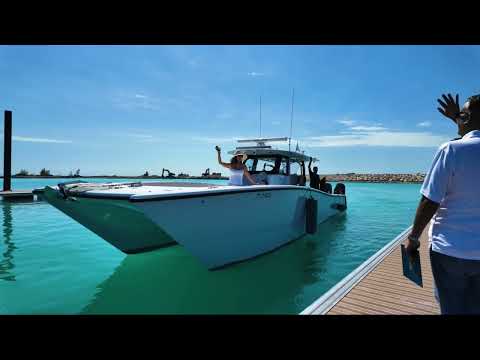
The $500 million Legendary Marina Resort at Blue Water Cay in Nassau introduces a 185-mph hurricane-rated facility to the Caribbean yachting market.
Continue with
The official opening of the Legendary Marina Resort at Blue Water Cay in Nassau marks a structural shift in Caribbean yachting infrastructure. By establishing a 50-acre facility on the southeastern tip of New Providence, the project aims to capture high-value maritime traffic moving between the United States and the Exumas. Prime Minister the Hon. Philip Davis presided over the launch, signaling the government's intent to leverage this site as a primary gateway for regional marine tourism.
Infrastructure and Operational Capacity
The facility is designed to address the specific logistical bottlenecks often faced by luxury vessel owners in the region. Phase One provides deep-water access with approximately 50 wet slips capable of accommodating vessels up to 130 feet. The inclusion of dedicated catamaran berths is a strategic move to capture the growing demand for multi-hull vessels, which often struggle with standard slip configurations in older Caribbean ports.
Beyond wet storage, the site features a dry-stack facility with capacity for over 300 vessels. The technical differentiator here is the 185-mph hurricane-rated structure, currently the only one of its kind in The Bahamas. This rating is a critical risk-mitigation feature for owners of center console vessels up to 55 feet, as it directly impacts insurance premiums and asset protection during the Atlantic hurricane season. The operation is supported by the world's largest marina Wiggins forklift, which facilitates high-volume launch and retrieval cycles.
Economic and Strategic Positioning
The project represents a $500 million multi-phase investment. While the current focus is on marine infrastructure, the master plan includes a full waterfront resort community. The economic thesis relies on the proximity to Lynden Pindling International Airport, which allows for rapid transit from international markets to the marina. By positioning itself 32 nautical miles from the Exumas, the resort functions as a staging ground for the broader Family Islands, effectively extending the range of smaller vessels that might otherwise be limited by fuel capacity or weather concerns.