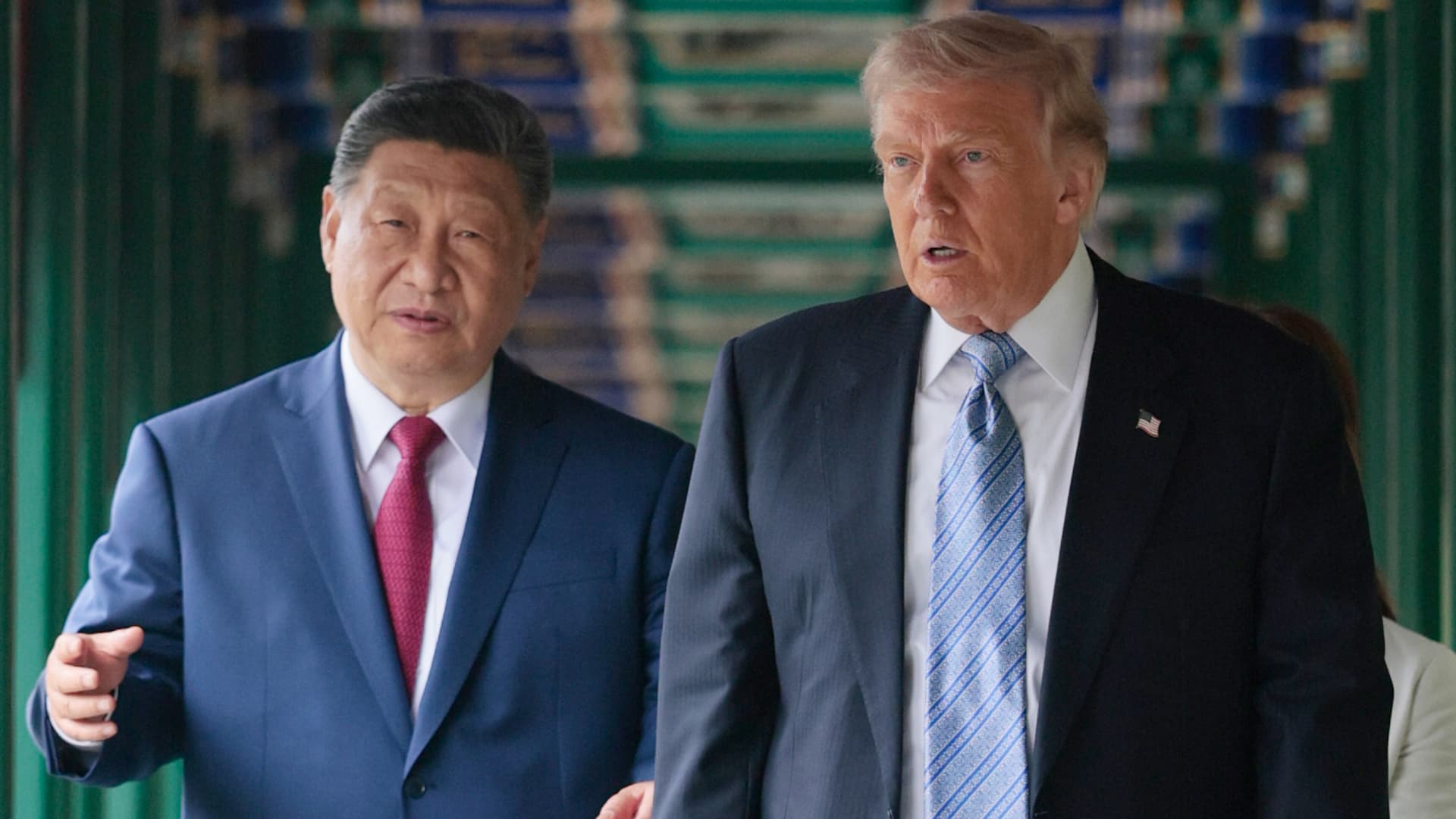
President Donald Trump refused to tell President Xi Jinping whether the U.S. would defend Taiwan if China attacked. The exchange, disclosed on Air Force One after a Beijing summit, leaves the market without a clear signal on the most consequential geopolitical risk for the semiconductor industry.
TSMC and the Chip Supply Chain Face a Binary Risk
Taiwan Semiconductor Manufacturing Co. (TSMC) fabricates roughly 90% of the world’s most advanced chips. Any military conflict that disrupts its fabs would sever the supply of processors to Apple (AAPL), NVIDIA, AMD, and nearly every major tech company. Trump’s refusal to commit to Taiwan’s defense–coupled with Xi’s warning that mishandling the issue could put the entire U.S.-China relationship “in great jeopardy”–elevates the probability tail of a supply shock that equity markets have largely ignored.
The simple read treats Trump’s ambiguity as a negotiating tactic. The better market read recognizes that strategic ambiguity cuts both ways. It gives the U.S. flexibility. It also signals to Beijing that the cost of escalation may be lower than previously assumed. For TSMC’s ADR (TSM) and the iShares Semiconductor ETF (SOXX), that translates into a higher geopolitical risk premium that is not yet priced into near-dated options.
The S&P 500’s top constituents derive a significant portion of revenue from products manufactured by TSMC. A supply disruption would hit earnings across the technology sector, yet the VIX–based on broad index options–does not fully capture this single-stock and sector-specific tail risk. Traders who dismiss the exchange as mere posturing overlook the fact that Xi’s language was unusually direct, warning of “clashes and even conflicts” if the Taiwan issue is mishandled.
Defense Contractors Face a Binary Outcome
Defense stocks often rally on Taiwan tensions because any conflict would likely accelerate U.S. and allied military spending. Lockheed Martin (LMT), RTX, and Northrop Grumman (NOC) would see order books swell if the U.S. signaled a shift toward a more assertive posture. Trump’s non-answer, however, does not provide that signal. Instead, it leaves the sector in a holding pattern: the upside from a defense buildup is deferred, while the downside from a sudden de-escalation is equally remote.
The immediate market reaction is likely to be muted because the exchange itself is not new policy. The risk is that Xi’s explicit warning raises the stakes for any future misstep. A single provocative statement from either side could trigger a rapid repricing of defense and semiconductor stocks. For now, the ambiguity keeps both the bullish and bearish cases alive, compressing volatility until a clearer catalyst emerges.
Next Decision Point: Policy Signals and Hedging Flows
The next concrete catalyst is any follow-up statement from the White House or State Department that clarifies the U.S. position. If officials walk back Trump’s ambiguity with a reaffirmation of the One-China policy and strategic ambiguity, the risk premium may fade. If they double down on the refusal to answer, markets will have to price a wider distribution of outcomes.
For traders, the immediate watchlist action is to monitor TSMC options skew and the VIX term structure. A sudden spike in out-of-the-money put buying on TSM would signal that institutional investors are hedging a tail risk that the broader market is not yet discounting. The absence of such flows would suggest that the event is being dismissed as political theater–a view that may prove complacent given Xi’s unusually direct language.