Aurum Resources reports thick gold intercepts at BDT2, expanding its 3.03M ounce Boundiali project. With $61M in cash, the firm targets a 2026 feasibility study.
Aurum Resources (ASX: AUE) has reported a series of thick gold intercepts at its BDT2 deposit, a critical development for the company’s 3.03 million ounce Boundiali gold project in Côte d’Ivoire. The drilling results confirm the continuity of mineralization and provide the necessary data to upgrade resource classifications from inferred to indicated status. For investors, the primary takeaway is the company’s focus on converting geological potential into a formal resource base ahead of its upcoming feasibility milestones.
The assay results from BDT2 include several notable intersections that underscore the thickness of the gold-bearing zones. Specifically, the company reported 40.60 meters at 1.06 grams per tonne (g/t) from 299.40 meters, which includes a higher-grade sub-interval of 6.0 meters at 2.77 g/t. Other significant intercepts include 26 meters at 1.48 g/t from 175 meters, with a 4.0-meter section grading 3.82 g/t, and 23 meters at 1.32 g/t from 376 meters, featuring a 3.0-meter interval at 5.33 g/t.
These results are part of a broader 28-hole drilling program. According to Managing Director Dr. Caigen Wang, the majority of these holes are intended to lift the confidence level of existing inferred resources. By tightening the drill spacing, Aurum aims to move these ounces into the indicated category, which is a prerequisite for the pre-feasibility study (PFS) scheduled for May 2026. The deeper holes also serve a secondary purpose: confirming that the gold system remains open at depth, providing a pathway for future resource expansion.
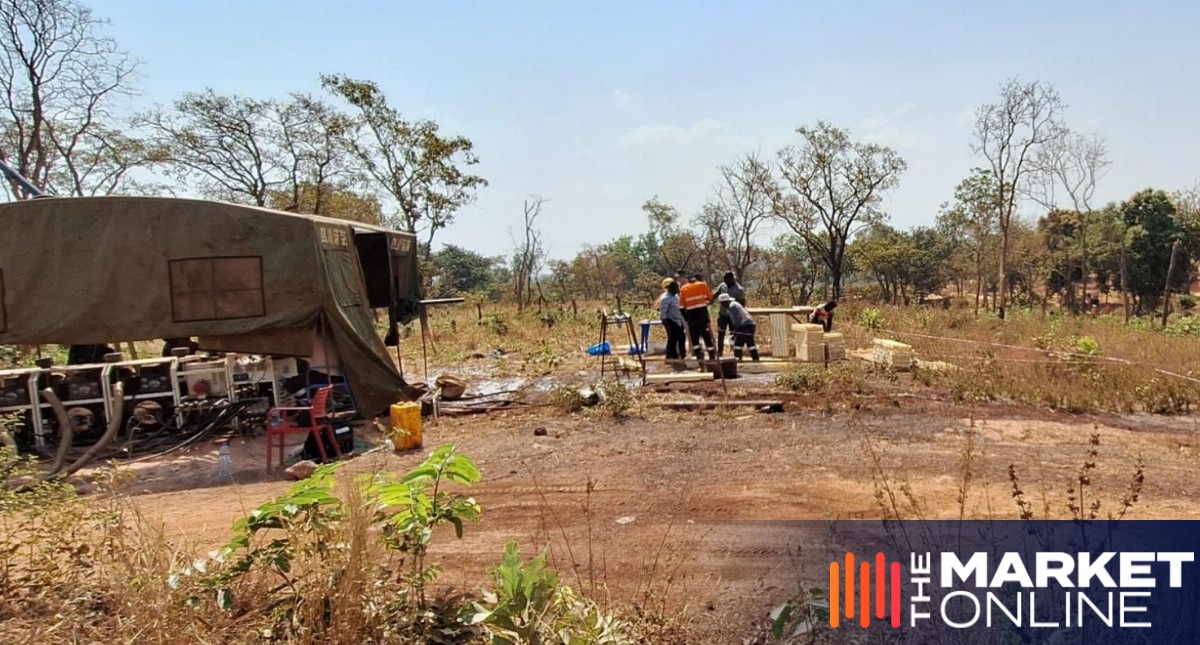
Aurum is aggressively scaling its field operations to maintain this momentum. By the end of this month, the company expects to have 16 diamond drill rigs active across the Boundiali deposits. This fleet expansion is designed to accelerate both the conversion of existing resources and the testing of blind anomalies that have not yet been defined by surface outcrops. The company’s total gold resource across its group assets now sits at 4.2 million ounces.
Financial liquidity remains a key differentiator for Aurum in the current junior mining environment. With $61 million in cash, the company is well-capitalized to fund its aggressive drilling campaign through the next two years. This capital runway is intended to support the transition from the May 2026 PFS to a definitive feasibility study (DFS) targeted for late 2026. The current market capitalization of $250.9 million, with the stock trading at 62.3 cents, reflects a valuation that is increasingly tied to the company's ability to prove up these ounces at scale.
The read-through for the broader West African gold sector is positive, particularly for companies focused on rapid resource growth through aggressive drilling. As seen in other regional developments like the Predictive Discovery and Robex merger, the ability to consolidate and define large-scale deposits is the primary driver of value in this jurisdiction. However, the risk for Aurum lies in the execution of its fast-tracked timeline. Moving from exploration to a DFS within 18 months requires consistent operational performance and favorable metallurgical results, which are yet to be fully integrated into the economic model.
While the company’s Alpha Score of 55/100 suggests a mixed outlook, the technical success at BDT2 provides a concrete marker for investors tracking the project’s progress. The focus should now shift to the upcoming resource update and the ability of the 16-rig fleet to maintain high-quality intercepts as they move into less-explored zones of the Boundiali permit. Investors should monitor whether the grade consistency observed in these latest intercepts holds up as the drill program expands into the deeper, untested portions of the deposit.
AI-drafted from named sources and checked against AlphaScala publishing rules before release. Direct quotes must match source text, low-information tables are removed, and thinner or higher-risk stories can be held for manual review.