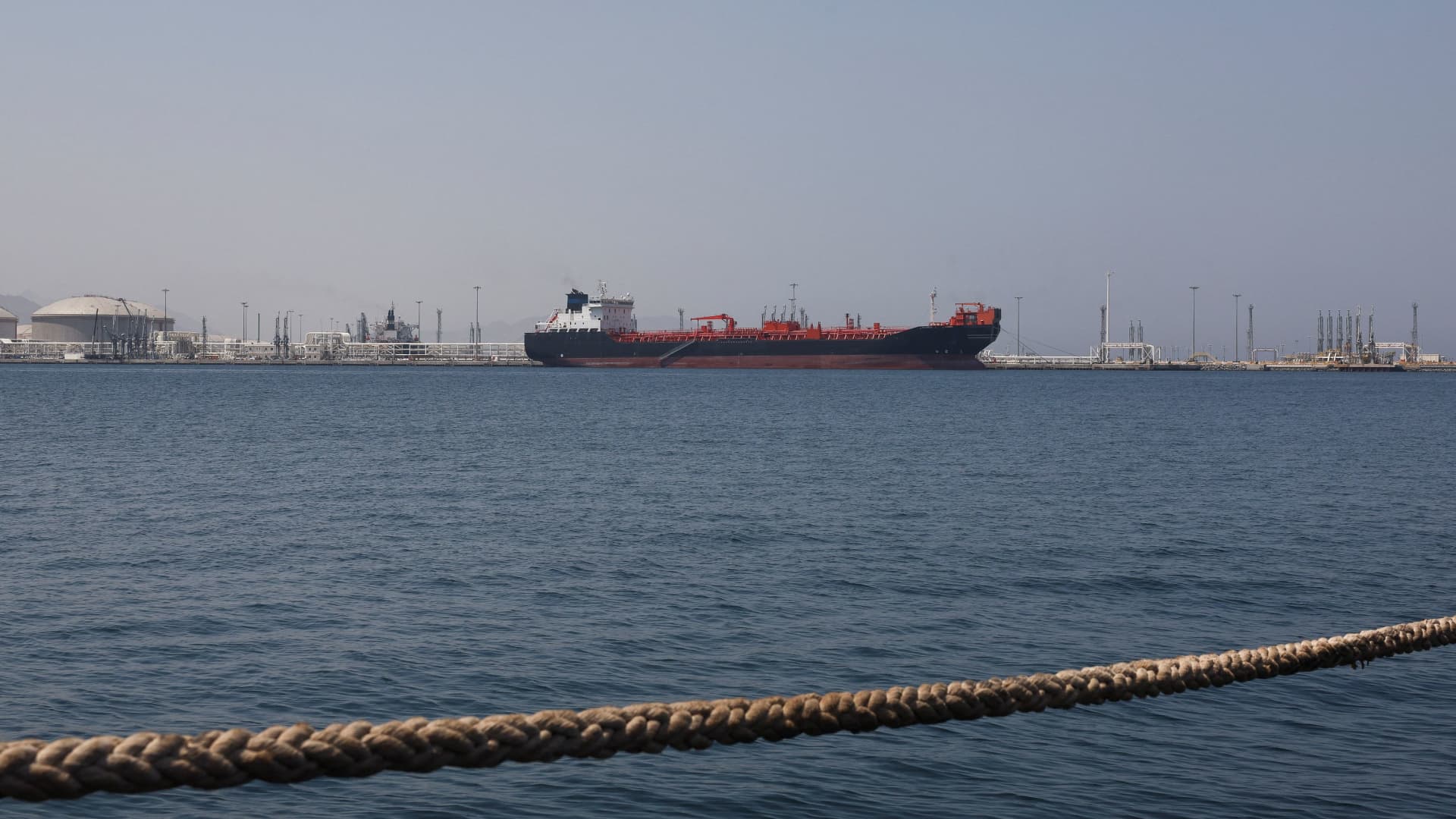
Geopolitical Volatility and the Strait of Hormuz
Crude oil prices moved higher during Thursday's session as market participants recalibrated the risk premium associated with the Strait of Hormuz. Brent crude futures for July climbed 0.91% to $102.19 per barrel, while U.S. West Texas Intermediate futures for June rose 1.23% to $96.25 per barrel. This price action reflects persistent anxiety regarding the security of one of the world's most critical energy transit chokepoints, where U.S. naval blockades and Iranian counter-measures have created a high-stakes standoff.
The immediate market concern centers on the operational status of the Strait. Former U.S. Ambassador to Oman, Marc Sievers, noted on CNBC's "Access Middle East" that the primary focus for regional stability is the full reopening of the waterway. The objective is to ensure that international energy commerce, specifically the movement of oil tankers currently stalled in the region, can resume without the threat of tolls or interference from the Iranian Islamic Revolutionary Guard Corps (IRGC).
The Fragility of Diplomatic Negotiations
Market sentiment remains whipsawed by conflicting signals regarding a potential resolution to the conflict. Reports initially suggested that Washington and Tehran were nearing a 14-point memorandum of understanding, a development that briefly offered a path toward de-escalation. However, these hopes were tempered by President Donald Trump's recent statements on Truth Social. Trump indicated that while a peace deal remains a possibility, the alternative is a significant escalation in military intensity.
"The bombing starts, and it will be, sadly, at a much higher level and intensity than it was before," Trump stated, should Iran fail to agree to the proposed terms. This ultimatum has effectively neutralized the optimism generated by the potential memorandum. The response from Tehran has been equally cautious. Iranian Foreign Ministry spokesperson Esmaeil Baqaei emphasized that the nation is still reviewing the proposal and intends to present its response through mediators in Pakistan. Baqaei further signaled a hardening stance on the nature of these negotiations, citing International Court of Justice precedents to argue that genuine engagement requires good faith rather than coercion or extortion.
Macroeconomic Implications of Sustained Energy Premiums
Beyond the immediate supply-chain disruptions, the duration of this conflict is becoming a central variable for broader economic forecasting. Scott Chronert, a U.S. equity strategist at Citi, highlighted that the persistence of elevated oil prices is a significant factor for future growth expectations. The mechanism here is twofold: higher energy costs act as a direct tax on consumer spending and industrial production, while simultaneously complicating the Federal Reserve's interest rate policy. If oil prices remain elevated for an extended period, the resulting inflationary pressure could force the central bank to maintain a more restrictive monetary stance than previously anticipated.
For traders, the current environment necessitates a distinction between short-term tactical volatility and long-term structural shifts. While the immediate price spikes are driven by the threat of a closed Strait of Hormuz, the more durable impact on equity markets will be determined by how these energy costs filter through corporate earnings and consumer confidence. As the situation evolves, the primary marker for market stability will be the actual, rather than promised, flow of tankers through the Gulf of Oman.
Sectoral Read-throughs and Asset Positioning
Investors evaluating exposure to this volatility should consider the mechanical differences between upstream producers and downstream consumers. While energy producers may benefit from the higher price environment, the broader market faces a drag from increased input costs. For context on broader market health, AlphaScala tracks diverse sectors; for instance, Welltower Inc. (WELL) currently holds an Alpha Score of 52/100, reflecting a mixed outlook in the real estate sector, while Paramount Global (PARA) sits at 30/100, categorized as weak. These scores underscore the importance of sector-specific fundamentals even when macro-level commodity shocks dominate the headlines.
To navigate this, traders should monitor the following indicators:
- The status of the 14-point memorandum of understanding between the U.S. and Iran.
- Official statements from the Iranian Foreign Ministry regarding the mediation process in Pakistan.
- Real-time tanker traffic data through the Strait of Hormuz to confirm if the blockade is easing or tightening.
If the diplomatic impasse continues, the market will likely continue to price in a higher risk premium, keeping WTI and Brent futures sensitive to any news regarding military activity. Conversely, a concrete agreement that guarantees the free passage of energy exports would likely trigger a rapid unwinding of the current risk premium, leading to a sharp correction in oil prices. For those interested in deeper analysis, our commodities analysis and crude oil profile provide further context on how these supply-side shocks typically propagate through global markets. The current setup remains highly binary, with the risk of escalation effectively capping the downside for oil prices in the near term.