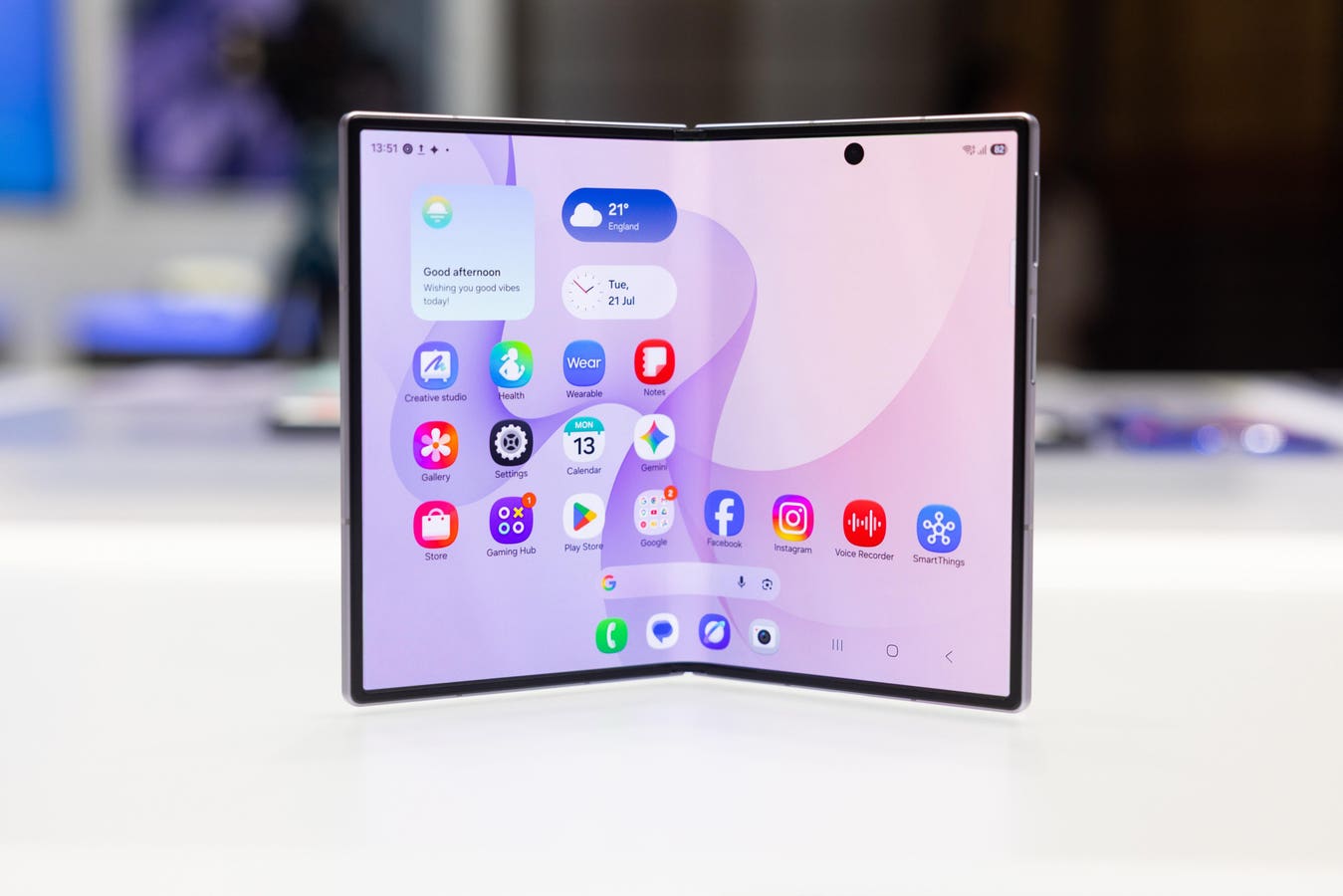
Apple's first foldable iPhone, expected in September, will carry a price tag near $2,400 – at least $500 more than Samsung's Galaxy Z Fold 8, which launched this month at $1,899. The premium is steep, but the investment case for Apple stock hinges on whether the device can pull enough volume to matter to the company's top line.
The foldable phone market remains tiny – roughly 1% of global smartphone shipments. Apple's entry could expand that slice, but only if the iPhone Fold convinces buyers to pay up for a form factor that Samsung has been refining for seven generations.
Bloomberg's Mark Gurman has said the device will "cross the $2,000 threshold." IDC's forecast puts it closer to $2,400 in higher storage configurations. At that price, Apple needs to justify the delta against the Z Fold 8 on hardware, software, and longevity.
Camera gap
The Galaxy Z Fold 8 ships with a 50MP sensor and a 50MP ultrawide, but no telephoto lens. The Z Fold 8 Ultra adds a telephoto for $200 more. The iPhone Ultra is expected to launch with wide and ultrawide lenses, also without a telephoto. The question is image quality.
If Apple brings the full iPhone 18 Pro Max camera stack to the foldable, the video advantage – where iPhone consistently outruns Android flagships – could be a real differentiator. For a $2,400 device, anything less would feel like a compromise.
Resale value
Foldable phones lose an average of 64.6% of their value within 12 months, according to data from SellCell shared with the source. The Samsung Galaxy Z Fold 6 1TB shed nearly $1,500 in one year. Apple's slab phones hold up better: the iPhone 16 retained 51.5% of its launch price after 12 months, versus 35.4% for the average foldable.
SellCell modeled what a $2,000 foldable iPhone would retain if it matched the iPhone 16's depreciation curve: roughly $1,030 after one year, or about $300 more than a comparable Android foldable. That math narrows the effective price gap for buyers who intend to resell, even if first-gen hardware often depreciates faster than established lines.
Battery trade-off
The Galaxy Z Fold 8 uses a 4,800mAh silicon-carbon battery with 45W wired charging. Silicon-carbon packs more energy in the same space than traditional lithium-ion – the Z Fold 7's 4,400mAh cell at 25W was only 0.3mm thicker. Apple has not adopted silicon-carbon in any product, and its first foldable is unlikely to be the testbed. The typical cautious approach suggests a conventional lithium-ion cell, which would likely be smaller than Samsung's. That means paying more for less battery life, though the trade-off could be longer cell longevity.
Software maturity
Samsung has shipped foldable phones every year since 2019. One UI 9 includes taskbar multitasking and foldable-optimized apps. Apple's iOS 27 will include foldable-specific features, but first-gen software on a new form factor carries teething risks. The source notes that even for a company as deliberate as Apple, some early bugs are likely.
For investors, the iPhone Fold is a test of Apple's ability to enter a new category without the margin erosion that often accompanies new hardware. The bill of materials for a foldable display and hinge is higher than a slab phone's, so gross margins could be below the company average. But if Apple captures even 10% of the foldable market – which IDC projects to reach 35 million units by 2026 – that adds roughly $7 billion in revenue at a $2,000 average selling price.
Samsung's Galaxy Z Fold 7 saw price cuts of up to $400 at retail, and the Galaxy S26 Ultra fell by $500 in a recent sale. Apple does not discount directly, but third-party retailers have cut prices on the iPhone Air. If the iPhone Fold sells below expectations, those discounts could narrow the price gap further.
Watch for September's launch event, first reviews, and early sell-through data. The stock's reaction will depend on whether the foldable drives a meaningful upgrade cycle or remains a niche product.