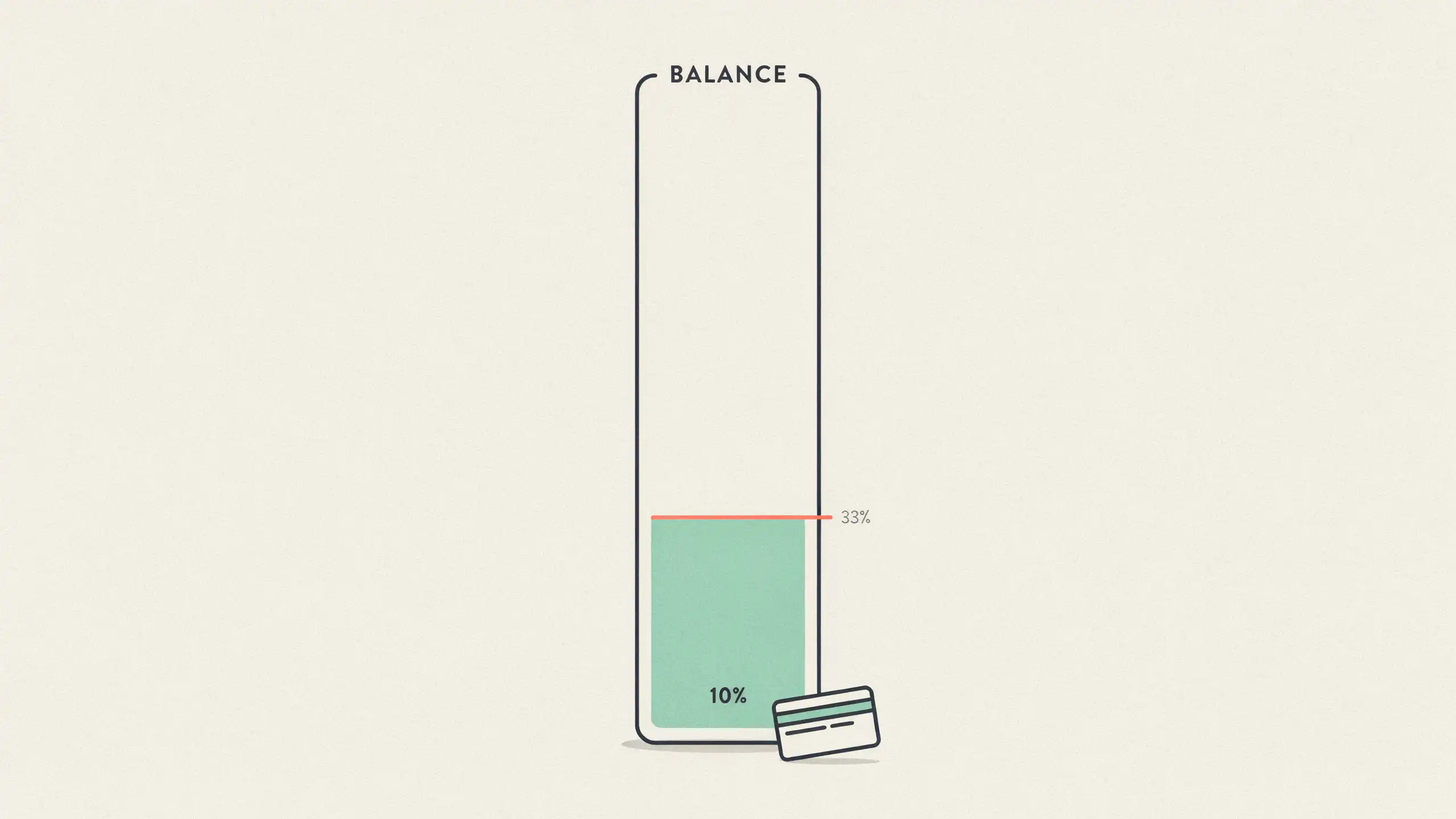
Apple Card holders can raise their credit scores by paying down the balance before the statement closing date, not just before the due date. Credit utilization is the second biggest factor in FICO scoring, and the highest scores cluster when the ratio stays below 10%, not just the standard 30% threshold.
Card issuers report balances to credit bureaus on the statement closing date, typically three weeks before payment is due. An Apple Card user who charges $2,700 of a $3,000 limit and pays in full by the due date still shows 90% utilization to the bureaus. That drags the score until the next lower balance is reported.
A late payment stays on a credit report for seven years. A high utilization ratio stops hurting the moment a lower balance gets reported. That makes it one of the fastest levers on a FICO score, rewarding action within weeks instead of years.
FICO scores also check each card's ratio separately. A single maxed-out Apple Card drags down the overall score even when total utilization looks fine. The fix is to watch every card's closing date and pay down a few days before it posts. Splitting spending into two payments each month keeps the balance from building in the first place.
Widening the denominator helps without paying off a dollar. Request a credit limit increase on a card held for a while. Keep old cards open to pad total available credit. Going from $1,500 in balances on $5,000 in limits to the same $1,500 on $10,000 cuts utilization from 30% to 15%. The limit increase is math, not permission to spend more.
Set a reminder three days before each statement closes. It is the rare credit move that shows up in the score within a single billing cycle.