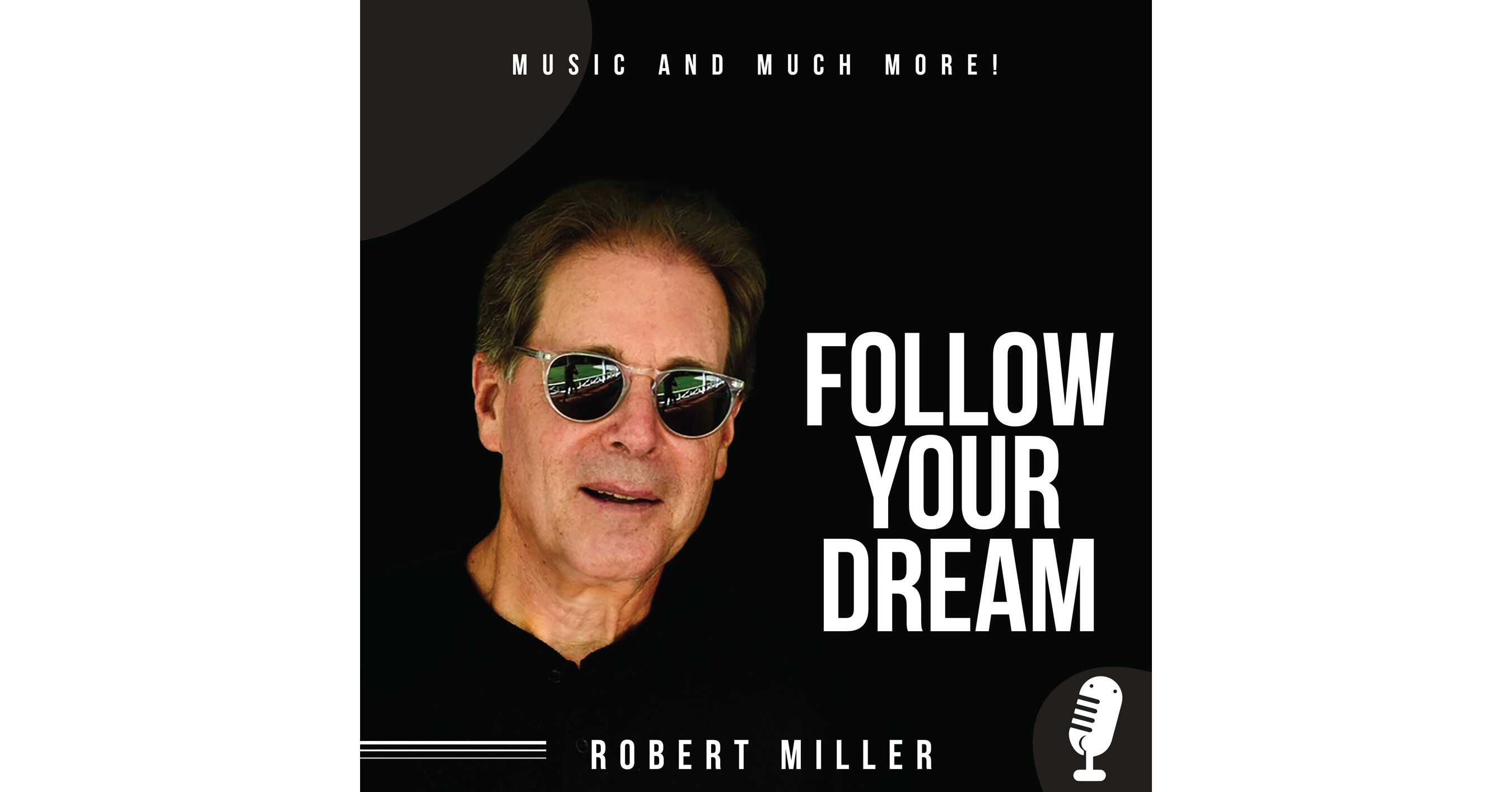
"Follow Your Dream", the podcast created and hosted by Billboard #1 musician and bestselling author Robert Miller, has expanded beyond its original interview format into a multi-format global arts platform. The project, which has generated more than 4.5 million downloads and produced over 750 in-depth conversations with artists from 40 countries, now operates across four distinct creative pillars. It reaches listeners in 200 countries.
The shift marks a structural change for a property that began as a series of peer-to-peer musician interviews. Miller has reorganized the archive and new output into interviews, commentary, curation, and cultural profiles, effectively turning a single-format show into a continuously growing repository of artistic perspectives.
The 750-Episode Archive That Became a Four-Pillar Platform
From Peer-to-Peer Conversations to a Structured Content Engine
The platform did not start with a multi-format blueprint. Miller built it over five years through conversations with musicians, then gradually added voices from film, literature, theater, photography, and poetry. The archive now includes Legends profiles on figures such as Beatles producer Sir George Martin, promoter Bill Graham, and Supertramp founder Rick Davies, alongside Special Collections episodes organized around themes like The Cuban Masters, Broadway Performers, and The British Invasion.
The four-pillar structure gives the archive a navigable shape. Interviews remain the core, commentary adds Miller's own perspective as a working musician, curation packages thematic collections, and cultural profiles provide longer-form biographical treatments. This is not a podcast adding a newsletter; it is a single brand reorganizing its entire output into a coherent media product.
The Four Pillars: Interviews, Commentary, Curation, and Cultural Profiles
Each pillar serves a distinct editorial function. The interview pillar houses the raw conversations. Commentary allows Miller to connect dots across disciplines. Curation surfaces thematic threads that might otherwise remain buried in a 750-episode catalog. Cultural profiles offer deeper dives into individual artists' bodies of work.
The structure matters because it changes how the content can be monetized. A thematic collection can be licensed or packaged for a different platform. A cultural profile can become a standalone documentary treatment. The archive stops being a back catalog and starts functioning as a reusable asset base.
Robert Miller's Background and the Platform's Organic Expansion
A Billboard #1 Musician Turns Interviewer
Miller is not a journalist who picked up a microphone. He is a Billboard #1 musician and bestselling author. That peer status shapes the conversations. Guests include Judy Collins, Melissa Manchester, Arturo Sandoval, Natasha Paremski, Broadway figures Richard Maltby, Jr., Shoshana Bean, Lucie Arnaz, photographers Bob Gruen, Elliott Landy, Jay Blakesberg, and poets Robert Pinsky and Paul Muldoon.
The peer-to-peer dynamic removes the distance that often flattens artist interviews. Miller can discuss the mechanics of a recording session or the economics of a tour from direct experience. That credibility, built over hundreds of episodes, is what allowed the platform to expand beyond music without losing its identity.
Why the Platform Resonates Across 40 Countries
The geographic spread, 40 countries of guest origin and 200 countries of listenership, is not a marketing metric. It reflects the fact that the creative disciplines covered, music, photography, poetry, theater, do not have a single cultural center. A conversation with a Cuban jazz musician travels as easily as one with a British Invasion producer. The platform's editorial voice, rooted in craft rather than geography, makes that reach possible.
How Follow Your Dream's Four Pillars Reflect a Sector-Wide Pivot
The Move From Ad-Supported Audio to Diversified Revenue Streams
The podcasting sector has spent years chasing advertising dollars tied to download numbers. "Follow Your Dream" has 4.5 million downloads, a figure that would support a modest ad business. The platform's reorganization, however, points toward a different model. By structuring content into pillars, Miller creates inventory that can be monetized in multiple ways: licensing thematic collections to educational platforms, packaging cultural profiles for film or publishing, offering curated archives to institutions.
This is not a new idea. Several independent podcasters have moved toward subscription tiers, live events, and video. The difference here is that the pivot is editorial first, commercial second. The four pillars exist because the content demanded them, not because a business model required them. That sequence, editorial structure driving commercial opportunity, is what separates sustainable media brands from download-chasing shows.
Independent Creators Building Media Brands Without Institutional Backing
"Follow Your Dream" has no venture capital, no network parent, and no public ticker. It is a privately held project under Cakewalk Records, Inc. The expansion to a multi-format platform happened without a funding round or a strategic partnership announcement. For the broader creator economy, that path is instructive. It shows that a single-format show can evolve into a diversified media property through organic audience building and editorial discipline, not through a capital-intensive pivot.
That statement is not a mission statement. It is a description of an asset that compounds. Each new episode adds to an archive that becomes more valuable as it grows, because the connections across disciplines multiply.
The Read-Through for Niche Media Platforms
How a Single-Show Podcast Can Evolve Into an Archive and Network
The most direct read-through is for other independent podcasters with deep back catalogs. A show that has produced hundreds of episodes sits on an underutilized asset. The "Follow Your Dream" model suggests that reorganizing that archive into thematic pillars, adding commentary and curation layers, and packaging it as a coherent platform can unlock value without requiring a new content production budget.
This is not a stock-market call. No public company is directly comparable. The read-through is operational: the platform's evolution demonstrates a path from single-format show to multi-format media property that relies on editorial architecture, not on platform algorithms or advertising scale.
The Role of Curation and Special Collections in Audience Retention
Podcast discovery remains broken. Most shows rely on platform recommendation engines or word of mouth. "Follow Your Dream" addresses this by creating its own discovery layer. The Special Collections episodes, Cuban Masters, Broadway Performers, Poetry in Motion, The British Invasion, function as curated entry points. A listener interested in theater does not need to scroll through 750 episodes; they can start with the Broadway collection and then follow the threads into related interviews.
This curation layer also extends the shelf life of individual episodes. An interview recorded three years ago becomes part of a thematic collection and gets surfaced again. The platform's release cadence, four to five new episodes each week, keeps the archive growing while the curation layer keeps the back catalog alive.
Scaling Without a Public Markets Playbook
The Private Path: No Ticker, No Quarterly Pressure
"Follow Your Dream" operates outside the public markets. There is no quarterly earnings call, no analyst coverage, no pressure to show sequential download growth. That structural freedom allowed Miller to spend five years building an archive before reorganizing it into a platform. A publicly traded podcast network would face a different set of constraints, and the sector has seen several high-profile pivots struggle under the weight of investor expectations.
The private path is not a guarantee of success. It does, however, permit a longer time horizon for editorial experimentation. The platform's four-pillar structure emerged from the content itself, not from a strategic review mandated by a board.
What Publicly Traded Podcast Networks Can Learn From the Indie Model
For public companies in the audio space, the "Follow Your Dream" evolution offers a narrow but useful signal. The value in a podcast library is not just in the download numbers; it is in the connections between episodes and the ability to repackage them. A network that treats its catalog as a database rather than a feed can create new revenue lines from existing content. That requires editorial investment, not just technology investment.
The platform's expansion also underscores a risk for ad-dependent models. When a single independent operator can build a global audience of 4.5 million downloads across 200 countries without a marketing budget, the moat that large networks once had, distribution scale, becomes thinner. The competitive advantage shifts to the depth of the archive and the quality of the curation.
For broader market context, see our stock market analysis.