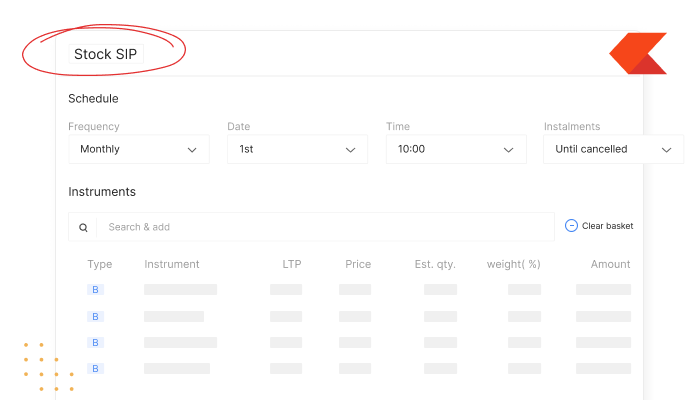
Zerodha redesigned the stock SIP flow on Kite web, moving the setup from a two-step process into a single booking flow and adding a UPI Autopay option that removes the manual funding step.
Stock SIPs on Kite previously required users to build an order basket and link it to a recurring schedule. Enough cash also had to sit in the trading account before every installment. The updated experience lets users start from the Orders menu by selecting SIP, or from the More options menu on any instrument in a watchlist or holdings list.
Zerodha's announcement frames the change around consistency. Building a long-term position requires investing steadily, and the old workflow made it easy to postpone an installment when markets turned volatile. The new design does two things differently: it separates quantity-based plans from amount-based plans, and it lets the amount-based mode fund itself.
Schedules run daily, weekly, or monthly. Users pick the date and time for order placement and set a duration, then add the stocks and ETFs they want to accumulate. Bonds follow the same flow.
A quantity-based SIP buys a fixed number of units per installment. Kite shows the approximate amount required at the latest market prices and notes that the actual sum can differ when the order executes, so account balances still need to be topped up manually before the scheduled time. UPI Autopay and locked instrument weights do not apply to this mode.
The amount-based mode starts from a total installment figure. Units of each instrument are estimated from that figure, and the sum splits across holdings according to user-set weights. A 60/40 allocation between two stocks works the same way as a weighted split across several ETFs. A Split equally option divides the amount evenly, and individual weights can be locked so a change to the overall amount or to other weights leaves that allocation alone.
Fractional units cannot be purchased, which can leave the invested sum slightly below the allocation. Estimated quantities shift with market prices at execution time; the exact fill can differ from the estimate.
UPI Autopay covers the funding leg in the amount-based mode. The bank account is debited one day before the scheduled SIP date, putting the cash in the trading account before orders go out. Setting it up requires entering bank and UPI details and approving the mandate in the UPI app.
Orders default to market orders with market protection, a price band designed to limit the impact of sudden moves. A limit order option exists. The order can go unexecuted if the instrument never reaches the specified price. SIPs run on trading days only; a schedule that lands on a holiday moves to the next trading day.
Existing stock SIPs carry over without action. Plans created before the update with multiple schedules are the exception: they cannot be modified directly, and the extra schedules must be removed first.
The rollout starts on Kite web. Kite mobile will get the same experience later; SIPs created on Kite web may have limited editing options through the app until then.