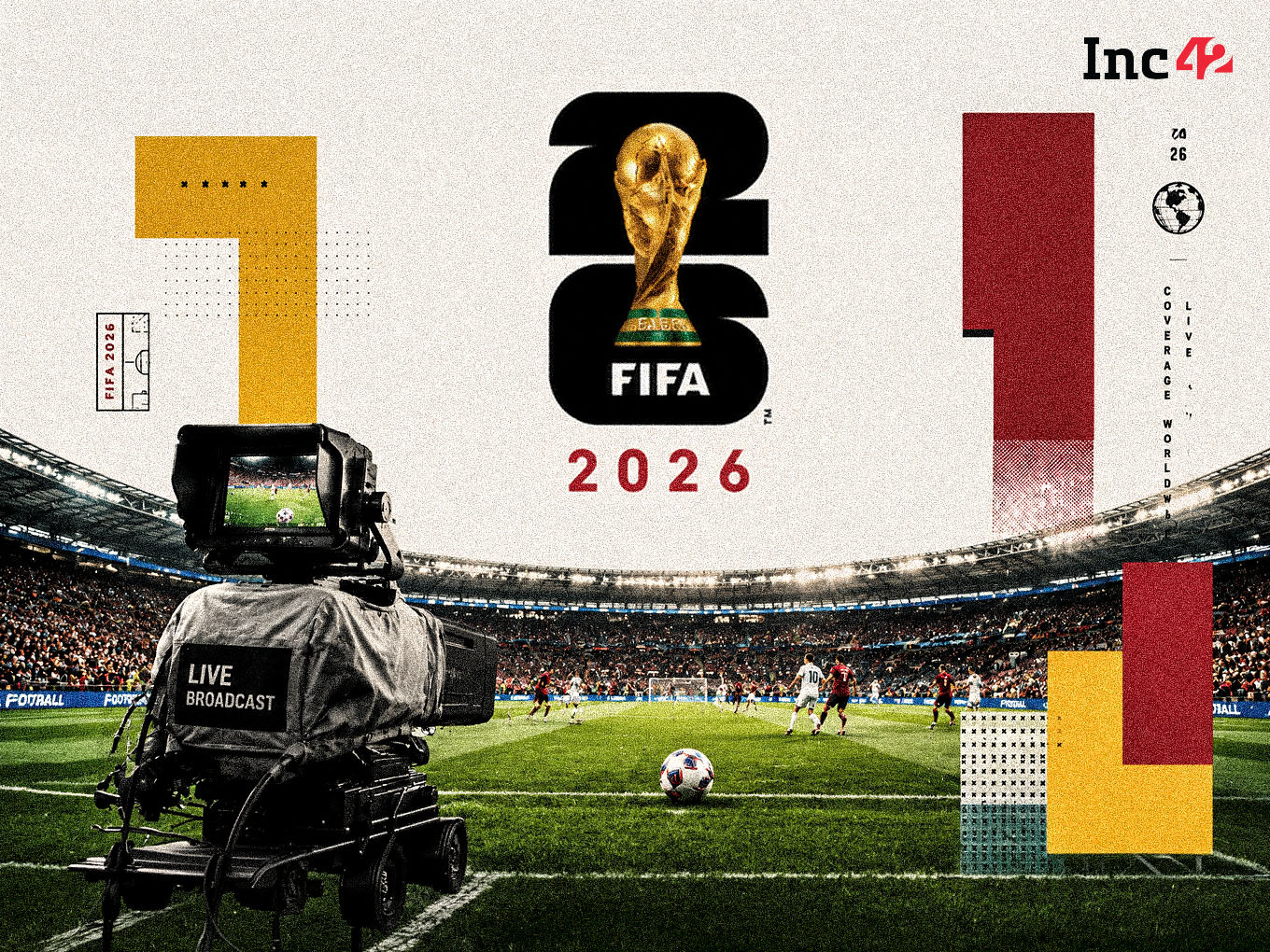
Zee Entertainment secured the India broadcast and streaming rights for the FIFA World Cup 2026, FIFA World Cup 2030, and the FIFA Women's World Cup 2027, ending months of uncertainty over where Indian fans would watch the marquee football event. The deal covers 39 FIFA events between 2026 and 2034, including youth World Cups, Futsal competitions, and Intercontinental Cup fixtures. Matches will air on Zee's newly launched Unite8 Sports channels and stream on ZEE5.
The announcement closes a protracted negotiation that forced FIFA to lower its ambitions. The governing body had initially targeted close to $100 million for the India rights, roughly 40% higher than the $71 million that Viacom18 paid for the 2022 World Cup. That price proved too rich for the market.
JioHotstar's bid was rejected as too low. SonyLIV evaluated the opportunity and chose not to submit a bid. State-run broadcaster Prasar Bharati and FanCode also stayed away. The only serious bidder left was Zee.
What Changed in FIFA's India Rights Auction
The naive read is that Zee simply won a prestigious sports asset. The better read is that FIFA's pricing power collapsed because the buyer pool shrank and capital discipline tightened.
India's sports broadcasting market is more concentrated than ever. JioStar, the merged entity of Reliance Industries and Walt Disney's India media businesses, now controls the most valuable sports properties: ICC events, the IPL, and the English Premier League. That dominance leaves fewer broadcasters able to write big cheques for global events.
At the same time, broadcasters are becoming far more selective about where they deploy capital. After years of heavy spending on cricket rights, the focus has shifted from chasing scale at any cost to extracting returns from existing investments. This caution explains why FIFA's India rights process turned into a prolonged negotiation despite football's growing popularity in the country.
Romy Gai, FIFA's Chief Business Officer, framed the deal positively:
"The Indian market is of strategic importance for FIFA as it displays immense potential driven by a young and passionate audience. We believe the extensive broadcast and digital distribution ecosystem of 'Z' coupled with their deep understanding of local viewers and multi-platform capabilities will play a pivotal role in expanding the reach of football."
FIFA had to recalibrate its expectations. The $100 million target was not met. Broadcasters are tightening capital allocation. The merger of Reliance Industries and Walt Disney's India media businesses created a single dominant platform. That concentration narrowed the pool of buyers able to write big cheques for global events.
What the Deal Includes Beyond the World Cups
Zee's package covers a wide range of tournaments beyond the senior men's World Cups. The list includes:
- FIFA U-20 and U-17 World Cups (men and women)
- FIFA Futsal World Cups
- Intercontinental Cup fixtures
- Exclusive FIFA documentary series
This structure gives Zee year-round football content, reducing the risk of a single-tournament spike. The Unite8 Sports brand will launch four channels: Unite8 Sports 1, Unite8 Sports 1 HD, Unite8 Sports 2, and Unite8 Sports 2 HD. Zee will also stream matches live on ZEE5, offering multilingual coverage.
The Monetization Reality for Zee
The naive take is that Zee just acquired a prestigious asset. The practical question is whether Zee can monetize FIFA content profitably without IPL-scale audiences.
Key insight: The value of a rights package depends on the advertiser's willingness to pay per viewer, not just the raw audience number. Soccer in India still lags far behind cricket in both reach and ad rates. Without a proven track record of converting football viewers into paid subscribers or premium ad inventory, Zee faces an uphill climb.
Zee's strategy combines linear television (still the dominant medium in smaller cities) with digital streaming. That dual approach can capture casual viewers, it also means higher production and distribution costs for multilingual coverage. The network must justify those costs against alternative uses of capital and the opportunity cost of not chasing bigger cricket assets.
Risk Check: Execution and Competitive Pressure
Three risks stand out:
-
Audience fragmentation: Football fans in India are used to free streaming or cable access. Monetizing them requires converting a portion to subscription or compelling advertising data. ZEE5 has a solid user base it is not in the same league as JioStar's combined platform.
-
Cost of production: Producing multilingual broadcasts across multiple channels drains margins. Zee must keep production costs contained relative to ad revenue.
-
Rival counterprogramming: JioStar can run cricket alongside FIFA, siphoning ad dollars and viewer attention. Zee cannot match that scale.
Next Decision Point: Watch Ad Revenue and Subscription Data
For traders tracking Zee Entertainment stock, the first concrete test comes when Zee reports ad revenue for the quarters covering the FIFA World Cup 2026 (June 11, 2026 launch). A meaningful uptick in advertising spend from international brands targeting Indian consumers would validate the thesis. Weak numbers would imply that soccer rights alone do not move the needle.
A secondary marker is ZEE5 subscriber growth during the tournament windows. If the streaming platform adds net new users without heavy discounts, the deal improves the digital business's economics. If growth comes only from free users, the path to profitability remains uncertain.
Zee's Broader Sports Bet
Zee's FIFA rights are part of a larger bet that sports broadcasting can still generate returns in a highly concentrated market. The company's earlier win of a separate eight-year FIFA package, covered in Zee Beats Jiostar for Eight-Year FIFA Rights Package, showed its willingness to double down on football.
The sports market is not growing evenly. Cricket dominates ad budgets. Soccer has a young, urban audience with lower absolute viewership. Zee is betting that the gap will narrow. That bet depends on execution in production, distribution, and monetization.
The deal gives Zee clear programming for the next decade. It also gives the company a high fixed cost that will pressure margins if ad growth stalls. The next two World Cup cycles will determine whether the asset is a bargain or a burden.
For context on the broader media landscape, see the stock market analysis section. Zee's Alpha Score of 32/100 (Weak) in the Communication Services sector, available on the DIS stock page, reflects the execution risks embedded in this strategy.