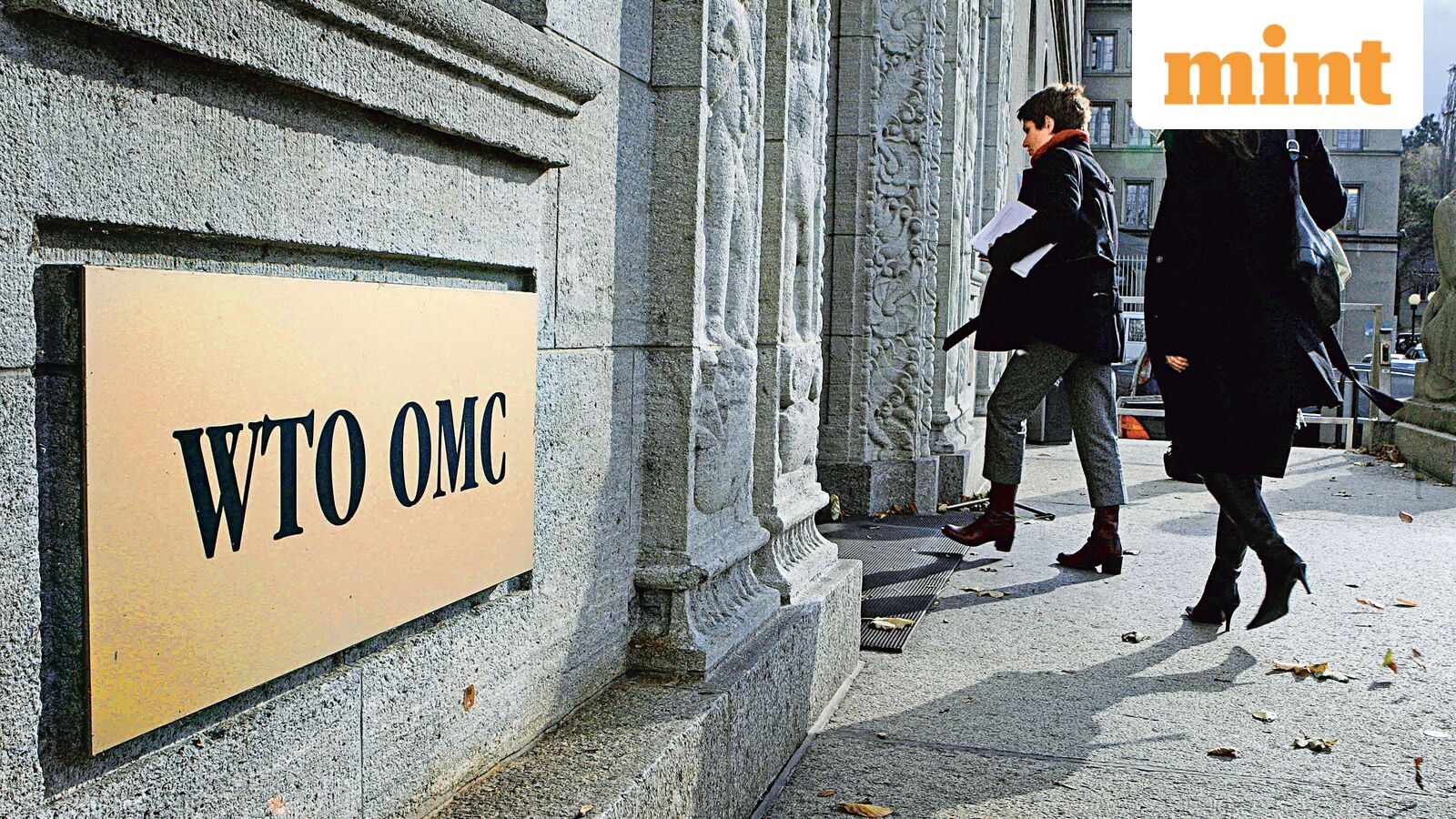
The failure of WTO members to agree on a structured negotiating agenda at the 14th Ministerial Conference (MC-14) in Yaoundé, Cameroon, is not a procedural miss. It reflects a shift from disagreement on reform contours to disagreement on the fundamental architecture of the multilateral trading system (MTS).
The MC-14 Breakdown: From Reform to Architecture
The inability to agree even on a ministerial declaration with a generic paragraph on the WTO's importance is the headline event. The mechanism behind it matters more than the diplomatic embarrassment.
From Contours to Architecture
Until recently, WTO members disagreed on the contours of reform: consensus-based decision-making, the two-tier dispute settlement mechanism, and the extent of special and differential treatment based on development status. Those disagreements were about how to fix a known system.
At MC-14, the disagreement shifted to the fundamental architecture of the WTO itself. Members now disagree on what the system should be, not just how to adjust it. This is a structural change in the negotiation dynamic. When the question shifts from "how to reform" to "what are we reforming toward," the probability of any near-term agreement drops sharply.
The Bulldozer Problem
One of the architects of the original WTO system is now acting as its "very bulldozer," according to the article's authors. This is not a neutral observation. The United States, which helped design the post-1995 rules-based order, has shifted from system maintenance to system pressure. The mechanism is straightforward: when the largest economy in the system no longer treats the system's survival as a priority, every negotiation becomes a test of whether the system can absorb unilateral pressure.
The Mechanism Behind the Stasis
The article identifies three structural forces that explain why MC-14 failed and why the next conference is unlikely to succeed without a change in approach.
Geopolitical Fragmentation
Growing geopolitical fragmentation reduces the trust needed for any multilateral exchange of policy space. A WTO agreement is a mutual exchange of policy space: each member gives up some domestic policy autonomy in exchange for predictable access to other markets. When trust erodes, the willingness to make those exchanges collapses.
From Protectionism to Precautionism
The shift from protectionism (protecting producers from foreign competition) to precautionism (protecting citizens and consumers from a range of risks) changes the nature of trade disputes. Protectionist measures are about tariffs and quotas. Precautionist measures are about standards, regulations, and risk assessments. These are harder to negotiate because they touch domestic regulatory sovereignty directly.
The Plurilateral Workaround
A group of WTO members agreed at MC-14 on interim arrangements to operationalize the Electronic Commerce Agreement, while saying they will continue efforts toward its full incorporation into the WTO rulebook. This is a new approach the article calls "operating within the impasse."
In a well-functioning system, this would be circumvention and subversion. In the current context, it is seen as progress. The mechanism is straightforward: when the full multilateral track is blocked, members who want results will find alternative paths. The risk is that these plurilateral agreements create a two-tier system where some members benefit from new rules while others are left out.
Who Is Exposed and How
The article focuses on two economies that are structurally dependent on a functioning multilateral trading system: China and India.
China's Exposure
China's economic model relies on export-led growth and access to global markets. A fragmented trading system with inconsistent rules across regions increases transaction costs and reduces the predictability that underpins long-term investment decisions. China's response has been to pursue regional and bilateral FTAs, the article argues these cannot substitute for the MTS.
India's Exposure
India is similarly dependent on international trade for economic growth. The article notes that India relies on a well-functioning, rules-based MTS as a global public good to underwrite trade stability and predictability. India's position at the WTO has been defensive on issues like agricultural subsidies and special and differential treatment, the system's erosion hurts India's export ambitions directly.
The FTA Limit
Regional and bilateral FTAs can complement the MTS but cannot substitute for it. The mechanism is simple: FTAs create preferential access between specific partners, they do not provide the global predictability that allows businesses to plan supply chains across multiple markets. A company exporting to 20 countries would need 20 different sets of rules under an FTA-based system, versus one set under the WTO.
The EU-CPTPP Bridge: A Second-Best Solution
The article mentions a proposed cooperation between the EU and economies of the Comprehensive and Progressive Agreement on Trans-Pacific Partnership (CPTPP) . The effort would establish bridges between trading systems through common rules of origin.
How Bridges Work
Common rules of origin allow a product to qualify as originating in one trade bloc and then be treated as originating in another bloc for tariff purposes. This reduces the friction of trading across multiple FTAs. The article is clear: such approaches remain second best to a functioning MTS.
The mechanism is that bridges require negotiation between blocs, which takes time and political capital. They also create complexity: a product might qualify under the EU-CPTPP bridge but not under a separate EU-India FTA, creating a web of overlapping rules that only large compliance departments can navigate.
What Would Confirm the Thesis
The article's central thesis is that the WTO is in a vicious cycle: systemic issues block progress on substantive trade matters, and the list of systemic issues is expanding. The following would confirm this thesis is correct:
- No ministerial declaration at MC-15: If the next ministerial conference also fails to produce a declaration, the pattern is confirmed.
- More plurilateral workarounds: If more members adopt the "operating within the impasse" approach for other agreements, the multilateral track is being abandoned in practice.
- U.S. continues to bypass the system: If the U.S. uses tariff tools outside WTO frameworks without facing effective pushback, the system's enforcement mechanism is broken.
- China and India shift to bilateral FTAs: If these two economies pivot decisively to bilateral deals, they are signaling that the MTS is no longer their primary vehicle.
What Would Weaken the Thesis
The following would suggest the WTO can still recover:
- A breakthrough on dispute settlement reform: If members agree on a path to restore the Appellate Body, the system's enforcement mechanism is being rebuilt.
- A successful MC-15 with a substantive agenda: If the next conference produces a structured negotiating agenda, the current impasse was a one-off.
- The U.S. re-engages on reform: If the U.S. proposes a concrete reform agenda rather than blocking progress, the system's largest member is back in.
- The Electronic Commerce Agreement is fully incorporated: If the plurilateral workaround leads to full multilateral adoption, the system can absorb new approaches.
The CUTS Initiative: Trade, Not Just Aid
The article introduces a new initiative by CUTS International called "Trade, Not Just Aid," co-chaired by the three authors. The initiative aims to take WTO reform issues around the world, raising awareness about the WTO's role in daily life.
Why This Matters for Traders
The initiative's focus on demystifying and democratizing trade discussions is not just a policy exercise. If the WTO's role in daily life is better understood, political pressure for reform could increase. That would change the probability of a breakthrough at MC-15 or MC-16.
For now, the initiative is a long-term effort. The article's authors include a former WTO director-general, a former Indian foreign minister, and the secretary general of CUTS. Their combined credibility gives the initiative weight, the mechanism for translating awareness into political action is slow.
The WTO stalemate is not a near-term catalyst for any single stock or sector. It is a structural risk for any company with cross-border supply chains. The erosion of predictable trade rules increases the cost of doing business across borders, which reduces margins for exporters and importers alike.
For traders tracking the stock market analysis space, the WTO's trajectory is a slow-moving variable. It does not create a tradeable event today. If the system continues to fragment, the cost of hedging currency and tariff risk will rise, and companies with diversified supply chains will gain a structural advantage over those concentrated in single markets.
The WTO is not dead. It is in a phase where the cost of using the system is rising while the benefits are declining. Traders should watch for any shift in U.S. trade policy or a breakthrough at MC-15 as the next concrete markers. Until then, the default assumption should be that fragmentation continues.