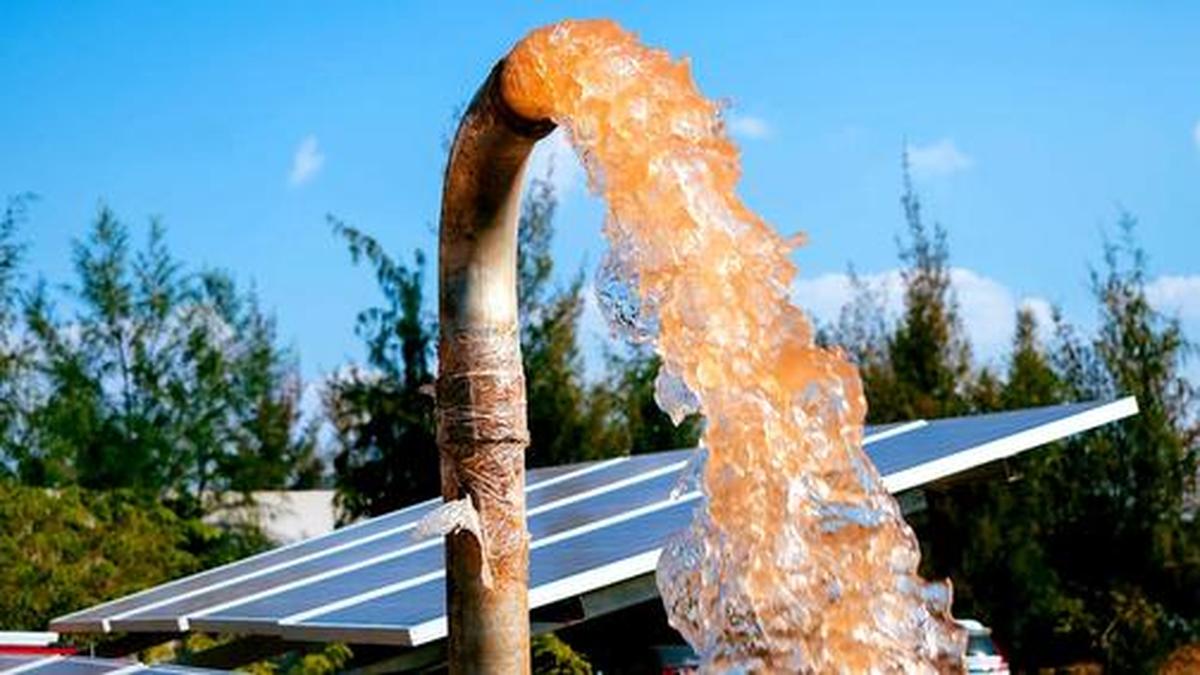
The Watershed Organisation Trust (WOTR) has successfully deployed its community-led groundwater management framework across 183 villages spanning Maharashtra, Telangana, Madhya Pradesh, and Odisha. By integrating the Community Driven Vulnerability Evaluation Visual Integrator (CoDriVE-VI) tool, the organization is shifting the management of water-stressed aquifers from decentralized, uncoordinated extraction to a data-informed, collective model. This transition is critical for regions where agricultural livelihoods face existential threats from rapidly declining water tables.
The Mechanism of CoDriVE-VI Integration
The core of this intervention lies in the CoDriVE-VI tool, which provides a 3D visual representation of both the surface landscape and the underlying aquifer systems. This visualization is not merely an academic exercise; it serves as a decision-support system for local farmers. By mapping how groundwater flows and how localized extraction impacts neighboring plots, the tool creates a shared understanding of the resource as a finite, interconnected asset. This shift in perception is the primary catalyst for the adoption of water-efficient irrigation and strategic crop planning.
Operational Impact and Resource Efficiency
The initiative has demonstrated measurable improvements in water security, with reported gains of approximately 20 percent in groundwater availability. Furthermore, the focus on identifying specific recharge zones has enhanced the annual recharge capacity of these regions by 20 to 30 percent. These figures suggest that the bottleneck in rural water management is often information asymmetry rather than a total lack of physical resource. By providing farmers with the technical capacity to interpret aquifer dynamics, WOTR has effectively lowered the barrier to entry for sustainable water stewardship.
Scaling and Long-Term Resilience
With 39 on-ground training sessions completed, the program has reached over 1,310 farmers. The scalability of the CoDriVE-VI approach is significant because it relies on local stakeholders to interpret data and enforce usage patterns, rather than top-down regulatory mandates. Ankita Yadav, Senior Researcher at W-CReS, noted that the objective is to foster responsible usage through a shared understanding of the resource. This community-led model is increasingly relevant as climate volatility makes traditional water management practices obsolete.
For investors and analysts tracking the intersection of climate resilience and agricultural productivity, the WOTR model provides a blueprint for how technology can stabilize rural economies. While the current scale is limited to 183 villages, the methodology is designed for expansion into other vulnerable regions. The success of this initiative underscores a broader trend in stock market analysis where resource efficiency is becoming a key indicator of long-term economic viability in emerging markets. As companies like ARM (Arm Holdings plc) continue to drive the underlying hardware and sensor technology that powers such data-intensive tools, the synergy between high-tech visualization and on-the-ground sustainability will likely intensify. The ability to quantify recharge capacity and water availability at the village level is a necessary precursor to any large-scale investment in climate-resilient agriculture.