Sales of catastrophe bonds that carry wildfire exposure have soared past $5 billion this year, approaching the record set during all of 2025, according to data published Monday by Artemis, an industry data specialist. Issuance last year ran roughly double the prior year's total.
Insurers are turning to the bonds to pass historic levels of wildfire risk to capital-market investors. Investors lose principal when a predefined catastrophe hits; they collect a premium when it does not. Wildfire is the fastest-growing natural-catastrophe peril in the world. Insured losses are climbing about 12% a year, according to KatRisk, a risk modeling firm, and investors are growing more comfortable with the models used to map that exposure.
"The key enabler is robust risk quantification," said Tyson Vickery, managing director and global placement leader for Europe at Marsh, the world's largest insurance broker. "Investors need confidence in the underlying hazard data and catastrophe models."
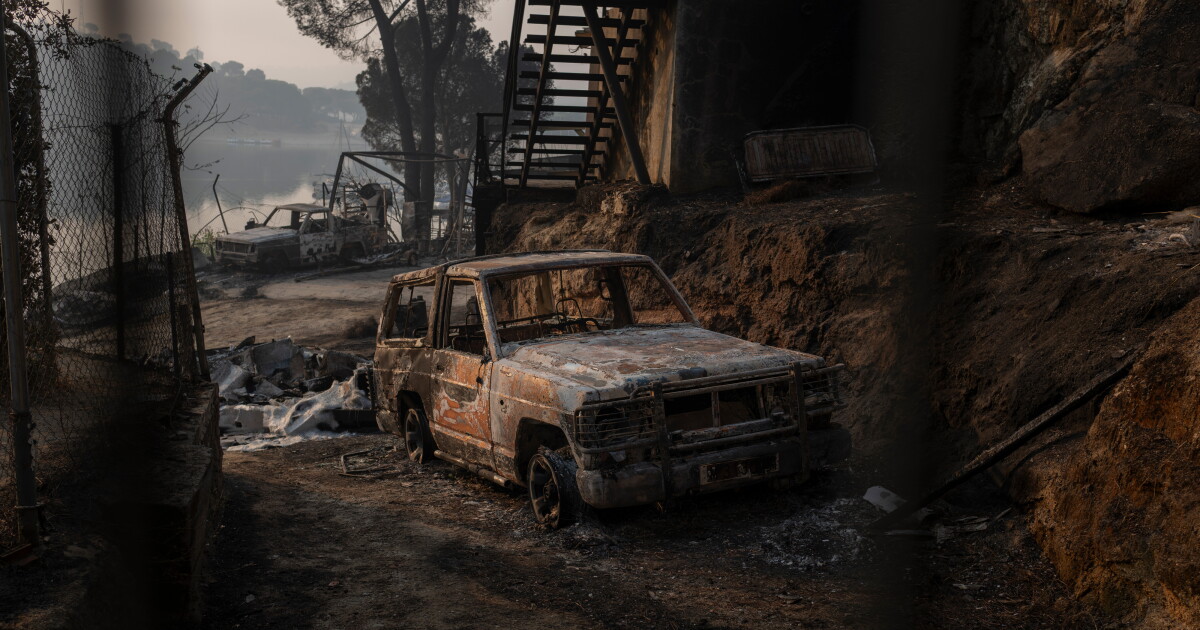
California dominates the market today. Insurers and investors interviewed by Bloomberg say Europe will eventually need a way to pass wildfire risk to private investors. The continent is the fastest-warming in the world, and its fires are increasingly frequent and destructive. How much damage this season's fires have caused is still unclear, insurers said.
Will Bruce, global head of climate risk consulting at Aon Plc, said the region's cat bond market has a long way to go before it catches up with the U.S. "Whether a specific market develops around European wildfire risk will depend on a range of factors, including exposure growth, demand for protection, investor appetite and continued advances in modeling and analytics," he said.
Wildfire modeling in Europe is advancing, Vickery said. It is still less mature than the models built for markets such as California.
The wildfire-linked issuance is part of a broader cat bond boom. New sales surged 45% last year, lifting the total outstanding market to a record $61 billion. Hurricanes remain the dominant peril by far. Balz Grollimund, head of catastrophe perils at Swiss Re, said interest in transferring wildfire risk to capital markets is growing. "The absolute risk for the insurance industry is still small compared to global peak risks that are typically covered by cat bonds," he said.
Rising temperatures are turning wildfires into a more frequent and destructive category of natural catastrophe. Investors have mostly bought bonds that bundle wildfires with other perils. Standalone wildfire exposure is becoming more common. Dirk Schmelzer, a senior fund manager at Plenum Investments AG, said the risk is now large enough to be placed "on a standalone basis."
California's FAIR Plan Turns to Cat Bonds
The fires that tore through the greater Los Angeles area in January 2025 destroyed more than 16,000 buildings and produced a record $40 billion in insured losses. Insurers have declined to renew more than a million wildfire policies in recent years. Homeowners now lean on the state-backed California FAIR Plan, the insurer of last resort; its exposure has grown sharply, with Los Angeles County alone up more than 50% between 2024 and 2025. The FAIR Plan entered the cat bond market last year.
Modeling a Fire's Path
Predicting where a fire will go and how fast it will move requires mapping temperature, vegetation growth, wind speeds and local topography. Wildfires are also one of the few disaster categories where human intervention can change a bond's risk metrics; cutting back dense and dry vegetation early in the season can materially alter the odds of a loss.
Verisk and Moody's are among the firms releasing new models that give investors more to work with. Moody's carries an Alpha Score of 66 out of 100, which AlphaScala rates Moderate; see the MCO stock page.
Acrisure Re, a reinsurance broker, said better modeling has had a "profound" impact and is already feeding back into pricing. Wildfire models had tended to "systematically" underestimate the risk in the past, the broker said; newer versions incorporate up-to-date fire data and climate trends, making them more reliable. "Sponsors with good data and prudent structures are finding receptive investors, whereas poorly understood wildfire risks would still face a high cost of capital," Acrisure said in a report.