The AI Leadership Gap Is Not About Technology
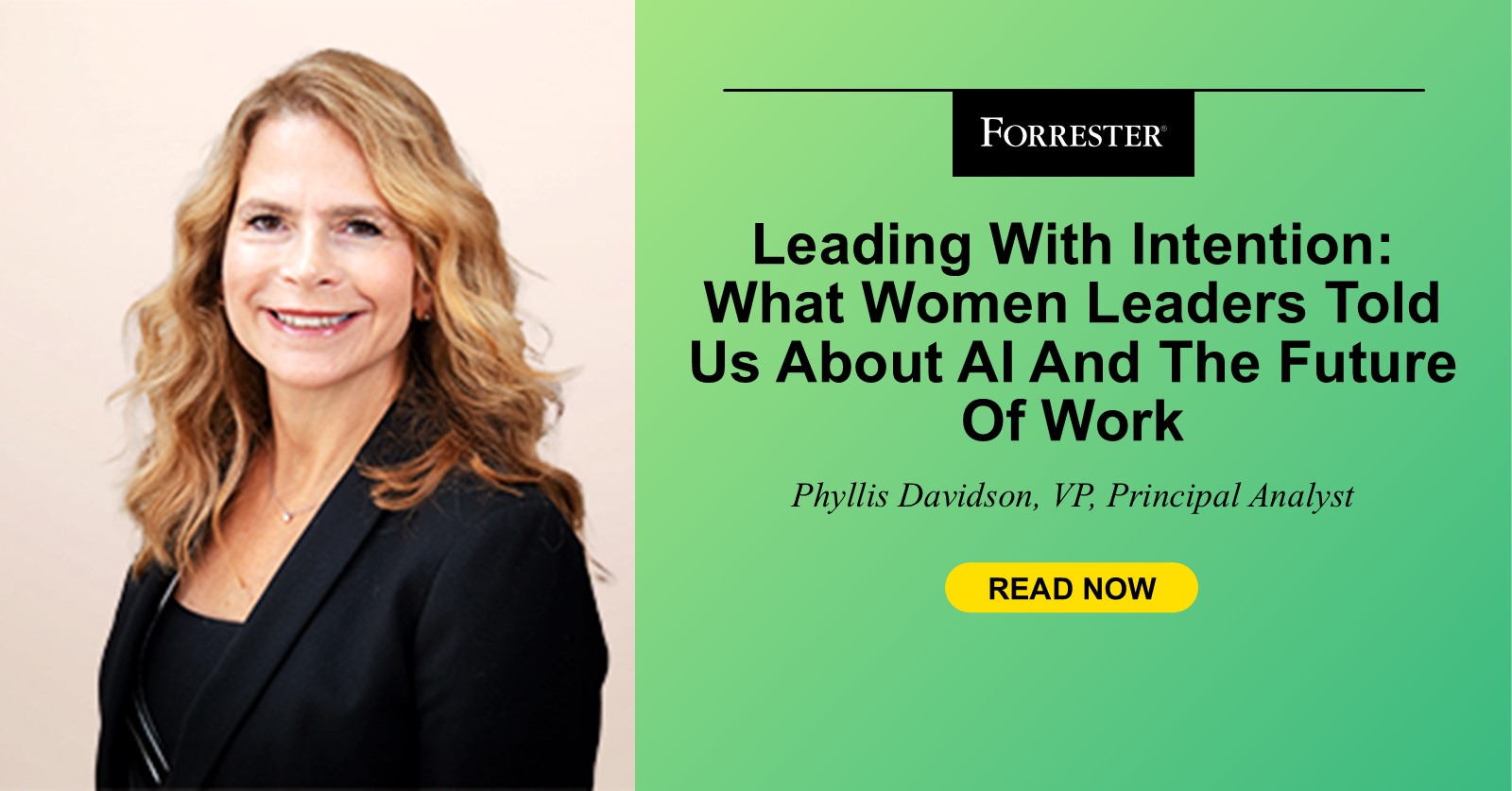
At the Forrester B2B Summit in Phoenix this April, more than 200 women gathered for the Forrester Women's Leadership Program. The roundtable topic was deliberate: AI and the future of work. The framing came from Heather Cairns-Lee of the International Institute for Management Development, who said during a webinar that "AI may become one of the most significant leadership opportunities for women in decades. Its impact will depend on how capability, governance, and leadership are built around it."
That sentence captured the tension in the room. The conversation about AI and women at work has polarized. Barron's has warned about disproportionate risk for women. Forbes, Fortune, and CNBC have run more optimistic pieces on women's potential advantage in AI-enabled leadership. The data, however, cuts a sharper line.
The McKinsey Data That Changes the Frame
McKinsey's "Women in the Workplace 2025" report found that women are 23% less likely than men to receive manager support for using AI and less likely to be recognized for doing so. This is not a skills gap. It is a recognition gap and a sponsorship gap. The implication for the women in the room was direct: AI alone will not close workplace equity gaps. Leadership choices will.
What Women Bring to an AI-Enabled Environment
The roundtables started with a reflective question: what perspectives do women uniquely contribute when AI is reshaping workflows? Participants identified four clusters of strengths.
- Agility as learners in fast-moving, ambiguous contexts where the rules are not yet written.
- Emotional intelligence and empathy applied at organizational scale, not just in one-on-one interactions.
- Calm, adaptive leadership during moments of crisis when the default playbook does not apply.
- Community building and mentorship as force multipliers that compound individual capability into team capability.
These are not soft skills in the traditional sense. They are structural advantages in an environment where AI handles the repeatable and the predictable, leaving the ambiguous, the relational, and the high-stakes to human judgment.
The Central Question: Equitable AI Transformation
The roundtables then moved to the actionable question: What can each person do, individually and collectively, to ensure that AI transforms leadership in equitable ways? The answers fell into three categories.
Setting Norms Before the Norms Are Set
Participants described AI less as a destiny and more as a leadership moment. The practical takeaway was that norms around AI use are being written right now, in real time, inside individual teams and departments. The women who participate in those conversations – who ask the governance questions, who push for transparency in how AI tools are evaluated and deployed – are shaping the rules before the rules harden.
Building Capability, Not Just Access
Access to AI tools is not the same as capability to use them well. The roundtables emphasized that building real capability requires manager support, time for experimentation, and recognition for results. The McKinsey finding that women receive less manager support for AI use is not a technology problem. It is a management problem that requires a management solution.
Leading with Intention, Not Reaction
The program was designed around a simple idea: focus fuels intentional action, and intentional action drives transformation. The women in the room were not reacting to AI. They were asking how to shape it. The keynote from Divya Rajagopalan, VP of global partner strategy at ServiceNow, reinforced that resilience is not about enduring change but about directing it.
The Risk of a Missed Opportunity
Key insight: AI will not close workplace equity gaps on its own. The gap will narrow only where leaders actively choose to sponsor, recognize, and support women's AI adoption at the same rate as men's.
If the current pattern holds – where women are less likely to receive manager support for AI use and less likely to be recognized for it – the technology will amplify existing disparities rather than reduce them. The roundtables did not treat this as inevitable. They treated it as a design problem that leadership can solve.
What This Changes for Leaders
For a senior editor at AlphaScala, the read is straightforward. The AI adoption story in the workplace is not just about which companies deploy the best models. It is about which organizations build the governance, capability, and sponsorship structures that let all employees – not just the ones who get manager nudges – use AI effectively.
Companies that ignore the 23% gap in manager support for women's AI use are leaving capability on the table. Companies that address it are building a durable advantage in how they deploy human judgment alongside machine output.
The women at the Forrester B2B Summit did not treat AI as a threat to their careers. They treated it as a moment to set the terms. That is the difference between reacting to change and leading through it.
The Next Decision Point
The roundtables produced no single manifesto. What they produced was a shared resolve that the next six to twelve months will determine whether AI adoption widens or narrows leadership gaps. The practical test for any organization is simple: are women getting the same manager support, the same recognition, and the same sponsorship for AI use as men? If the answer is no, the gap is a leadership choice, not a technology outcome.
For the women who attended the program in Phoenix, the work is already underway. The question for everyone else is whether they will join it.