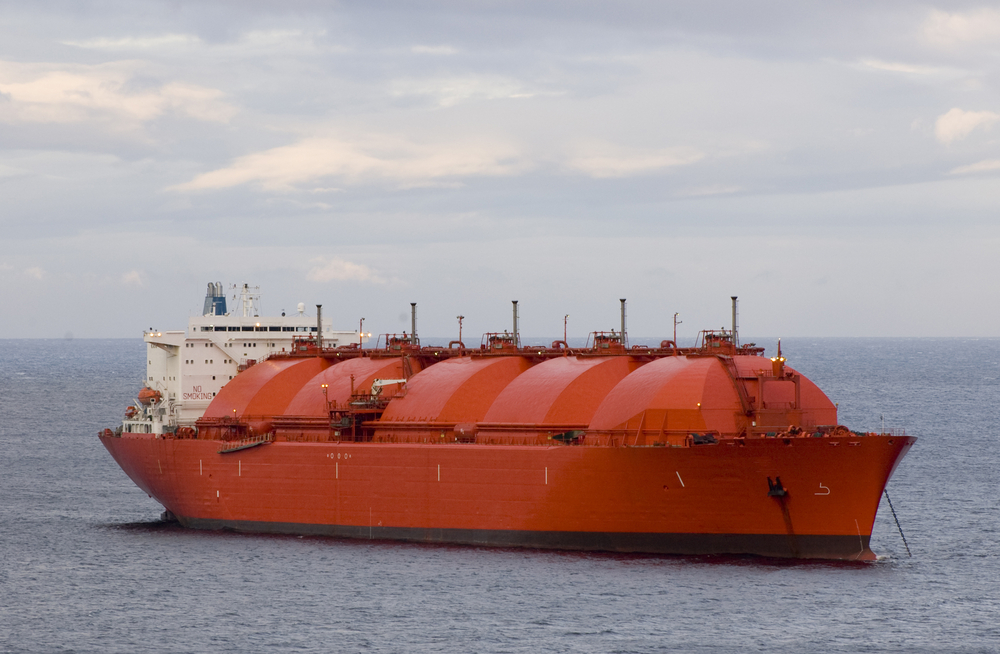
American liquefied natural gas exports hit a record in March 2026 as plants ran above nameplate capacity and new units came online. Shipments to Asia more than doubled from the previous month. Nearly a quarter of all American LNG went to Asia in April, a sharp increase since the conflict began in late February.
The driver is a multi-year supply hole. Iranian missile attacks on Qatari LNG infrastructure have disrupted deliveries to buyers, especially in Asia. Repairs could take years. At the same time, Europe continues to move away from Russian gas, and China is set to receive its first US LNG shipments in over a year next month, following President Trump’s trip to Beijing.
The simple read: the United States, already the world’s largest LNG exporter, is filling a structural supply gap and will double export capacity by the end of this decade. The better market read: not all LNG stocks benefit equally. Project execution risk, arbitration exposure, and contract structures separate the winners from the names that will lag.
The Middle East Disruption That Reshaped Global Flows
The attack on Qatari facilities is not a one-month shock. Infrastructure damage of that scale takes years to repair. That means cargoes originally contracted to Asian buyers must find new sources. US LNG, with flexible offtake agreements and a growing fleet of liquefaction trains, is the natural replacement.
This is not a temporary reshuffle. The United States built its export infrastructure after the shale revolution, and the cost of new capacity is falling. The Department of Energy has approved additional exports, and developers like NextDecade Corporation and Venture Global are racing to finish construction.
The Volume Picture
March’s export record was not a one-off. Plants that have been idled or restricted are now running above design capacity. New units at Cheniere Energy’s Corpus Christi and Venture Global’s Calcasieu Pass are contributing. The result is a market where the US is the marginal supplier to both Europe and Asia.
For traders, the question is how much of this volume growth is priced in. The LNG futures curve has shifted upward since February. Long-term contracts signed before the conflict may not capture the full spot uplift. Companies with more spot exposure – like Cheniere and Venture Global – stand to benefit more than integrated majors whose LNG revenue is a fraction of total earnings.
US Export Capacity Doubling: Supply Growth vs. Execution Risk
The US is on track to double its LNG export capacity by 2029. That means annual capacity additions of roughly 15 million tonnes per annum, or about 50% of the current total. Capacity announcements are not deliveries. The table below shows the status of NextDecade’s Rio Grande project:
| Train | Completion % (as of March 2026) | Target First LNG |
|---|
| Train 1 & 2 | 67.8% | H1 2027 |
| Train 3 | 44.2% | TBD |
| Train 4 | 10.6% | TBD |
| Train 5 | 6.8% | TBD |
NextDecade is targeting first gas in the second half of 2026, with first LNG from Train 1 in early 2027. Trains 4 and 5 are still early. That timeline assumes no permitting delays, no cost overruns, and no labor disruptions. None of those are guaranteed.
The Cost of Delay
Every quarter of delay pushes breakeven prices higher for developers that are not yet cash-flow positive. Venture Global has lower construction exposure because its Calcasieu Pass is operational. Its Plaquemines facility is still being brought online. The company also faces an arbitration dispute that could affect contract terms.
For traders, the gap between the bullish macro story and the micro execution reality creates a natural filter: stocks with confirmed first-cargo dates and low leverage to disputed contracts deserve a premium over pure developers.
Venture Global: Strong Q1 Beat with Arbitration Overhang
Venture Global reported strong first-quarter 2026 results, placing it among the energy stocks that crushed earnings estimates. On May 20, Raymond James lifted its price target from $14 to $16, maintaining an Outperform rating. The firm called the company an “attractive LNG growth platform” with a differentiated, repeatable development model.
The note also flagged mixed near-term sentiment driven by macro volatility in the LNG sector amid the US–Iran war and uncertainty surrounding the company’s arbitration issues. That is the risk that investors who buy on the Q1 beat alone might miss: the arbitration could change the economics of Venture Global’s long-term contracts with major buyers.
NextDecade Corporation: Citi’s Buy Call and the Rio Grande Progress
NextDecade received a vote of confidence on May 13 when Citi initiated coverage with a Buy rating and an $11 price target, implying 30% upside. Citi described the company’s Rio Grande site as “one of the last large-scale LNG export facilities on the US Gulf Coast.”
What makes NextDecade different from Venture Global is that it has not yet shipped cargo. Its progress is measured in construction milestones, not earnings beats. The stock will move on first-gas announcements, train completion updates, and offtake agreements. The 67.8% completion for Trains 1 and 2 is encouraging. The 44.2% for Train 3 and the single-digit figures for Trains 4 and 5 mean the bulk of the value is three years away.
Cheniere Energy and the Incumbent Advantage (Alpha Score 66)
Cheniere Energy (NYSE: LNG) is the established player with fully operational facilities at Sabine Pass and Corpus Christi. It has long-term contracts, a proven liquefaction process, and a track record of cash generation. In the AlphaScala proprietary rating system, Cheniere earns an Alpha Score 66/100, labeled Moderate, in the Energy sector.
That score reflects a company with stable earnings and limited near-term upside catalysts – unless a new supply disruption or additional capacity expansion drives volume higher. Cheniere’s stock page at /stocks/lng provides detailed metrics.
How Cheniere Compares to the Majors
Exxon Mobil (XOM) scores 54/100 (Mixed), and Chevron (CVX) scores 48/100 (Mixed). Both are part of the LNG value chain through their own liquefaction projects and equity stakes. LNG is a smaller portion of their overall earnings. That means their stock prices are less sensitive to the Middle East disruption as a pure-play LNG trade.
For traders seeking direct LNG exposure, Cheniere offers the cleanest balance of operational certainty and growth optionality. The 66 score does not signal that the stock is a buy or sell. It signals that the company’s fundamentals are moderate relative to peers, and the market pricing reflects that.
The Practical Framework for LNG Stock Selection
Not all LNG stocks are interchangeable. The sector splits into three tiers:
- Pure-play developers – Venture Global, NextDecade, Golar LNG. High potential upside with material execution risk. Stock moves on milestones, not macro.
- Pure-play operators – Cheniere Energy. Existing cash flow, moderate growth. Lower risk, lower relative upside.
- Integrated majors – Exxon, Chevron, ConocoPhillips, Shell, BP, TotalEnergies. LNG as a segment, not the story. Stock moves on earnings and oil price, not LNG-specific catalysts.
Three Factors to Monitor
- Project execution milestones – First gas dates, train completions, final investment decisions. Track these for Venture Global, NextDecade, and any new entrants.
- LNG pricing curve and contract structures – Spot market prices have moved higher. Many US projects sell on long-term contracts indexed to Henry Hub plus a fixed liquefaction fee. The conflict only boosts margins if the fee or the spread widens.
- Geopolitical risk – A ceasefire or reopening of the Strait of Hormuz could ease supply fears and flatten the forward curve. The article Oil Drops 7% as Trump Signals Strait of Hormuz Reopening outlines the downside scenario for energy names.
The LNG trade is grounded in a real supply deficit, not speculation. The disparity between the macro tailwind and the micro execution risk means the trade pays off only for names that deliver on time. NextDecade’s first LNG in early 2027 and Venture Global’s arbitration resolution are the near-term checkpoints. Until then, Cheniere offers the cleanest exposure with the least project risk, and its Alpha Score of 66 reflects that balance.