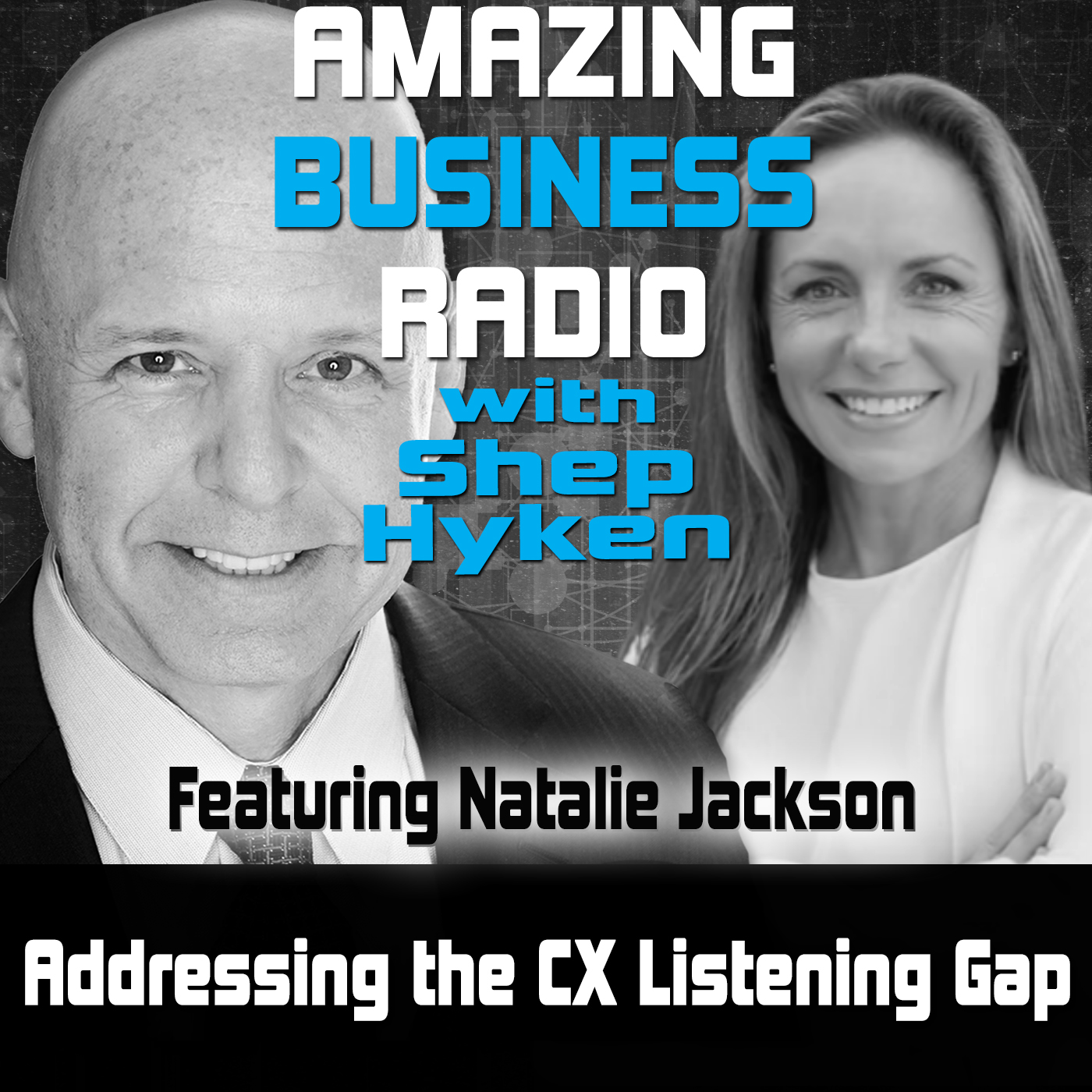
Customer experience strategist Natalie Jackson defines a core problem for companies: the listening gap between a brand promise and what customers actually experience. In a recent interview on Amazing Business Radio, Jackson, founder of Crescent Consultancy, described customer experience as “brand activation across everything.” A brand promise that does not translate into every employee interaction is not a promise. It is a liability that can erode revenue stability and raise acquisition costs.
For portfolio managers, the framework turns a soft metric into a testable competitive advantage. Jackson recommends companies start by asking whether their brand promise covers how the team should show up and whether everyone knows the experience target. When alignment is missing, churn rises. Margins shrink. The stock price eventually reflects that decay.
The Mechanism: Churn, Acquisition Cost, and Free Cash Flow
Jackson’s argument is that feedback is not a backward-looking report card. It is a leading signal. When customers consistently report a gap between promise and delivery, social proof weakens. Unhappy customers tell others. Acquisition costs climb. In sectors with low switching costs, the effect can appear within two quarters.
Companies that close the listening gap build deeper relationships. That directly supports revenue stability and pricing power. New York Times Co (NYT) operates in Communication Services, a sector where subscriber experience directly ties to content quality. The company’s Alpha Score from AlphaScala is 43 out of 100, labeled Mixed. That score suggests room for improvement on the listening gap. An investor tracking NYT can use Jackson’s checklist to assess whether management acknowledges the problem.
Practical Checklist for Evaluating Any Company
- Does the company have a documented brand promise that covers all touchpoints?
- Does that promise translate into specific employee behaviors supported by training and metrics?
- Is there a systematic feedback loop that closes the listening gap, or is feedback siloed in a complaints department?
These three questions can be answered from earnings calls, customer surveys, and industry reports. Executives who talk about NPS scores, customer effort scores, or employee engagement metrics as part of strategic reviews are likely closing the gap. Those who cite vague “customer centricity” without operational specifics are likely still in the gap.
Forward-Looking Signals in Earnings Calls
The next decision point arrives during quarterly earnings reports. Watch for mentions of customer satisfaction trends, churn rates, or new CX initiatives. A company that announces a formal CX training program or a new voice-of-customer platform is signaling a closing of the listening gap. One that stays silent on experience metrics signals the opposite.
For a broader view of how CX drives equity returns, read our stock market analysis. Compare tools to track these shifts using the best stock brokers. For direct analysis of NYT, visit the NYT stock page.
Jackson’s framework gives analysts a concrete way to measure whether a company’s experience investment is real or just marketing. The listening gap is not a soft concept. It is a lead indicator of churn and margin trajectory. The companies that close it will outperform peers. The companies that ignore it will eventually pay in earnings.