Commodities● Neutral
Why Sun Mobility's $78M Battery Swap Bet Targets Electric Trucks
Sun Mobility debuts modular battery swapping for 3-55 tonne electric trucks July 9-11. Backed by a $78M IOCL JV, the platform could cut upfront costs 40% and alter commercial EV economics.
Continue with
Sun Mobility will debut what it calls the world's first modular battery swapping platform for electric trucks and buses at Pravaas 5.0 in Gandhinagar from July 9 to 11. The platform covers vehicles from 3-tonne light commercials to 55-tonne multi-axle tractor-trailers and intercity buses. It marks the company's entry into heavy commercial vehicles after establishing swapping technology in two- and three-wheelers.
The system is backed by a $78 million joint venture with Indian Oil Corporation Ltd. It received AIS-038 certification from the Automotive Research Association of India in March, the first indigenously developed high-voltage swappable battery platform for trucks and buses to secure that approval. The certification validates thermal and electrical safety standards.
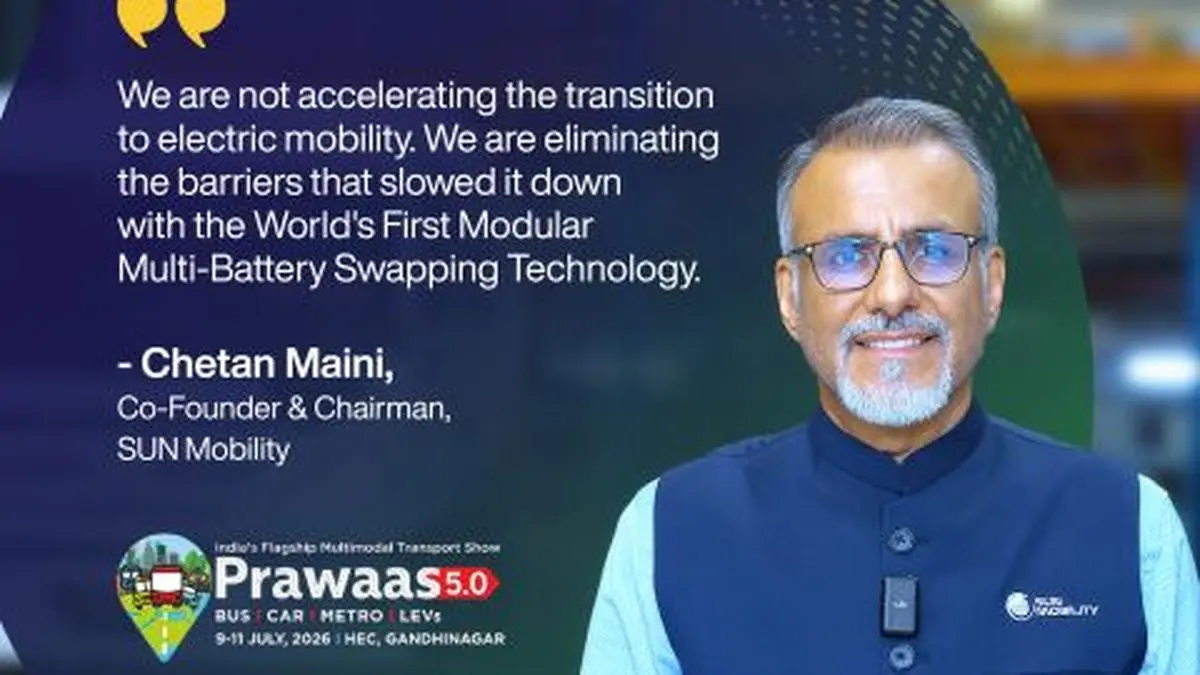
“We are not accelerating the transition to electric mobility. We are eliminating the barriers that slowed it down with the world's first modular multi-battery swapping technology,” said Chetan Maini, Co-Founder and Chairman of Sun Mobility.
Who Gains, Who Loses
The immediate beneficiaries are fleet operators. Under Sun Mobility's Battery-as-a-Service model, operators buy the vehicle and pay only for energy consumed. The upfront cost drops about 40%, bringing electric bus and truck prices closer to diesel and CNG equivalents. Tata Motors, which already demonstrated the platform on its Starbus 12m EV, could benefit if it adopts the standard. The joint venture with IOCL will deploy swapping stations across IndianOil's fuel retail network, starting with high-density freight corridors and intercity bus routes.
On the other side, manufacturers of fixed-battery electric trucks and buses face a competitive threat if the swapping model gains traction. Diesel and CNG vehicle makers also stand to lose market share if operating costs for electric alternatives fall.
How the Swapping System Works
Electric buses and trucks typically carry 200-400 kWh fixed battery packs. Charging takes 90 minutes to four hours, cutting fleet utilisation for operators whose revenues depend on keeping vehicles moving. Sun Mobility's platform uses modular 50 kWh and 100 kWh battery packs that swap in under three minutes. It supports both 330-volt and 660-volt architectures. Operators carry only the modules needed for a given route, improving payload compared with oversized fixed packs.
The Battery-as-a-Service model shifts battery ownership from the fleet operator to Sun Mobility and its joint venture. The company bears the battery cost and earns revenue through energy consumption payments.