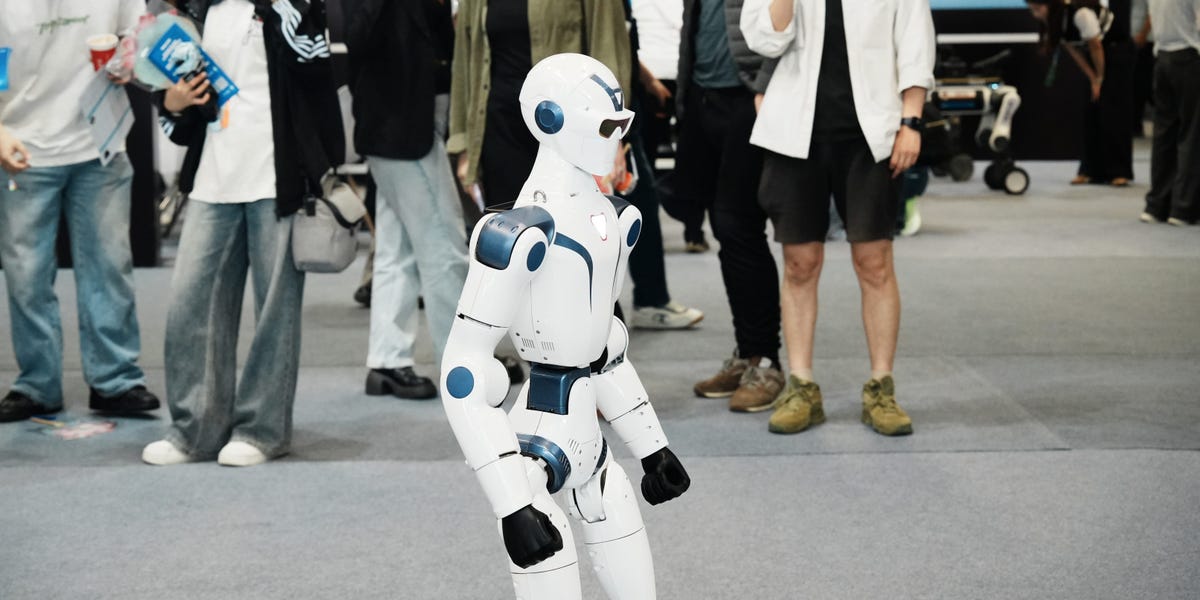
Silicon Valley spent the last few years teaching AI to generate text, images, and code. The next phase is giving that intelligence a physical body capable of lifting, sorting, building, and eventually living alongside humans. OpenAI, Meta, Tesla, and a wave of startups are racing to commercialize embodied AI – a pivot that changes the investment calculus for anyone holding software-only AI stocks.
The Physical AI Catalyst
The shift from pure software to hardware-backed AI is not a distant concept. This week, robotics and AI companies announced new collaborations and prototypes that signal the industry's intent to turn language models into action models. OpenAI, which built its reputation on chatbot ChatGPT, is now funding robotics startups and exploring humanoid designs. Meta, already deep in AI research, is investing in manipulation and perception systems that let AI interact with physical objects. Tesla's Optimus project moves from lab demos toward small-scale factory tasks.
A naive read treats this as a product launch cycle – more robots on assembly lines, more novelty. The better market read sees it as a structural expansion of the addressable market. Software-only AI monetizes through subscriptions and API calls. Embodied AI monetizes through hardware markup, recurring service contracts, and automation savings that compound over time. The capital intensity is higher, and the barriers to entry for competitors are also higher.
Why the Body Matters for Meta and Tesla
Meta's robotics research centers on dexterous manipulation – teaching AI to grasp, rotate, and hand off objects – which is precisely the skill set needed to operate in logistics, warehousing, and eventually homes. The company's Alpha Score stands at 62 out of 100, a Moderate label that reflects its current reliance on advertising revenue. A successful physical AI push could diversify Meta's revenue base beyond digital ads and into industrial automation. Execution risk is high; hardware margins are thinner and supply chains more fragile than software.
Tesla's Optimus program is further along in public visibility, with prototypes performing simple pick-and-place tasks at the company's factories. The bullish case ties Optimus to Tesla's core mission of reducing manufacturing costs. The skeptical view notes that humanoid robots remain years from economic viability. The next concrete marker comes when Tesla shows Optimus performing a multi-step manufacturing task without human intervention.
NVIDIA, while not a direct robot maker, is the compute backbone for nearly every AI and robotics platform. Its chips handle the real-time vision and control loops that embodied AI requires. Any acceleration in robotics R&D benefits NVIDIA's data center and edge computing segments.
What Comes Next for Robotics Investors
Investors should focus on three signals. First, capital expenditure guidance: any company that commits billions to robotics manufacturing infrastructure is signaling confidence in near-term demand. Second, commercial pilot announcements: a deal between a robotics startup and a major logistics provider is a tangible revenue event. Third, regulatory developments: safety standards for physical AI will shape deployment timelines.
The biggest single catalyst on the calendar is likely the next Tesla AI Day or Meta's Connect conference, where hardware prototypes will face public scrutiny. For now, the robotics thesis is a premium on top of existing AI valuations. It rewards patience and punishes hype.
Review Meta's robotics push on its stock page. For broader market context, see the stock market analysis desk note. Compare broker options suited for robotics-heavy portfolios at best stock brokers.