Stocks● Neutral
Why Netanyahu's 70% Gaza Order Resets the Risk Premium
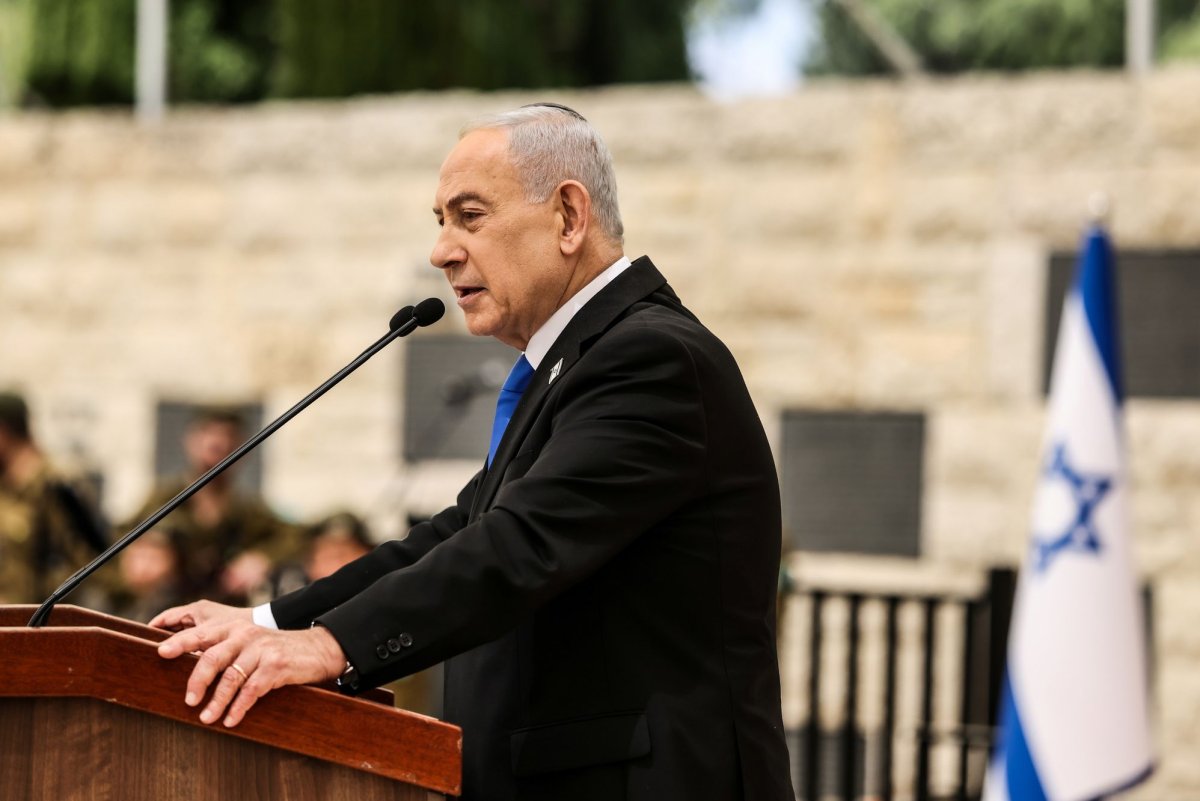
Netanyahu's 70% Gaza order voids the Trump peace plan. Traders must reset energy, defense, and shipping risk assumptions as the squeeze tightens.
Continue with
Israeli Prime Minister Benjamin Netanyahu ordered the IDF to expand its control of Gaza to 70% of the territory, up from the current 60%, as part of a squeeze on Hamas aimed at forcing progress on a U.S.-brokered peace deal. The move, reported Thursday, effectively cancels the existing framework of the Trump peace plan, which had fixed the IDF withdrawal line at about 53% of the enclave. For traders, the incremental expansion is not just a political shift. It resets the risk premium on a range of sectors that had priced in de-escalation.
The Squeeze Strategy and Its Market Read-Through
Netanyahu described the operation in sequential terms. "We were at 50, we moved to 60... Let's go step by step. First of all, 70. Let's start with that," he told reporters. The logic is that by compressing the 2.2 million population into less than one-third of the strip – an area already among the most densely populated on Earth before the war – Hamas will be forced to concede on the remaining points of the deal.
What Changed Under the Peace Plan
The Trump peace plan, signed in October 2023, committed Israel to a three-phase pullout. The first phase fixed a yellow line leaving Israel in control of 53% of Gaza. The IDF initially withdrew to that line. Talks stalled on the next steps: Hamas disarmament and further Israeli withdrawals. In response, Israeli troops began pushing west of the demarcation line. More than 900 Palestinians were killed in what the IDF described as defensive actions.
The Squeeze as a Negotiation Tool
Netanyahu's order extends that military creep into an explicit policy. Defense Minister Israel Katz reinforced the goal: "We pledged that Hamas will not rule Gaza civilly or militarily." He added that the long-term objective is voluntary mass migration of Palestinians out of Gaza. The combination of territorial expansion and migration rhetoric signals that the squeeze is not a tactical pause. It is the strategy.
Why the Peace Deal Assumption Is Now Obsolete
Traders who have been positioning for a gradual de-escalation – lower oil volatility, reduced defense spending tailwinds, normalized shipping through the Red Sea – need to reset that baseline. Muhammad Shehada, a visiting fellow at the European Council on Foreign Relations, told The Guardian that the move "completely upended the peace plan" and effectively makes the framework "null and void." The population density implications alone mean fresh humanitarian pressure. That pressure typically triggers diplomatic friction and supply-chain disruption.
Common Mistake: Treating Territory as a Bargaining Chip
Many market participants view territorial expansion in conflicts as a lever that eventually produces a negotiated settlement. The mistake is assuming the expansion stays within a reversible range. At 53%, the yellow line was a defined cap. At 60%, then 70%, the IDF is moving toward de facto control of the whole strip. Shehada warned that every additional square meter has a displaced family or makeshift shelter. That creates a dynamic where withdrawal becomes logistically more costly and politically more difficult.